Get Full Government Meeting Transcripts, Videos, & Alerts Forever!
Get email alerts on the Transit Security Contracts topic
No spam. Unsubscribe anytime.
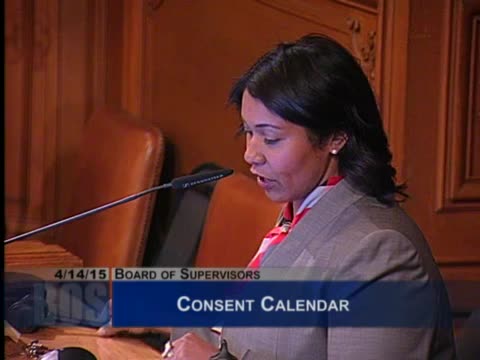
Board of Supervisors delays vote on $38.3 million Cyprus Security contract after ethics questions and debate over armed guards
Summary
After an internal city attorney review found no merit to conflict or kickback allegations, the board voted to continue consideration of a three-year, $38.3 million security contract with Cyprus Security so staff can return with options to remove armed services and provide more detail on negotiation and oversight.
The San Francisco Board of Supervisors voted April 14 to continue consideration for one week of a proposed three-year, roughly $38,300,000 contract (with a three-year option) between the San Francisco Municipal Transportation Agency and Cyprus Security to provide armed and unarmed security services.
The item drew extensive questioning from multiple supervisors about (1) an ethics review into whether an MTA employee who previously worked for Cyprus improperly participated in negotiations, and (2) whether the city should contract for armed security at MTA cash-handling locations and subway stations.
Deputy city attorney Andrew Shen told the board the city attorney's office investigated two discrete allegations: that the MTA employee was improperly involved because of a recent Cyprus employment, and that the employee had received "kickbacks" from Cyprus. Shen said the office "found ... these allegations have no merit." He said the employee had no ongoing financial ties to Cyprus when he joined the MTA and that sources of the kickback allegation provided no evidence of payments.
Supervisors pressed MTA procurement staff for details about the competitive process and how negotiations were conducted. MTA staff said the initial low-bid contract award process selected Andrews International, which later withdrew; the agency then entered negotiations with other proposers and ultimately negotiated with Cyprus, who adhered to and slightly lowered its original price. The MTA's contracts representative told the board that project managers, as subject-matter experts, are permitted to participate in negotiations while the contracts office provides oversight.
Much of the board's debate centered on the armed-security portion of the contract. Supervisor Katy Tang and others questioned the need for armed guards at locations where fare collection and cash handling occur, the frequency of training for armed private guards, and whether any historical pattern of robberies justified armed protection. Tang said she was "pretty uniformly opposed, to arming our security officers," and asked whether the city had alternatives such as unarmed guards or different deterrents. MTA staff estimated that over six years the unarmed services accounted for roughly $31,000,000 (about 950,000 hours) while armed services were about $7,000,000 (about 180,000 hours).
Supervisor Sandra Fewer removed her name as a sponsor and said she would not support the item as presented. Several supervisors said they could support unarmed services but not the armed component. Supervisor Scott Wiener moved to continue the item one week; Supervisor Mark Farrell seconded. The motion passed and the item was continued to the board's April 21 meeting so MTA staff can return with follow-up information, including whether a contract without armed services could be drafted and the procedural steps required (including any MTA Board review) to implement that option.
The board recorded one recorded no vote (Supervisor John Avalos) and the remainder of the board voting to continue; the continuance allows the current relationship with Cyprus to remain in place under existing administrative options until the board reconvenes on the matter.
The discussion also prompted commitments from MTA procurement to increase the contracts office's oversight of negotiations going forward and to consider policies to disclose prior employment relationships and nondisclosure agreements for staff involved in procurement.
The board did not take a final vote to approve the Cyprus contract on April 14; the item will return to a future meeting with the MTA's additional analysis and options regarding armed versus unarmed services, contract structure, procurement records, and training standards.
The board's decision to continue the item came amid broader questions about the scale of armed security hours, the adequacy of training for private guards (MTA staff described approximately 16 hours of firearms training plus recurring psychological and conflict-resolution training), and whether continuing armed hours is the best use of limited transit dollars.