Get Full Government Meeting Transcripts, Videos, & Alerts Forever!
Get email alerts on the Film Notice Ordinance topic
No spam. Unsubscribe anytime.
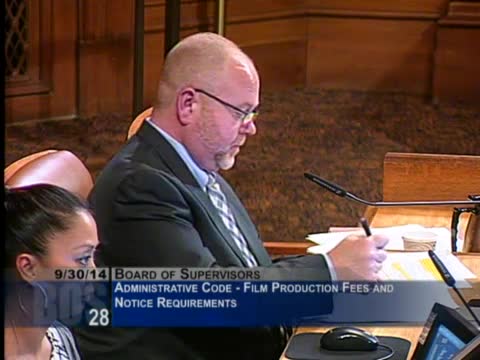
Supervisors amend film-notice ordinance to allow feasibility exceptions; ordinance passes first reading as amended
Summary
The board adopted amendments requiring film productions to notify neighbors within 50 feet when a production will close streets or obstruct parking for four or more hours, while adding a feasibility exception and directing the Film Commission to publish guidelines.
San Francisco'14The Board of Supervisors adopted amendments to an ordinance that would add —web series— to scheduled film-production use fees and require notice to affected residents and businesses when film productions would cause parking or traffic obstructions of four consecutive hours or more.
Supervisor Jane Kim (item sponsor in committee) introduced the measure in committee; Supervisor Cohen brought three amendments on the floor to add a feasibility exception to the 72-hour notice requirement, clarify the definition of —feasibility— and require the Film Commission to adopt guidelines describing circumstances when prior notice is infeasible. Supervisor Kim seconded the amendments; the board adopted them —without objection—. Supervisor Wiener supported notice requirements while stressing flexibility for the Film Commission to address exceptional circumstances.
Under the amended ordinance, notice to residents and businesses is required for productions expected to close streets or obstruct parking or traffic for four or more consecutive hours within a 50-foot radius of the production activity. The amendment creates a limited exception when 72-hour advance notice is infeasible and directs the Film Commission to prepare notice-guidelines within 30 days of the ordinance's effective date and to report those guidelines back to the board.
Clerk actions recorded that the ordinance passed the first reading as amended —without objection—. The Film Commission's director, Susana Robbins, was acknowledged during the discussion for her leadership. Staff did not record a roll-call tally for the first-reading passage on the floor; the clerk's record shows the amendments were adopted by voice/consensus.