Get Full Government Meeting Transcripts, Videos, & Alerts Forever!
Get email alerts on the Judicial Appeals Sentencing topic
No spam. Unsubscribe anytime.
Appeals court hears challenge to denial of probation for teacher convicted of sexual battery
Summary
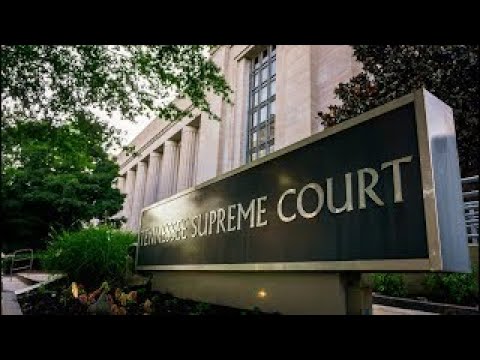
The Tennessee Court of Criminal Appeals heard oral arguments in the direct appeal of Cade Abbott on whether the trial court abused its discretion when it denied probation after Abbott pleaded guilty to three counts of sexual battery by an authority figure.
The Tennessee Court of Criminal Appeals heard oral arguments in the direct appeal of Cade Abbott on whether the trial court abused its discretion when it denied probation after Abbott pleaded guilty to three counts of sexual battery by an authority figure.
Defense counsel for Cade Abbott told the panel that the trial court's 20-page ruling ultimately rested on a single reason: the judge's statement that she "cannot in good faith depreciate the seriousness of the sexual battery by a teacher at a school," a finding defense counsel said impermissibly relied on the defendant's status as an element of the offense rather than applying the heightened analysis required by Tennessee precedent. "If that's the sole reason she relied on," defense counsel said, "then she has not conducted the proper Trent/Trotter analysis" and the denial of probation was an abuse of discretion.
Why it matters: The appeal asks the appellate panel to decide whether the sentencing court properly balanced statutory factors in TCA 40-5-103(b) and related case law when denying alternative sentencing. If the appeals court finds a legal error, it could remand for resentencing or order de novo sentencing.
The facts recited in argument: Abbott pleaded guilty to three counts of sexual battery by an authority figure, charged as Class C felonies. The victim was a 14-year-old student, and the conduct in the plea and sentencing record included kissing and alleged touching of the victim's breasts. Counsel said the parties' plea package involved a six-year aggregate sentence with the manner of service left to the trial court. The record also reflects Abbott had no prior criminal history and complied with pretrial release for roughly 20 months while wearing an electronic monitoring device.
Defense arguments: Abbott's lawyer argued the trial court acknowledged mitigating factors'including the lack of prior convictions, compliance with pretrial conditions and a psychosexual evaluation that described him as "amenable to treatment" and a low risk if treated'but did not perform the required statutory balancing. Counsel emphasized the transcript's concluding language and urged the panel that a sentencing denial based solely on the defendant's status as an authority figure (a teacher) improperly double-counted an element of the offense and ran afoul of the line of cases the defense cited.
State's position: Ronald Coleman, arguing for the State, urged the court to affirm. He said the trial court explicitly weighed deterrence and the seriousness of the offense, pointing to the length of the misconduct (described in argument as spanning roughly two years), the defendant's continued contact after two school warnings and the location of some acts at school and a school field trip. "It's not okay for a teacher to commit a sexual battery on a child on a student," Coleman said, arguing those facts supported both general and specific deterrence and justified confinement despite mitigating considerations.
Panel questioning focused on whether the sentencing court's written conclusion should be read in the context of the entire ruling. One judge noted the sentencing opinion runs about 20 pages and asked whether a single concluding sentence could be divorced from the court's full analysis. Defense counsel responded that, read as a whole, the ruling never expressly found the defendant "favorable for probation" or completed the statutory balancing required when the court relies on the seriousness of the offense.
No decision at argument: The panel heard both sides and moved on at the close of oral argument. Counsel for Abbott asked the court either to remand for resentencing or to exercise whatever relief is appropriate under the record; the State asked the court to affirm the trial court's exercise of discretion. The appellate court did not announce a ruling at the argument.
Context and next steps: The appeal hinges on statutory sentencing standards under Tennessee Code Annotated 40-5-103(b) and on appellate precedent the parties referenced at argument (including the case cited as Frasier and the line of authority defense described as "Trent/Trotter" analysis). The panel will issue an opinion after deliberation.