Get Full Government Meeting Transcripts, Videos, & Alerts Forever!
Get email alerts on the Audit Finance topic
No spam. Unsubscribe anytime.
County superintendent: FCMAT extraordinary audit finds no evidence of fraud; community disputes conclusions
Summary
The Santa Clara County superintendent presented findings from an extraordinary FCMAT audit that found insufficient evidence of fraud or misappropriation; many community speakers and some trustees said the findings did not resolve questions about appropriateness of prior spending and called for ongoing reforms and transparency.
The Santa Clara County superintendent of schools presented the findings of the Fiscal Crisis & Management Assistance Team (FCMAT) extraordinary audit and said the county concluded there was insufficient evidence to indicate fraud or illegal fiscal practices.
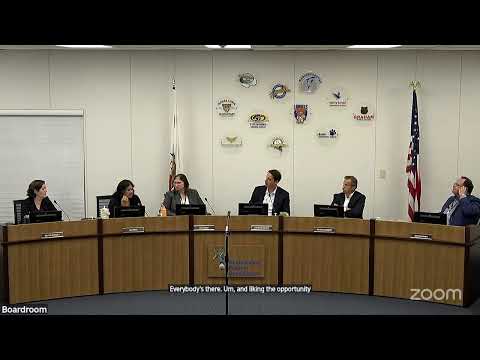
The announcement came during the Mountain View Whisman School District board meeting, where the county superintendent, Dr. David Austin, told trustees and the public that FCMAT found no evidence requiring further legal action and that the county office will continue to support the district as it implements administrative improvements.
The finding is significant because it closes the county'level extraordinary-audit process established to examine district fiscal concerns. "After a thorough review, FCMAT has determined that insufficient evidence exists to indicate that fraud, misappropriation of funds, and or assets, or other illegal fiscal practices may have occurred," Austin said. He acknowledged cooperation from district staff, past employees and community members and praised district leadership for acting on lessons from the audit.
Why the audit matters: community trust and governance
The nut graf: The audit clears the district of criminal fiscal findings under FCMAT's review, but residents and some former officials told the board that the report does not resolve whether past spending was appropriate or reasonable. Many speakers said the district must still improve transparency, oversight and policies governing expenses and contracts.
During the public-comment period and the discussion that followed, multiple speakers criticized specific prior expenditures identified in earlier reporting: guided-meditation payments, executive coaching contracts, public-relations spending and a New York trip. Former trustee Steven Nelson and community member Mr. Goranathan characterized the expenditures as excessive and said the audit's narrow legal standard does not address whether the spending was appropriate. "Whether or not you call all of this fraud, none of it is reasonable," Goranathan said in public comment.
Board responses and next steps
Trustees and the superintendent described steps already taken or planned to strengthen controls. Superintendent Bair outlined recently implemented changes including written purchasing procedures, a procurement checklist, more restrictive credit-card controls, adjusted delegated financial authority and formation of a budget advisory committee that recommended a travel policy. He said the district reduced roughly $700,000 in nonstudent-related contracts before his tenure.
Trustee comments emphasized both appreciation for the audit's independence and an ongoing duty to raise standards beyond legality. "The result that there's no fraud does not to me mean, 'Oh, we're fine to go on,'" Trustee Henry said, calling for cultural and procedural reforms. Trustee DeFazio, chair of the policy committee, said the committee will present several policy updates in coming meetings and noted a planned agenda item later this year on contracts and bidding.
Public demands for further transparency
Public speakers pressed for additional disclosures and accountability tools beyond the audit. Several asked the district to release itemized receipts and names tied to contested travel and vendor payments; others asked the board to require regular public review of credit-card statements and to follow prior grand-jury recommendations about disclosure practices. One online commenter said a sole-source, high-dollar vendor contract listed on the district's summer PO report lacked sufficient explanation.
What the county office will do next
Austin said the county office will continue a supportive role while the district implements recommended improvements and that some recommendations in FCMAT's reports have already been pursued. He declined to discuss specific recommendations in detail at the meeting but said the district will send the county a follow-up letter within the statutory 15-day timeframe outlining steps taken.
Board and community outlook
Trustees repeatedly described the audit as a step in a longer process of rebuilding public trust. Several trustees urged continued, public-facing reforms: posting credit-card statements and receipts, clarifying policies for travel and vendor selection, and improving contract oversight and reporting. "We want to make sure that every dollar is spent well," Trustee DeFazio said.
Ending: The county'level extraordinary audit closed the legal inquiry by FCMAT and the county superintendent, but the meeting made clear the district faces ongoing political and policy pressure to increase transparency, strengthen procurement controls and provide clearer public accounting for past and future expenditures.