Get Full Government Meeting Transcripts, Videos, & Alerts Forever!
Get email alerts on the Environment And Infrastructure topic
No spam. Unsubscribe anytime.
Council adopts Portland Urban Forest Plan with targeted amendments prioritizing low‑canopy neighborhoods
Summary
After debate and amendments, Portland City Council adopted the Urban Forest Plan. Amendments clarified priority investments in low‑canopy and low‑income neighborhoods and added district‑level performance measures; one funding‑workgroup amendment failed.
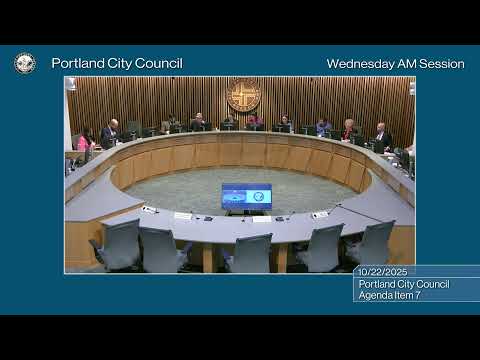
Portland City Council adopted the Portland Urban Forest Plan on Oct. 22 after a series of amendments and debate focused on prioritizing low‑canopy and low‑income neighborhoods and on how to plan for funding maintenance and sidewalk impacts.
Councilor Dan Ryan (note: transcript uses several variants for councilor names) and Councilor Jamie Dunphy led amendments to ensure that implementation and maintenance planning prioritize low‑income and low‑canopy areas (notably District 1/East Portland) and to require district‑level performance measures. Those amendments (Dunphy 1–3 and Dunphy 6) were approved by the council. An amendment (Dunphy 7) to convene a cross‑bureau team to propose permanent funding mechanisms passed or failed on individual roll calls as reflected in the minutes: district‑level performance reporting was added, but the proposed cross‑bureau permanent‑funding team amendment failed by a narrow margin.
Councilor Novick proposed amendments that would have narrowed language about the city assuming legal and financial responsibility for street tree‑related sidewalk repairs; those amendments were put to vote and did not pass. Debate included concerns about committing city resources without a specific funding plan and concerns about the equity of requiring property owners to bear costs related to street trees.
Supporters of the plan and staff emphasized the need for urgency because tree canopy and heat mitigation intersect with long‑term infrastructure projects, and staff noted the plan’s near‑term and phased priorities. Several councilors spoke in favor of the plan’s goals and of concentrating investment in heat‑vulnerable neighborhoods. After debate and the roll‑call vote, the council adopted the Urban Forest Plan as amended (roll call recorded 11 yes votes on adoption). Staff thanked bureau teams for their work and the meeting moved to a lunch break before the afternoon work session.
The adopted plan includes a combination of funding, prioritization and reporting commitments and asks staff to return with implementation steps; councilors requested continued work on details (funding sources, district metrics and coordination with transportation and public‑works investments).