Get Full Government Meeting Transcripts, Videos, & Alerts Forever!
Get email alerts on the Policing And Accountability topic
No spam. Unsubscribe anytime.
Portland approves $300,000 settlement in Adam Gregg lawsuit after testimony alleging faulty police reports influenced guilty plea
Summary
City council voted 11–1 to approve a $300,000 emergency‑ordinance settlement in a civil suit by Adam Gregg alleging a mistaken police report influenced his guilty plea; public testimony urged greater transparency and accountability for police records.
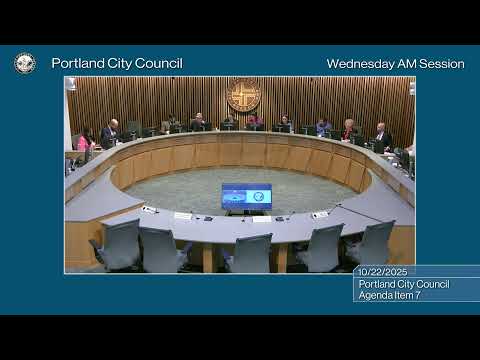
Portland City Council on Oct. 22 approved an emergency ordinance authorizing a $300,000 settlement in litigation brought by Adam Gregg alleging that inaccurate police records led him to plead guilty in a 2015 heroin distribution case. The council passed the settlement by roll call, 11–1.
City legal staff explained the core issue: clerical or report‑writing errors in police records had indicated a victim died after an overdose when, in fact, the person survived. The misstatement influenced prosecutor and defense conduct, the staff presentation said, and contributed to Gregg’s decision to plead guilty and serve over four years. “We are asking council to approve a settlement… the proposed settlement, dollars 300,000, avoids that risk,” counsel said during the staff summary.
City staff noted that prosecutors were dismissed from the suit on immunity grounds; that left the city as the remaining defendant and a potential trial risk of a significantly larger jury verdict and attorney fees. Counsel said Gregg has since pursued education and volunteer work and is now enrolled at Lewis & Clark Law School.
Public testimony included objections that the ordinance text lacked transparent detail on the underlying facts and a civil rights framing. Representatives of Portland Copwatch and other community groups described the case as distinct from use‑of‑force lawsuits but said it raised concerns about police report accuracy and prosecutorial reliance on those reports. Testifiers urged that settlements be clearer about case numbers and related litigation; witnesses cited linked cases and prior $45,001 and $3,750,000 settlements in other matters.
Council discussion touched on the limits of prosecutorial immunity under state law and whether responsibility lay with the county DA’s office or local police reporting. Several councilors said their decision balanced moral and legal responsibility and fiscal risk; one councilor called the settlement “reluctant” but fiscally prudent. The roll call recorded Clark, Green, Avalos, Dunphy, Smith, Kinal, Ryan, Guillaume, Maria, Novick, Hertogeny voting yes and Zimmerman voting no; the ordinance passed.
The ordinance text classifies the claim as bodily injury for internal claims handling; city staff said that classification aligns with their claims template though the underlying facts differ. Council members asked for clearer references to related case numbers and greater future transparency about settlements.
Actions required by the settlement (for example, discipline, policy change, or reporting) were not specified in the ordinance. City staff said internal and training changes and confirmation procedures for death notifications had been enacted or were under investigation; one officer was reported to have a sustained administrative finding and another was on leave while under investigation. The council’s approval concluded the item and moved the agenda forward.