
St. Paul HRA previews Healthy Homes, Power of Home grants to weatherize low‑income homes
Get AI-powered insights, summaries, and transcripts
Sign Up Free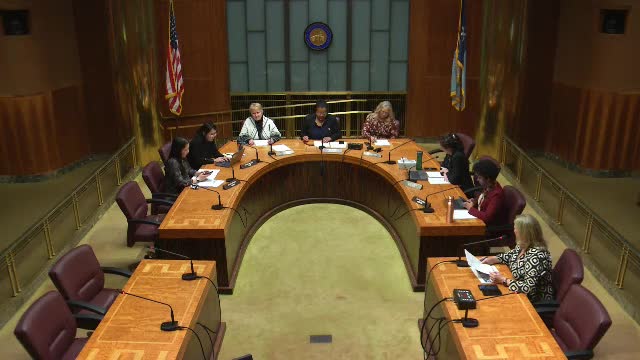
Summary
At a meeting of the St. Paul Housing and Redevelopment Authority, staff presented guidelines and implementation plans for two new home‑improvement programs aimed at low‑income households: Healthy Homes and Power of Home.
At a meeting of the St. Paul Housing and Redevelopment Authority, staff presented guidelines and implementation plans for two new home‑improvement programs aimed at low‑income households: Healthy Homes and Power of Home.
The Healthy Homes program, funded with a one‑time $1 million allocation from American Rescue Plan Act (ARPA) funds, is designed to cover pre‑weatherization repairs and health‑and‑safety work that currently keeps some income‑qualified homes from accessing existing weatherization services. Power of Home, backed by an ongoing $300,000 annual allocation from Xcel Energy franchise fees, is intended to support higher‑cost electrification measures such as cold‑climate heat pumps and other appliance upgrades.
Project manager Danielle Sindelar said the programs are intended to work together and reduce upfront cost barriers for households that cannot afford repairs even when long‑term energy savings are likely. “Our goal is to improve the energy efficiency of homes with people in Saint Paul who cannot afford some of these costs upfront,” Sindelar said. She told commissioners the city plans to offer the programs as grants (no repayment) and to pay contractors directly.
Staff said Healthy Homes will target households at or below 80% area median income (AMI) and focus on 1–4 unit properties that cannot otherwise be served because of costly pre‑weatherization needs — for example, knob‑and‑tube wiring, asbestos abatement or significant roof or plumbing repairs that exceed the scope of current weatherization providers. Rental properties must have at least half of their units income‑qualified to be eligible; property owners must show recent maintenance spending and the city will check Department of Safety and Inspections records and permits before awarding funds.
Power of Home will prioritize deeper upgrades and electrification for households at or below 50% AMI. Staff said rental property owners accepted into Power of Home will be required to provide a cost share at signing because the program funds are meant to upgrade the structure and equipment. Sindelar said projects will be evaluated for life‑expectancy of existing equipment so the city avoids replacing functioning newer systems.
Award amounts are planned to range from $5,000 to $50,000 per project; the city estimates the typical full weatherization costs roughly $15,000, and staff said they expect the combined programs to fund approximately 30 projects initially. Staff noted the Healthy Homes funds were designed specifically to fill gaps that community weatherization partners cannot cover because those partners have limited, recurring budgets.
Russ Stark, the city’s chief resilience officer, told the authority the team expects many early projects will be referrals from Community Action partners and Energy Sense Coalition — organizations that keep lists of income‑qualified homes they deferred because pre‑weatherization costs were too high. “Those projects are the lowest‑hanging fruit to identify places where there are needs,” Stark said, adding that staff will seek releases to access household Xcel Energy bills to model expected savings and track outcomes over time.
Commissioners probed prioritization and outreach. Several members said they oppose an unfettered first‑come, first‑served approach and asked staff to consider geographic targeting or an energy‑burden metric to prioritize households that pay a higher share of income for utilities. Sindelar and Stark said the program is currently designed to be citywide and first‑come, first‑served with built‑in eligibility screens, but they also said staff have discussed targeting higher‑need census tracts (including federal Justice40‑designated areas) in later phases if additional funding becomes available.
Staff outlined steps intended to minimize applicant burdens: a single combined application for both programs, use of income‑qualified census tracts so some residents would not need to provide documentation, and acceptance of enrollment in other city or state income‑qualified programs as proof. Staff also said the Center for Energy and Environment would provide home energy audits and post‑work quality assurance where appropriate.
Commissioners asked about contractor capacity and procurement. Sindelar said staff are coordinating with procurement and plan to lean on established trade‑partner lists used by energy programs and Xcel Energy rebates; staff also said they are coordinating with the city’s procurement office on contracting options and quality standards.
Staff said the guidelines would return to the authority for approval next week (staff noted an alternative option to schedule approval for a later meeting if members need more time). Pending procurement steps, staff said they hope to launch enrollment around mid‑May and estimated about four months for a typical project from application to completion.
The meeting included one formal vote unrelated to the briefing: commissioners approved the HRA meeting minutes (M I N‑25‑17) by voice vote, 5‑0; Commissioner Naker made the motion to approve.
No formal vote on the Healthy Homes or Power of Home guidelines was taken at this meeting; staff requested feedback and said the written guidelines would be presented for approval in the next meeting. Commissioners and staff agreed to continue refining eligibility documentation, outreach plans and contractor arrangements before final adoption.