Get Full Government Meeting Transcripts, Videos, & Alerts Forever!
Get email alerts on the Economic Development Defense Tech Parks topic
No spam. Unsubscribe anytime.
Committee advances bill creating 'level 3' tech park for Westgate at Crane to boost defense-sector investment
Summary
Senate Bill 465, amended to align with earlier House language, would create a new 'level 3' tech park category intended to allow Westgate at Crane to capture additional incremental tax financing to support defense-related infrastructure and private investment.
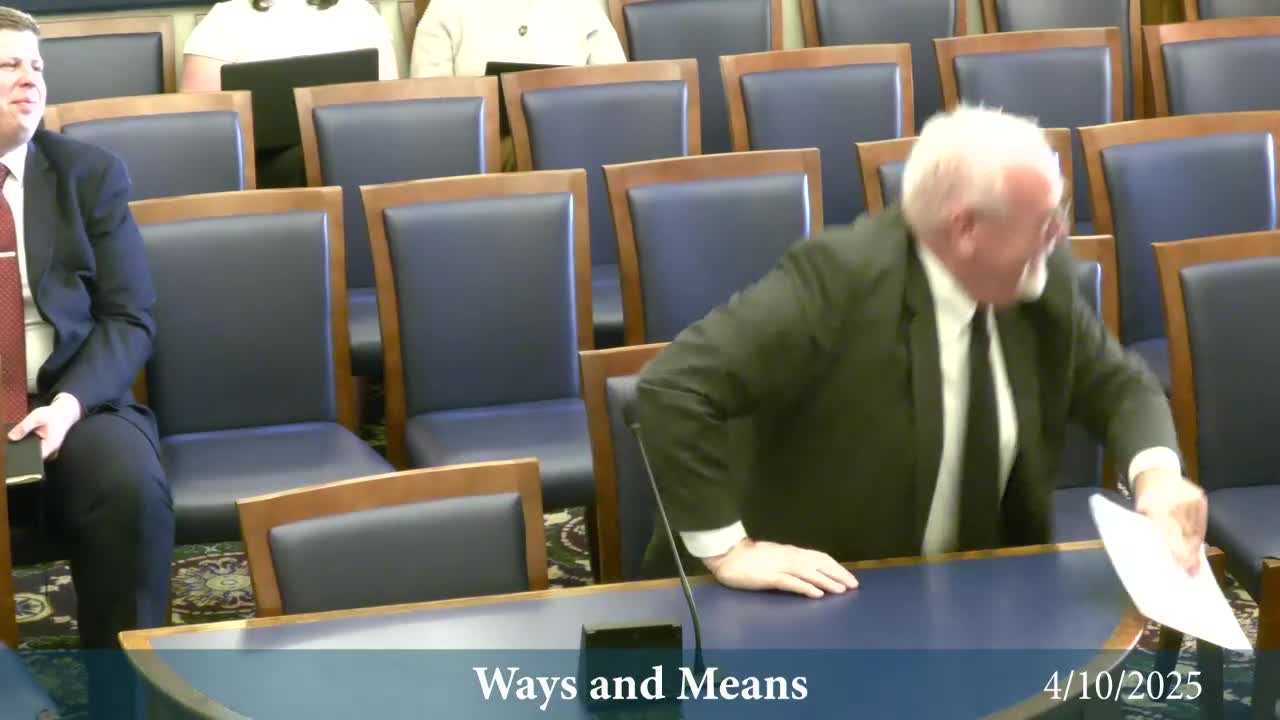
The Ways and Means Committee on Oct. 27 passed an amended version of Senate Bill 465 that would create a new "level 3" technology park designation intended to provide greater incremental tax-financing capacity for Westgate at Crane, a defense‑focused research and industrial park anchored by NSA Crane.
Representative Lynn Dower, presenting the bill, said SB 465 is "very similar to House Bill 1615" and would add a third level of tech-park financing. He summarized current limits: "level 1 can capture up to $5,000,000 in incremental tax financing. Level 2 can go an additional $2.50. What we would like to do... is create a level 3 tech park." He said the bill as introduced set the level‑3 incremental figure at an additional $10,000 and that an amendment (amendment number 2) would put the bill in the same form as HB 1615 as it left the House.
Bryant Niehoff, chief executive officer of the Uplands Science and Technology Foundation (USTF), testified in support and described Westgate’s economic footprint. Niehoff said Westgate "has delivered, as of 2023, dollars 15,900,000 in incremental state tax revenues, and attracted over $115,000,000 in total investment," and that the park currently supports about "950 high-tech jobs" with an average salary of about $87,000. He said a forthcoming microelectronics fabrication project is projected to add roughly 400 jobs averaging more than $100,000 a year and that, over the next decade, Westgate could generate an estimated $3,600,000,000 in payroll growth and about 3,700 new jobs.
Niehoff told the committee Westgate faces significant infrastructure needs — including power, water and wastewater capacity — and gave as an example a planned expansion of a small package wastewater plant from about 50,000 gallons per day to 350,000 gallons per day. He said legislation expanding cumulative tax‑increment (CTP) collection thresholds in 2023 (SEA, 2023) that lifted an annual CTP collection cap from $100,000 to $250,000 had been helpful, and that SB 465 would further help the park meet development costs unique to defense-sector investments.
Committee members discussed the bill’s scope. Representative Clinker asked whether the change would apply to research parks such as the Purdue research technology park; Representative Dower said the measure applies only to parks that meet the bill’s geographic and military enhancement-area criteria and said his understanding was that Westgate is the only location in the state that would qualify under that language.
Members adopted an amendment (amendment number 2) to align the bill’s language with House Bill 1615, by consent, and then moved to pass the bill as amended. The committee recorded the motion to pass as amended; the transcript records members' affirmative and “excused” responses but does not provide a final tally in the excerpted record.
The bill now moves forward with the committee’s amendment to match HB 1615; committee discussion left several implementation details — including whether other research parks might qualify under altered language, and precise fiscal estimates tied to the new incremental financing limits — to be resolved in later stages.