Get Full Government Meeting Transcripts, Videos, & Alerts Forever!
Committee backs hospital pricing package with phased freeze, a pricing study and language to return assessment dollars to hospitals
Summary
The Senate committee advanced an amended bill that freezes hospital prices for two years while the state conducts a pricing study and sets a later benchmark; sponsors said the phased approach balances cost control and protections for rural providers.
(Note: This article covers a lengthy committee discussion of House Bill 1004 and its amendment. Below is an edited, neutral summary of committee testimony, amendments and the committee’s vote.)
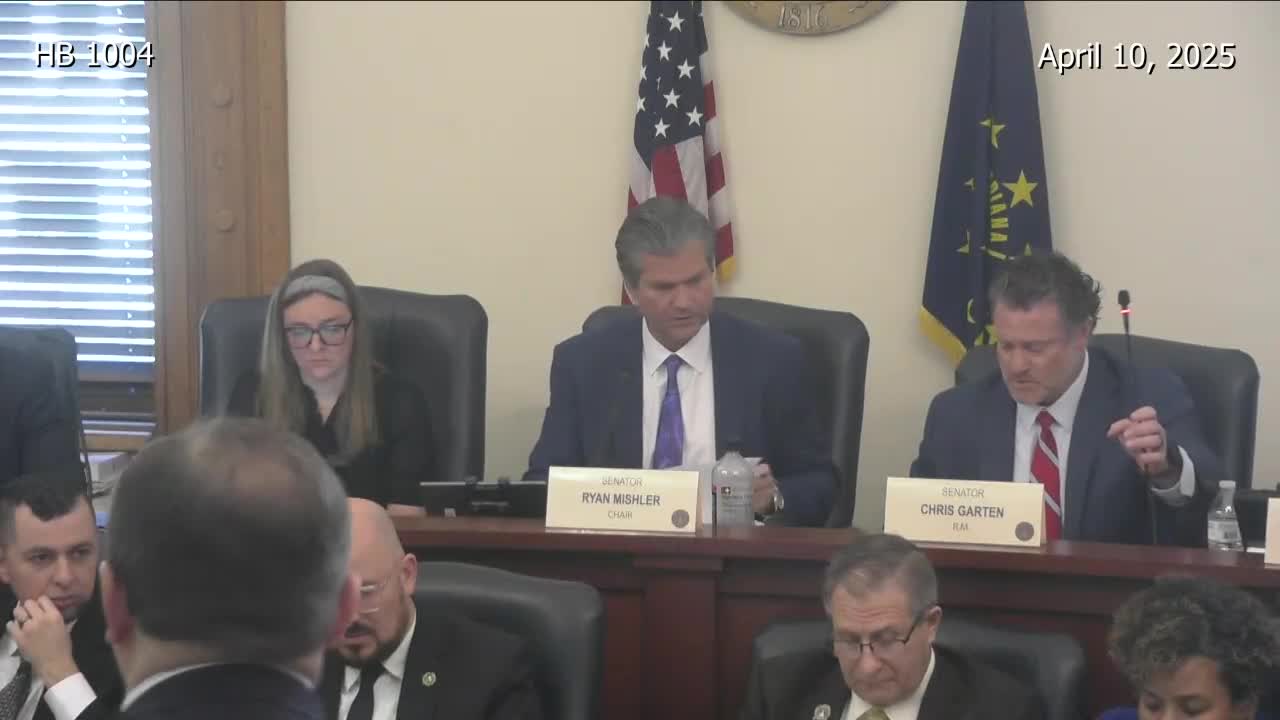
The Senate Appropriations Committee considered and advanced an amended House Bill 1004 that packages multiple changes aimed at reducing health‑care costs and redirecting hospital assessment revenues. Sponsors described a phased approach: a temporary price freeze, a state‑commissioned hospital pricing study, and a later reference‑based benchmark (placeholder figure cited in committee) with escalating penalties for repeat exceedances. The committee took amendment 8 by consent and passed the amended bill 9–4.
Why it matters: supporters said the bill offers a coordinated way to lower commercial hospital prices, restore some assessment dollars (the hospital assessment fee, or HAF) to draw down federal matching money, and allow hospitals to negotiate separately for Medicare Advantage. Opponents warned the policy could be destabilizing for hospitals — especially rural providers — if price caps or enforcement mechanics do not account for local cost pressures.
Core elements discussed
Two‑year freeze and pricing study: The amendment institutes a two‑year price freeze for covered hospital systems while the state Office of Management and Budget (OMB) completes a study (due in committee language by mid‑2026) intended to produce a reliable benchmark for pricing. Sponsor testimony emphasized that the early freeze buys time to create data the legislature and stakeholders can trust.
Reference benchmark and penalties: The amended language includes a placeholder reference number (discussed in committee as 270% of Medicare rates in current draft material) as a possible long‑term benchmark; sponsors said that number is provisional and that the properly scoped OMB study would inform the final benchmark. Penalties for exceeding the eventual benchmark would escalate over time (100% of overage then higher percentages for repeat exceedances in later years), with a multi‑year runway before…
Already have an account? Log in
Subscribe to keep reading
Unlock the rest of this article — and every article on Citizen Portal.
- Unlimited articles
- AI-powered breakdowns of topics, speakers, decisions, and budgets
- Instant alerts when your location has a new meeting
- Follow topics and more locations
- 1,000 AI Insights / month, plus AI Chat