Get Full Government Meeting Transcripts, Videos, & Alerts Forever!
Get email alerts on the Healthcare Policy topic
No spam. Unsubscribe anytime.
Committee advances amended site‑of‑service, surprise‑billing changes focused on larger hospital systems
Summary
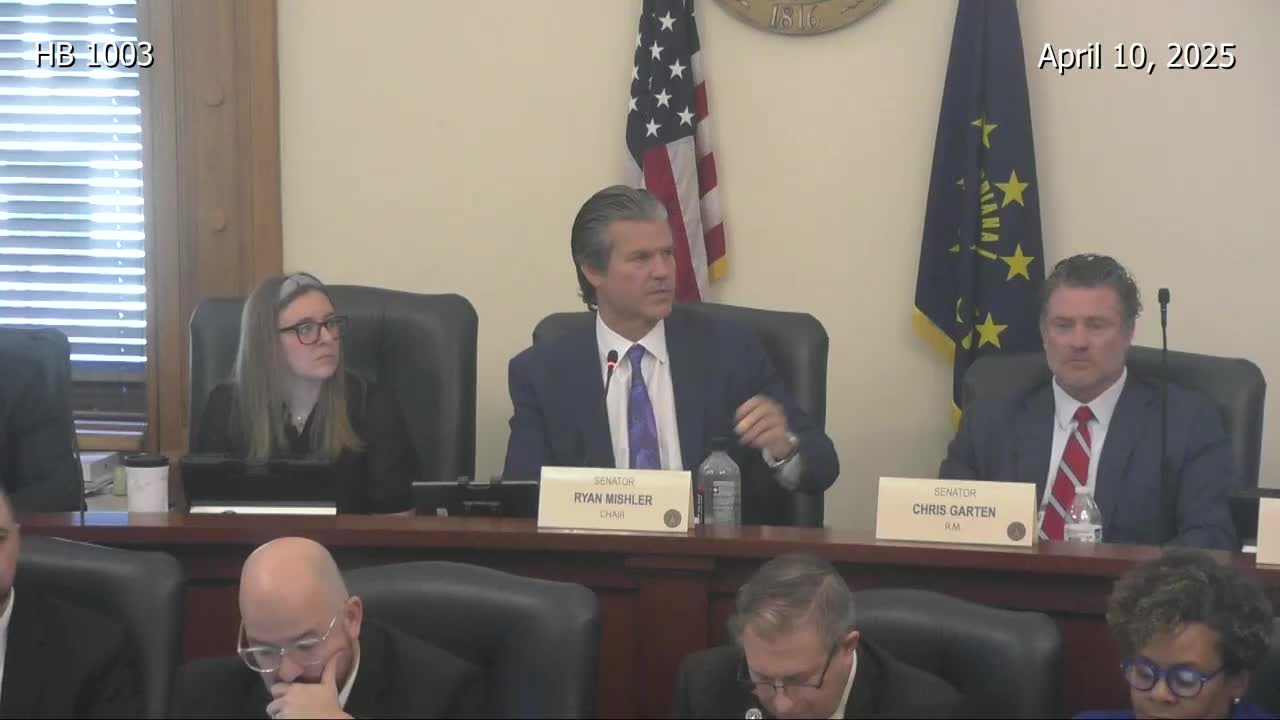
The committee approved an amended House Bill 1003 — a health sector bill that clarifies prior site‑of‑service language, limits some surprise‑billing practices and adds patient transparency measures. The amendment was taken by consent and the bill passed committee 10–3 after debate over scope and enforcement.
The Senate Appropriations Committee considered and advanced an amended House Bill 1003, a measure aimed at implementing and clarifying previously passed site‑of‑service and surprise‑billing provisions. Sponsors said the amendment plugs implementation gaps left from earlier legislation and clarifies rules so the Department of Health and the Department of Insurance can enforce patient‑protection provisions.
Why it matters: supporters said the amendment makes prior policy workable by clarifying definitions and the administrative role of state agencies; opponents warned the changes could shift disputes to providers and increase enforcement exposure for hospitals and clinicians.
Key changes and debate
Implementation clarification: Representative (Dr.) Barrett (presenting) described amendment 18 as closing a rulemaking gap from 2023’s site‑of‑service law. He told the committee the amendment “is not passing a new policy — we’re enabling a policy that we passed to go into function” and that the amendment had been vetted with the Department of Health’s general counsel.
Scope narrowed to large systems: committee discussion noted that the amended measure narrows the initial, broader application of the site‑of‑service rules to focus on the state’s five largest hospital systems (referred to in committee as the “big 5”). Supporters said that narrowing was necessary to manage implementation complexity and limit unintended impacts on smaller rural hospitals.
Provider complaints and prior authorization: Committee members asked whether complaint and prior‑authorization appeals would be filed by institutions, providers, or patients. Presenters said both providers and facilities could initiate complaints to the Department of Insurance when prior‑authorization decisions adversely affect patients, while patients retain other advocacy routes through the department if they believe their insurer acted improperly.
Surprise‑billing and facility fee language: The amended bill includes provisions to require greater alignment of covered physicians and covered facilities and to increase patient transparency about facility charges. Sponsors removed more aggressive “resale” and pricing levers from earlier drafts; language retained aims to improve disclosure and reduce surprise bills that occur when patients receive care from out‑of‑network clinicians at in‑network facilities.
Enforcement and fraud concerns: Some members — notably Senator Brown — warned the committee that new enforcement authorities and expanded responsibilities for the attorney general’s Medicaid fraud control unit could create imbalances between insurer enforcement tools and provider dispute remedies. Brown said the amendment could increase litigation risk and make providers feel exposed to investigations if payors challenge coding or place‑of‑service determinations. Supporters said the enforcement language targets bad actors and is meant to protect patients and taxpayers.
Action and vote
- Amendment 18 (technical/implementing language to close 2023 site‑of‑service gaps) was taken by consent; the bill, as amended, passed the committee by a recorded vote of 10 to 3.
Speakers and attribution
- Dr. Barrett (presenter, House) described the amendment’s purpose: “We’re not passing a new policy — we’re enabling a policy that we passed to go into function.” - Senator Brown (critic) expressed concern that enforcement mechanics and fraud referrals could be abused by third‑party payors and cited practical risks to hospitals and providers.
Authorities referenced
- Department of Health rulemaking authority and prior 2023 enactment (House Bill 1004 in 2023) — referenced_by: ["hb1003-site-of-service-surprise-billing"] - Department of Insurance complaint processes and prior authorization oversight — referenced_by: ["hb1003-site-of-service-surprise-billing"]
Actions
- {"kind":"motion","motion":"Adopt amendment 18 (clarifying implementation language)","mover":"Representative Barrett","second":"consent","vote_record":[],"tally":{"yes":(consent),"no":0},"outcome":"approved","notes":"Amendment taken by consent to clarify 2023 site‑of‑service implementation."}
- {"kind":"other","motion":"Committee passage of amended House Bill 1003","mover":"Chairman Micheler","second":"not specified","vote_record":[],"tally":{"yes":10,"no":3},"outcome":"approved","notes":"Bill advances to full Senate."}
Discussion vs decision
- Discussion: scope (big 5 vs statewide), complaint filing mechanisms, and enforcement roles. - Direction: presenters and agencies were asked to clarify complaint/appeals processes and patient protections. - Decision: amendment taken by consent; bill advanced by committee vote.
Clarifying details
- Targeted application: amended bill focuses initial implementation on five largest hospital systems (the "big 5"). - Complaint filers: providers and facilities may file prior‑authorization complaints; patients retain other routes through the Department of Insurance.
Searchable tags:["healthcare","surprise_billing","site_of_service","prior_authorization","insurance_transparency"]
Provenance:{"transcript_segments":[{"block_id":"t3083","local_start":0,"local_end":120,"evidence_excerpt":"thank you, mister chairman. Would you wanna, present the amendment?","global_start":3083,"global_end":3203,"reason_code":"topicintro"},{"block_id":"t4170","local_start":0,"local_end":120,"evidence_excerpt":"Bill passes 10 to 3.","global_start":4168,"global_end":4288,"reason_code":"topicfinish"}]}
salience:{"overall":0.78,"overall_justification":"The bill changes site‑of‑service and surprise‑billing implementation; affects hospital billing and patient protections.","impact_scope":"state","impact_scope_justification":"Applies to major hospital systems and insurance contracts in state.","attention_level":"high","attention_level_justification":"Long committee discussion and multiple stakeholders; enforcement implications.","novelty":0.55,"novelty_justification":"Clarifies and implements previously passed law rather than creating wholly new policy.","timeliness_urgency":0.70,"timeliness_urgency_justification":"In‑session implementation decisions and agency rulemaking timelines.","legal_significance":0.65,"legal_significance_justification":"Affects statutory implementation and enforcement procedures.","budgetary_significance":0.15,"budgetary_significance_justification":"No large direct budget appropriation recorded in committee."}