Get Full Government Meeting Transcripts, Videos, & Alerts Forever!
Get email alerts on the Student Voice topic
No spam. Unsubscribe anytime.
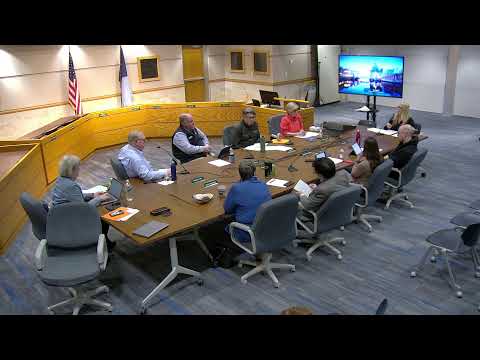
Minnetonka board reviews plan to add structured student voice, moves to begin selection process
Summary
At a March 27 study session, the Minnetonka School Board discussed a recommendation to form a formal student‑voice group of 16 to 20 students who would meet monthly, review upcoming board agendas and select representatives to present student feedback to the board.
At a March 27 study session, the Minnetonka School Board discussed a recommendation to form a formal student‑voice group of 16 to 20 students who would meet monthly, review upcoming board agendas and select representatives to present student feedback to the board.
The proposal, introduced by Superintendent David Law and summarized by executive director Dr. Getty, would have teachers nominate students who meet set criteria; nominated students would then be selected by peer vote. The selected group would identify topics of interest, gather feedback from classmates and elect rotating representatives to attend board meetings or present on specific agenda items.
Board members and students described existing student input structures across the district as background for the proposal. Superintendent Law and Dr. Getty noted surveys, principal advisory councils, student clubs, a teaching and learning student advisory with about 40 students, a recent high‑school student forum with roughly 40 participants, and Vantage Public Policy students who presented to the board in the fall as examples of current practices. Dr. Getty said the district “has a variety of committees that involve students” and highlighted that student feedback on curriculum and facility planning has been shared with the board.
Three students from Minnetonka High School — Rory Shone, a junior; Shania Gibson; and Charlie Welch — told the board how they gather and represent peers and where they have seen change. Rory said student participation “felt really helpful” after a student presentation on public policy, adding that students sometimes feel a “barrier” between adult decisionmakers and students. Shania described work on the student belonging committee that produced a deeper teacher‑feedback survey, saying the group “threw out a bunch of ideas” and is still refining questions for next year. Welch credited principal advisory council work with shifting “anchor time” to after first hour to improve attendance and usefulness.
Board members asked how the student group would avoid being “performative.” Megan (board member) pressed for intentional scaffolding and training so participating students would be prepared and not feel tokenized. Dan (board member) said he supported flexibility that would allow student representatives to speak on any agenda item when they have relevant input, but also raised concerns about the time required for a student to stay fully informed on the board’s work. Several board members, including Sally and Chris, urged a modest pilot rather than an expansive rollout and suggested returning a written proposal so the board and administration share a common understanding of logistics.
Superintendent Law described an implementation timeline contingent on board direction: recruiting teachers would identify rising seniors, juniors and sophomores starting in April, with voting in May. When asked about a legislative proposal to require a student member on school boards, the board said it would monitor any action at the state level but did not report a concrete statutory change affecting the district at the meeting.
On the basic selection mechanics, the board gave direction to proceed with the teacher‑nomination and student‑voting approach so teachers would have time to implement the process for next school year. The administration said it would resurface the existing written proposal, refine logistics (including where student representatives would sit during meetings and whether representatives would attend entire meetings or only part), and return with details at the April meeting so the board could act in May if it wishes.
The board and students said they would also explore low‑cost outreach to connect more students to board agendas, such as sharing brief agenda summaries on the high‑school morning show or using QR codes and social media to solicit feedback.
The discussion closed with the board asking administration to prepare written recommendations and implementation options so members can confirm consistent expectations around training, rotation of representatives, meeting participation and communication back to students.