Get Full Government Meeting Transcripts, Videos, & Alerts Forever!
Get email alerts on the Sundance Solar topic
No spam. Unsubscribe anytime.
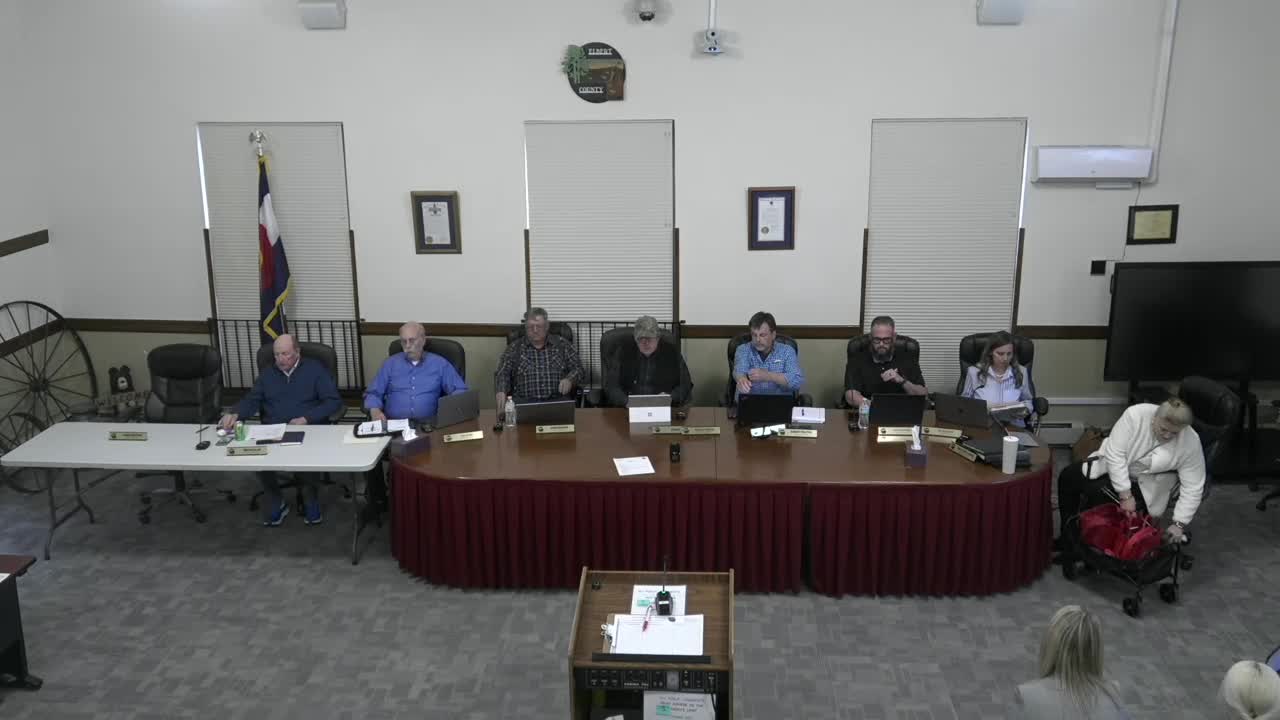
Elbert County planning commission delays decision on Sundance Solar after unresolved cultural, safety and financial questions
Summary
The Elbert County Planning Commission on Tuesday continued consideration of a 1041 permit and Special Use Review for the Sundance Solar project after commissioners said key information — including a cultural‑resource overlay, wildlife-monitoring plans, decommissioning assurances and visual‑screening details — remained unresolved.
The Elbert County Planning Commission on Tuesday continued consideration of a 1041 permit and Special Use Review for the Sundance Solar project after commissioners said key information needed to evaluate approval criteria remained incomplete.
Commissioners voted to continue the item to a date-certain hearing on April 22, 2025, at 6 p.m., after multiple members raised unresolved questions about a cultural-resources survey overlay that, as presented at the meeting, appeared to overlap proposed array areas; wildlife and public‑safety commitments from Colorado Parks and Wildlife and local fire departments; the proposed decommissioning financial assurance; and other technical details staff and applicants agreed to provide before the next hearing.
Why it matters: The county is weighing whether the utility-scale solar facility meets statutory and local criteria that include protection of paleo‑historic and archaeological resources, public health and safety, and community character. Commissioners said they could not find sufficient documentary evidence in the record that those criteria, and related mitigation measures, had been demonstrated to the commission’s satisfaction.
During several hours of questioning and public testimony, representatives of the project developer, Cypress Creek Renewables, and its local subsidiary, Sundance, responded to queries from commissioners and nearby residents about whether certain studies and commitments were complete and where they appear in the application. Cypress Creek project representative Zach Bartholomew said, “the project actually is not funded by subsidies,” and that the company would supply additional documentation on request.
Attorneys and consultants for the applicant acknowledged gaps in the publicly posted site mapping and offered to provide confidential, higher-resolution shapefiles and related reports for county staff and commissioners. “We can provide the report,” said Addison Fairchild, an attorney with Holland & Hart representing Cypress Creek, when asked about a cultural‑resource survey the applicant had marked sensitive.
Commissioners emphasized that the planning criteria require clear evidence that the project will not “degrade areas of paleo historic or archaeological importance.” Commissioner Nicole Hunt said the county’s regulatory framework makes commitments enforceable if they are included as conditions of approval: “I think the way that we make it a permanent commitment is by making it a condition of approval.”
What remains outstanding - Cultural-resources overlay: Commissioners and county staff reported a spatial mismatch between the cultural consultant’s mapped avoidance areas and the project site plan as submitted. The applicant agreed to provide the high-resolution shapefile and to reconcile the overlay prior to the next hearing. County staff flagged the matter as central to the 1041 and SUR criteria on protecting archaeological and paleontological sites. - Wildlife mitigation and monitoring: Colorado Parks and Wildlife (CPW) recommendations became a point of discussion. The applicants said they had coordinated with CPW and proposed game cameras and slide gates; project staff said CPW had reviewed and provided recommendations. Commissioners asked for specifics on number and type of cameras, whether cameras will provide true 24/7 remote monitoring, and written CPW communications documenting the agency’s review and any recommended mitigations. - Fire safety and emergency response: Commissioners and members of the public pressed the applicant about response times and on-site readiness if a fire starts. Project representatives said the design includes a perimeter firebreak, coordination with Kiowa and Rattlesnake fire departments, and an approved battery emergency-response plan for the energy storage systems. McCarthy Building Companies representative Nick Parton described a 30‑foot perimeter firebreak incorporated into the design; the applicant also said operations and maintenance will include monthly reporting and local operations staff who can respond to alerts. - Decommissioning and financial assurances: Commissioners asked for clarity about the decommissioning bond, its calculation and periodic updates. Staff and applicants explained that third‑party studies calculate decommissioning estimates, the company will update those estimates every five years, and the county requires financial security (bond or letter of credit) recorded against the land. Commissioners requested a clearer justification for the bond amount and said they may set a higher condition as part of approval. - Screening and visual impacts: Commissioners and neighbors argued the proposed eight‑foot screening fence recommended by CPW will not screen panels that track the sun and can reach up to 15 feet at peak tilt. The applicant said typical panel height would be much lower and that CPW recommended the eight‑foot fence; commissioners asked the applicant to return with specific options such as berms, taller screening, or vegetation plans to reduce visibility and preserve the county’s rural character. - Water use and wells: The applicant said hauling construction water was the preferred option and that on‑site wells would only be used if explicitly permitted; the applicant said it would accept a permit condition prohibiting use of on‑site wells for construction, operations or maintenance unless approved by the county. - Ownership, panels, batteries and supply-chain questions: Commissioners asked about ownership and investors, the country of origin for panels (applicants said panels are sourced from Vietnam), and the battery chemistry (applicants said lithium‑iron‑phosphate). The applicant said the company is U.S.-based and that equity investors are not part of local operating management. Commissioners also asked for documentation showing the project’s economic viability and the developer’s ability to provide long‑term financial assurance.
Next steps and action taken: The commission voted to continue both the 1041 permit review and the special-use review to a date-certain meeting on April 22, 2025, at 6 p.m. The applicant agreed to provide the county with written requests for information and to deliver the requested materials — including the cultural‑resource shapefile overlays, CPW coordination records, more detailed monitoring/camera plans, decommissioning bond backup, and further details on screening, emergency response and financial assurances — in time for the April 22 hearing.
Why commissioners continued the hearing: Commissioners said they were constrained by state timelines related to 1041 permits but also expressed that the application record, as presented at the meeting, lacked the specific spatial and documentary evidence necessary to determine compliance with criteria that protect cultural resources, public safety and community character. County staff warned that state statute imposes a deadline once an application is deemed complete and that the board and applicant must track those statutory timeframes as the process continues.
The commission’s decision to continue gives staff time to review the applicant’s supplemental materials and gives commissioners an opportunity to consider added conditions of approval or revisions to the site plan before recommending approval or denial to the Board of County Commissioners, which is scheduled to consider the case on May 14, 2025, according to county staff comments at the meeting.
Ending: Commissioners and the applicant agreed to reconvene on April 22; until then, the county will accept written requests for specific documents and clarifications so staff can assemble a complete record for decision-making.