Get Full Government Meeting Transcripts, Videos, & Alerts Forever!
Get email alerts on the Downtown Revitalization topic
No spam. Unsubscribe anytime.
Council sets aside $100,000 for downtown revitalization study; plan emphasizes housing and storefront improvements
Summary
Council confirmed a $100,000 allocation for downtown neighborhood revitalization and directed staff to seek a consultant and begin community outreach to create an identity, improve business support and pursue housing and property-improvement strategies.
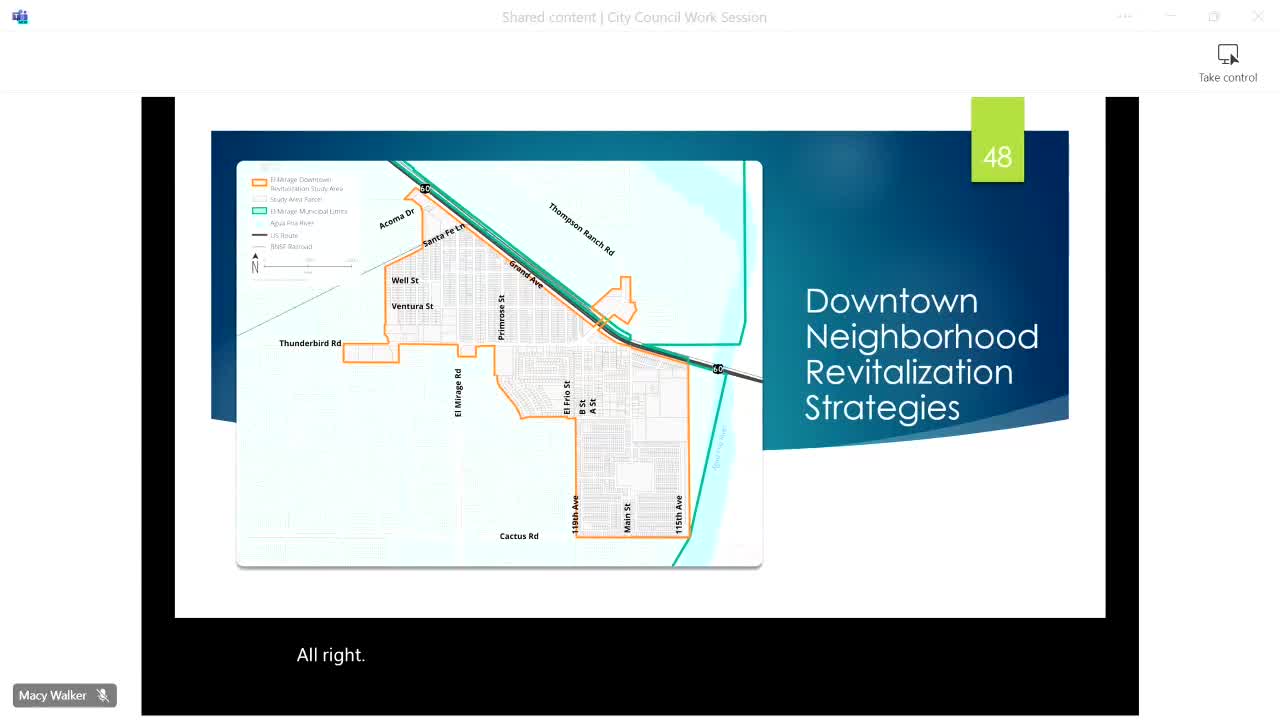
The Umbrash council on April 14 confirmed a $100,000 placeholder in the FY26 budget for downtown neighborhood revitalization work. Staff reviewed a previously completed study and the neighborhood strategies memorandum that recommends short-term actions and a longer-term implementation plan to strengthen housing conditions, improve commercial facades and create a distinct identity for the downtown area along Thunderbird Road.
Robert (development staff) presented the revitalization goals: promote local shopping and services, create a unique sense of place (name, entry signage, wayfinding), support business retention and recruitment through education and technical assistance, and pursue grants and property-improvement programs to raise neighborhood quality. Staff emphasized community engagement — neighborhood meetings, business outreach, "brown-bag" sessions and volunteer groups — before proceeding with major capital or branding steps. The council discussed establishing a small competitive grants program for property improvements and the need to involve churches, community organizations and housing partners to help low-income homeowners resolve deferred maintenance.
Staff proposed procuring a consultant with experience in business district revitalization and residential rehabilitation to guide identity development, grant strategies and community engagement. Council members asked the team to ensure the effort includes clear application procedures if the city provides grant funding, to avoid favoritism and to satisfy legal requirements for public-purpose expenditures.
Code-compliance and rental-property concerns drew substantial discussion. Council members asked staff to research legal options (for example, rental-permit programs used in other jurisdictions) and to continue proactive education and outreach: postcards, short videos and direct owner notifications for code violations. Staff noted code-enforcement practices already include courtesy notices to residents and formal notices to property owners recorded with Maricopa County; the revitalization effort could expand assistance programs for owners who lack the capacity to make repairs.
Next steps: staff will issue a request for qualifications for a consultant, schedule community information sessions, and form volunteer teams of residents, business owners and property owners to advise implementation. The $100,000 allocation will be available in the tentative budget and used to support consultant work, community outreach and small pilot projects, subject to council approval.