Get Full Government Meeting Transcripts, Videos, & Alerts Forever!
Get email alerts on the Tax Deed Ordinance topic
No spam. Unsubscribe anytime.
Executive committee adopts new tax-deed ordinance to implement Act 207; delegates disposition authority to committee
Summary
The Washington County Executive Committee unanimously approved a 2025 ordinance replacing Chapter 49 of the county code to implement 2023 Act 207 and the U.S. Supreme Court—s Tyler v. Hennepin County decision; the ordinance requires appraisals, creates a repurchase process and delegates property-disposition authority to the executive committee.
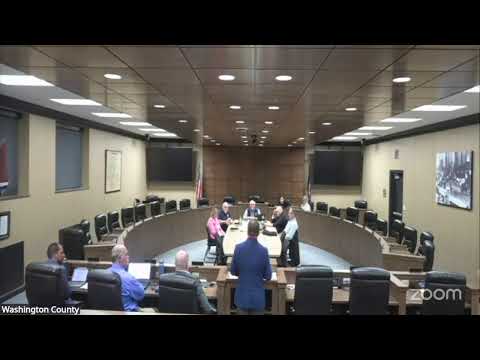
WASHINGTON COUNTY — The Washington County Executive Committee unanimously approved a 2025 tax-deed ordinance that replaces the county—s existing Chapter 49 procedures and implements provisions of 2023 Act 207, passed after the U.S. Supreme Court—s decision in Tyler v. Hennepin County.
The ordinance was introduced as "2025 ordinance, tax deed sales 49-10." Supervisor Chagrin moved the motion and Supervisor Trotheis seconded. The committee recorded the motion as passing unanimously.
County staff and counsel framed the ordinance as a response to the Supreme Court ruling and state legislation intended to ensure former property owners receive surplus proceeds when the county acquires property for unpaid taxes. Staff said the law and local ordinance are intended "to make sure that the county is not getting any more money than it rightly has come to it when it takes the property" and to provide a clear repurchase process for former owners.
Key provisions explained to the committee include:
- Notice and repurchase rights: Within 30 days of tax-acquisition, the treasurer must notify a former owner of a potential claim to surplus proceeds and the steps to repurchase the property.
- Appraisals and sale price: Within 120 days of acquisition, the executive committee must determine an appraised value for the property; staff said the county will not generally approve sales below that appraised value unless the executive committee later decides a lower sale is most advantageous to the county.
- Repurchase requirements and liens: The ordinance follows current state law requiring a former owner who seeks to repurchase to pay county expenses and taxes. Staff raised concerns about a statutory requirement that repurchasing owners must also demonstrate payment of other liens on the title (for example, contractor or judgment liens). County staff said that provision, as written in state statute, could force the county to try to verify and enforce private liens, imposing administrative burdens and potentially harming creditors and property owners. Staff said they raised the concern with Representative Rob Brooks and county-association counsel Andy Phillips and expect legislative clarification in future sessions.
- Delegation and process: The county board delegates authority to acquire, manage and sell tax-deed properties to the executive committee, which will set appraisals and make disposition decisions in most cases. If surplus proceeds cannot be distributed to a prior owner within a year, the funds become abandoned and turn into unclaimed funds per state law.
Committee members asked about appraisal timing, assessed versus appraised value, and the effect on contractors and other lienholders. A committee member who identified a family background in contracting said lienholders— claims often represent small-business owners— only remaining remedy to recover unpaid work. County staff acknowledged those concerns and said some statutory language may be changed at the state level.
The ordinance will be transmitted to the full county board for final publication in the county code.