
Sawyer County says ambulance collections improve; board discusses potential effects of new LCO clinic ambulance
Get AI-powered insights, summaries, and transcripts
Subscribe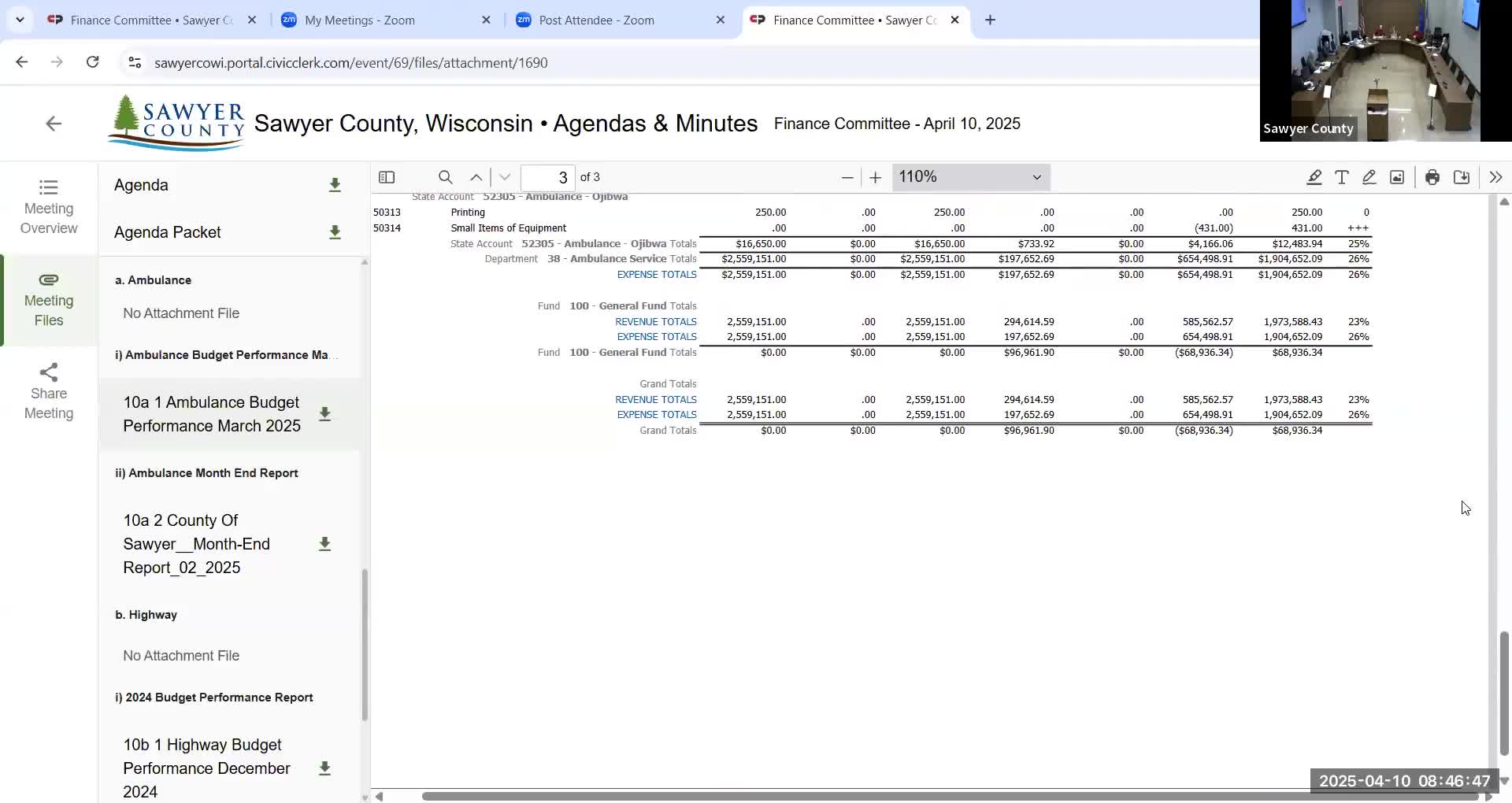
Summary
County staff reported higher current collections for ambulance services and lower long‑term aging; supervisors asked whether a proposed LCO‑based ambulance would help response times or reduce county revenue.
Sawyer County staff reported improved ambulance billing and collections and discussed how a proposed ambulance based at an LCO clinic could change response patterns and county revenue.
Finance director Mike reviewed the Emergency Medical Services Management Company (EMSMC) call and collections report. For the 12‑month period cited, gross ambulance charges exceeded $3 million, with negotiated reductions leaving net charges just over $2 million. Collections on net charges were running at about 33 percent, and the aging report showed roughly 50 percent of receivables current and about 23 percent older than 120 days — an improvement compared with prior months, staff said. The packet also showed that Medicare, Medicare Advantage and Medicaid accounted for about 60 percent of expected payments.
Supervisors asked about a proposed clinic at “LCO” and whether ambulance service there would help response times or harm county revenue. Staff cautioned that if a new service took some 911 responses, the county would still need to staff its ambulances while losing runs that generate revenue, which could increase net subsidy per call. At the same time, staff said a locally based ambulance could improve response times for communities like Round Lake if dispatch protocols direct the local unit to respond.
Discussion covered co‑response scenarios, dispatch coordination and the possibility of mutual responses similar to arrangements in the Bridgewood area and with neighboring services. Staff emphasized that the county remains responsible for countywide 911 service and that any change would require clearly defined service territories and dispatch instructions.
No formal action was taken; supervisors directed staff to continue monitoring collections and to coordinate with neighboring jurisdictions and potential local providers on response protocols.