Get Full Government Meeting Transcripts, Videos, & Alerts Forever!
Get email alerts on the County Budget topic
No spam. Unsubscribe anytime.
Washoe County manager presents $1.064 billion FY26 budget; commissioners press for more detail
Summary
County Manager Eric Brown presented a recommended FY2026 budget totaling about $1.064 billion and asked the county commission to direct staff to return with certified tentative and final budgets for adoption at a May 20 public hearing.
County Manager Eric Brown presented a recommended fiscal year 2026 budget on April 15, asking the Board of County Commissioners to acknowledge the status report and direct staff to return with certified tentative and final budgets for public hearing on May 20, 2025. The proposed budget covers the period July 1, 2025, through June 30, 2026, with estimated appropriations of approximately $1,064,000,000.
Brown said the board had reaffirmed three strategic priorities — “mental health, senior services, and infrastructure” — and that the recommended budget reflects those priorities while trying to avoid layoffs and furloughs. Staff presentations highlighted revenue and cost pressures, including an anticipated 9.4% increase in property tax revenue (which incorporates a reallocation of an expiring library expansion tax), uncertainty in consolidated tax (sales tax) data during the state’s modernization of reporting systems, and recurring pension (PERS) cost increases.
The recommended package includes several staff actions intended to limit personnel cost growth: a hiring freeze with a vacancy review process, no new permanent positions across funds, and a moratorium on reclassifications that would create permanent cost increases. Budget manager Lori Cook said the vacancy-review process is intended to yield about $2 million in savings through the end of the current fiscal year and roughly $11.3 million next fiscal year. “No new positions in any fund,” Cook said in the presentation.
Assistant County Manager Dave Solero outlined proposed transfers and fund-specific actions: a general fund allocation plus use of the library expansion fund balance to create a flat overall library budget of about $18,400,000 for FY26 (including a proposed $1,300,000 general-fund allocation), a $1,000,000 recommended increase in the general-fund transfer to Northern Nevada Public Health (to a total of roughly $10.5 million), and a recommended $5,000,000 supplemental transfer to the county’s roads special revenue fund to limit deterioration of the pavement condition index.
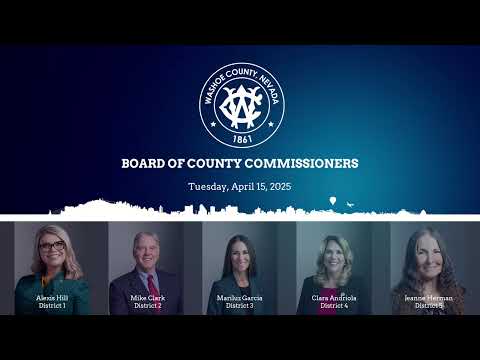
Commissioners asked for far more department-level detail before taking final action. Chair Alexis Hill and several commissioners said the board needs transparent lists of positions (by department and funding source) that could be affected by vacancy savings or other reductions, and asked staff to provide the support materials used in the briefings. Commissioner Clara Andreola urged providing departments with explicit targets so they can propose options, and Commissioner Marielus Garcia said he supported the recommended transfers to roads and public health but wanted more frequent and granular follow-up. Vice Chair Jean Herman urged the board to consider longer-term consequences of rapid growth and whether development is paying for its costs.
Finance staff said the tentative budget must be filed today to meet the state deadline but that the Board can still change figures between the tentative and final budgets. “We can fold [your] direction in,” Cook told commissioners; she said staff would post the state-required tentative documents and work with commissioners and department heads to produce more detail and, if necessary, schedule special meetings prior to the May public hearing.
The presentation and ensuing discussion did not contain a recorded final vote on adoption; staff said the immediate objective was direction to continue the process, incorporate commissioner feedback, and return with a certified tentative budget and then a final recommended budget for adoption at the public hearing scheduled May 20.
Next steps listed by staff include posting the tentative budget, further departmental briefings, monthly updates on revenues and personnel tracking, and preparing the five-year capital improvement plan for the board’s later consideration.
The budget conversation touched multiple policy tradeoffs — stabilizing services, using one-time fund balances to smooth operations, and taking early personnel-control measures — while commissioners sought more transparency and department-level analysis before approving final appropriations.