Get Full Government Meeting Transcripts, Videos, & Alerts Forever!
Get email alerts on the Rikers Closure Supportive Housing topic
No spam. Unsubscribe anytime.
Council members and advocates urge expedited closure of Rikers, unveil package to expand supportive housing and reentry services
Summary
Council Member Carlina Rivera and colleagues, joined by advocates and formerly incarcerated New Yorkers, called for accelerating Rikers Islandclosure and outlined a package of bills and budget proposals including Intro 1100 to expand supportive housing eligibility and Intro 1240 to create holistic needs assessments for people arrested.
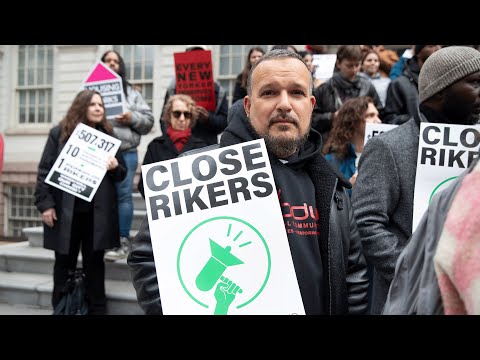
Council Member Carlina Rivera, flanked by advocates and people with lived experience, urged faster action to close Rikers Island and outlined a set of bills and budget proposals intended to expand supportive housing, speed case processing and provide services for people returning from jail.
Rivera said the council is advancing legislation and budget proposals that "expand mental health and supportive housing services, strengthen alternatives to incarceration, speed up court cases, and actually require real leadership with an office of coordinator for Rikers closure who would report directly to the mayor." She identified Intro 1100, which would amend supportive housing eligibility to include recent justice involvement, and Intro 1240, which would establish a holistic needs-assessment program with the individual's consent.
The proposals were presented at a City Council news event that included comments from Helen Taylor, a resident who credited supportive housing and services at Fortune Society with helping her transition off the street; Stanley Richards, president and CEO of the Fortune Society and a member of the Independent Rikers Commission; Council Member Rita Joseph, who introduced Intro 1240; Prince Forsett of the Center for Employment Opportunities; and Darren Mack of Freedom Agenda. Richards described the Independent Rikers Commission's "blueprint to close Rikers" and repeated commission findings cited at the event: that Rikers is expensive, deteriorated, and houses large numbers of people with serious mental illness.
Speakers cited several data points discussed during the event: the cityDepartment of Corrections budget and operating costs are high (speakers cited roughly $400,000 per incarcerated person per year), 62 deaths on Rikers since 2020, about 87 percent of the people held there are pretrial, and about 57 percent have a mental health diagnosis. Rivera and Richards said those figures show the city would benefit fiscally and humanitarianly from investing in alternatives such as supportive housing, drug treatment and mental health care.
Intro 1100: Rivera described Intro 1100 as an amendment to supportive-housing eligibility to permit people with justice involvement in the prior 12 months to qualify for supportive units. Rivera said the change would remove eligibility barriers that now prevent thousands of New Yorkers from accessing units with wraparound services and estimated it could help "over 2,000 people." No vote or formal council action on the bill was recorded at the news event.
Intro 1240: Council Member Rita Joseph described Intro 1240 as a program that, with consent, would assess people at arrest for mental health challenges, substance-use disorder, intellectual disability, trauma and other psychosocial factors and share that information with defense counsel to inform charging, bail, plea and diversion decisions. Joseph said the goal is to direct people toward treatment and support rather than defaulting to incarceration.
Other measures mentioned at the event included: proposals to provide technology so people in custody with pending criminal proceedings can securely receive and review evidence; the establishment of a coordinator position for Rikers closure; a proposed "early release 6A" program; funding to provide money to people upon release; and references to the jail population review teams that the council has supported to identify who should remain in custody. Speakers emphasized implementation will require concurrent strategies to reduce the jail population and build alternatives, and they urged the administration to move faster than the most recent public timetable cited for closure.
Advocates and formerly incarcerated speakers described the lived experience rationale for the bills. Helen Taylor said having supportive housing and the Fortune Societyservices allowed her to leave living in parks and rejoin cultural life. Prince Forsett and Darren Mack framed reentry support and community investments as both humane and likely to reduce recidivism.
Speakers repeatedly framed "jail is not a home" and called on the city to invest in upstream services, while urging the administration to meet or accelerate earlier closure targets discussed by the council and advocates. No formal votes or council committee actions were recorded at the event; the session functioned as a press announcement and policy briefing.
Ending
Council speakers asked the press and attendees to speak with advocates and people with lived experience about the proposals and said the council will continue to draft and "memorialize and codify" programs intended to meet closure timelines. Rivera and colleagues said they will continue oversight and push the administration to implement housing, diversion, mental-health services and other measures the council and its partners say are necessary to close Rikers Island and reduce incarceration in New York City.