Get Full Government Meeting Transcripts, Videos, & Alerts Forever!
Get email alerts on the Municipal Budget topic
No spam. Unsubscribe anytime.
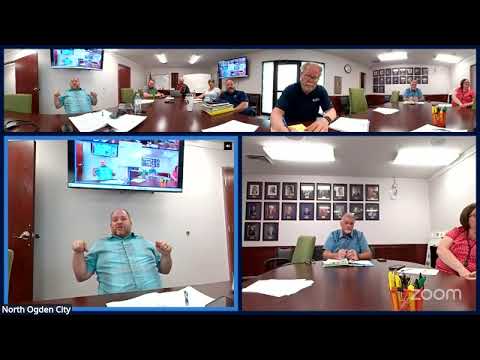
North Ogden budget committee reviews police, code enforcement, planning tools and pool finances
Summary
City staff and council members reviewed departmental operating budgets, discussed body‑camera and license‑plate camera contracts, considered adding a community service officer, approved a one‑year trial of business‑license software and debated fees to reduce losses at the aquatic center.
North Ogden City staff on Tuesday walked the Budget Committee through proposed operating budgets and a series of departmental changes that would shift costs, add one‑time software subscriptions and prompt policy decisions on user fees.
The session focused on the police budget and surveillance contracts, potential expansion of community service officer (CSO) staffing and code enforcement, a planned purchase of PlacerAI economic‑data software for planning, a push to modernize business licensing, and options to reduce the long‑running operating shortfall at the North Ogden Aquatic Center.
John (staff member) told the committee police operating costs were largely stable but that the department had reclassified some subscription expenses into travel and training to reflect increased in‑house policy work and training. “The chief has rotated that money in,” John said, adding the department dropped an outside policy host service (Lexipol) and plans to maintain its policy manual internally.
On cameras and digital evidence, John summarized the council’s ongoing review of the regional license‑plate camera network often called Flock (or similar vendors). He said the system has helped solve crimes, and noted resident concerns about data security and third‑party handling of footage. “If chief was here, he would tell you that we've had quite a few cases solved with the use of it,” John said. Committee members asked for a status report for council that would quantify recovered cases and outline third‑party auditing plans.
Police equipment items discussed included a second department drone (budget line roughly $5,800) and computer replacements. The committee heard the body‑camera line shows an increase in gross spending but that part of the increase — roughly $6,000 — is expected to be covered by a grant. The committee noted the multi‑year hosting contract includes a municipal escape clause if future council funding is cut.
Code enforcement and community service officers were a second major topic. Staff described that CSOs handle animal control, evidence intake, background checks and many code‑complaint investigations; adding one full‑time CSO would cost about $80,000 in salary and benefits plus a vehicle estimated at $25,000–$40,000. John said council would decide whether to fund a new CSO after a separate council discussion; staff framed the CSO position as a lower‑cost way to address recurring neighborhood issues without adding a sworn officer.
Planning staff asked the committee to consider a subscription to PlacerAI, a commercial data product that uses anonymized movement data to produce market and foot‑traffic analytics. The software was presented as a one‑year (or optional two‑year) service at about $24,000 annually; staff suggested the RDA (redevelopment agency) could fund the purchase. Planning noted a recent, one‑time market study cost roughly $20,000 and said PlacerAI’s continuous data could reduce future consultant spending and produce use cases for planning, parks scheduling and targeted economic outreach.
Bryce (staff member) outlined administrative changes to digitize business licensing and other transactional services. The recommended business‑license software carries an initial cost in the current proposal (presented as the lower‑cost option among vendors) and a smaller ongoing annual fee (staff cited roughly $8,000 implementation and about $2,500 recurring as representative figures). Bryce said the new system would allow emailed licenses, renewal reminders and online payments, and could reduce postage, printing and counter transactions.
Committee members discussed credit‑card convenience fees and the city’s current roughly 1.5% merchant cost for online payments. Several committee members urged staff to explore incentives for customers to use ACH/ACH‑type payments (lower cost to the city) and to increase online options for annual passes and permits that are often paid by engineering firms via card.
The Aquatic Center’s operating shortfall drew sustained comment. Staff reported utilities and maintenance remain the largest line items and that pump and chemical upgrades could reduce energy use. Committee members discussed raising resident gate fees, charging higher nonresident rates, and pursuing new revenue opportunities at the pool — for example, concession arrangements, advertising banners, reserved‑table fees and food‑truck permits. One council member urged staff to identify the breakeven gate price and present options; John said the finance director had previously calculated an operational breakeven above current prices.
Insurance and general‑government costs were also reviewed. Staff told the committee they expect an insurance increase but that several prior large claims are now rolling off the city’s five‑year claims history; a placeholder increase of about $20,000 was in the draft budget pending final broker bids.
Where staff sought committee guidance, members asked for the following at the council level: an audit/status report on the regional camera system and its case outcomes; outreach to raise private donations for an additional police drone; council guidance on whether to add a CSO and how to prioritize code enforcement; authority to proceed with business‑license software implementation; and options and public‑communication strategies for adjusting aquatic center fees.
The committee scheduled follow‑up discussions on overall revenue projections, the transportation utility fee and city salary philosophy at its next meeting.
The transcript shows committee members raised multiple operational and policy follow‑ups rather than adopting final budget decisions at the session.