Get Full Government Meeting Transcripts, Videos, & Alerts Forever!
Get email alerts on the Drainage Infrastructure topic
No spam. Unsubscribe anytime.
Drainage topped candidates’ priorities; views split on assessment fee
Summary
Candidates agreed drainage and flood management are pressing infrastructure needs in Stafford, proposing studies, EDC funding and external grants while differing on an assessment fee.
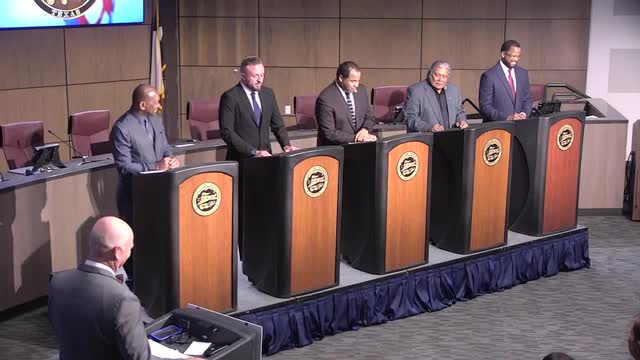
Drainage and flood mitigation were front-and-center at the Fort Bend Chamber forum, with candidates outlining a mix of studies, grant-seeking and infrastructure projects — and expressing different stances on a possible drainage assessment fee.
Candidate William Bosley said the Stafford Economic Development Corporation (EDC) is directing $6,000,000 toward drainage projects in the commercial corridor and described a newly created neighborhood drainage committee that will focus on six residential neighborhoods. “We included 2 drainage studies…for Linda, Craven Road and Crestmont,” Bosley said.
Christopher Caldwell urged faster pursuit of state and federal grants and said he would “accelerate drainage improvement projects in flood prone neighborhoods” while protecting the city budget. Several candidates recommended routine maintenance of ditches, culverts and detention ponds as part of a comprehensive stormwater plan.
Horace Ray Thomas described an approach of learning from neighboring jurisdictions and called an assessment fee “a tool” to be kept in the toolbox: “I will throw it into the toolkit and consider it. If it works, it works. If it doesn't work, it doesn't work,” he said.
Clay Foster and other candidates framed drainage as a capital-planning issue and urged that drainage be included in a citywide long-term capital improvement plan tied to financing options — including EDC funding, assessment districts, or public-utility improvement districts — and targeted neighborhood studies.
No formal vote occurred at the forum. Candidates generally agreed that a mix of targeted studies, maintenance, grant-seeking and coordination with regional entities such as the Houston-Galveston Council of Governments will be necessary to address recurring flooding problems.