Get Full Government Meeting Transcripts, Videos, & Alerts Forever!
Get email alerts on the Municipal Finance topic
No spam. Unsubscribe anytime.
Stafford candidates split on property tax and push for more budget transparency
Summary
Candidates at a Fort Bend Chamber forum offered competing approaches to Stafford’s finances, with most saying the public should have a direct say on taxes and many urging clearer, repeatable budget reporting.
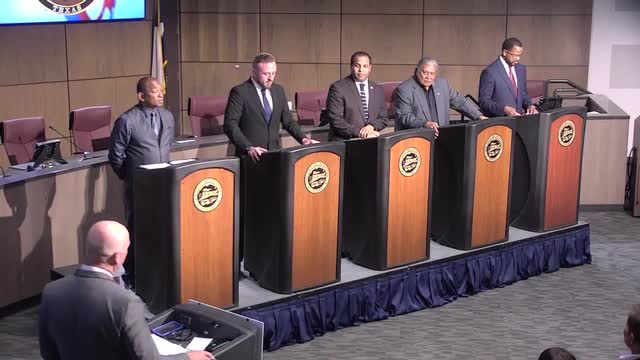
Candidates for Stafford City Council at a Fort Bend Chamber forum on April 22 debated whether the city should preserve its long-standing no-property-tax policy, how to increase revenues and the steps needed to improve transparency in the city’s budgeting.
At the forum, candidate William Bosley, introduced as a current city councilman and Stafford Economic Development Corporation director, urged calm and business attraction as the route to revenue growth: “The city is fine…not gonna shut down,” he said, adding that Stafford’s ISO rating remains high and that new business and hotel development could boost sales taxes.
Police officer and candidate Clay Foster said elected officials should “bring the public into the room” to show where money is spent and where shortfalls exist. Candidate Christopher Caldwell, identified himself as a current member of the Stafford City Council and department chair at Houston Community College, said the council cannot unilaterally impose a property tax: “No 7 individuals that sit on city council can implement a property tax. We do not have the power or the authority to do so,” he said, adding that any tax change should be driven by voters and accompanied by full access to the data behind the decision.
Several candidates described a need for a recurring, easy-to-read budget dashboard. Ray Thomas said he had proposed a public dashboard that would show budget status and quarterly performance reporting, and criticized frequent post-adoption budget amendments: “Every year…city council has put together a budget that within 1 week of enacting it, started to amend it,” he said.
Candidates proposed a range of revenue strategies. Foster suggested a crime control and prevention district funded by sales tax diverted from the EDC portion to support public safety; Bosley highlighted EDC-led projects and a hotel-at-the-Stafford-Center strategy to increase “heads and beds.” Others recommended internal efficiency reviews, grant-seeking and an audit of purchasing practices.
The discussion reflected a common caution about raising property taxes. Several candidates said a property tax should be a last resort and emphasized pursuing grants, partnerships and efficiency first. At the same time, multiple speakers said residents must be given clear, repeatable information so they can judge any proposed change.
Looking ahead, candidates urged regular quarterly budget reporting, clearer revenue forecasts tied to specific development projects, and more public outreach about the city’s fiscal condition.