Get Full Government Meeting Transcripts, Videos, & Alerts Forever!
Get email alerts on the Campaign Finance topic
No spam. Unsubscribe anytime.
Tennessee committee approves fee and funding changes for Bureau of Ethics technology upgrade
Summary
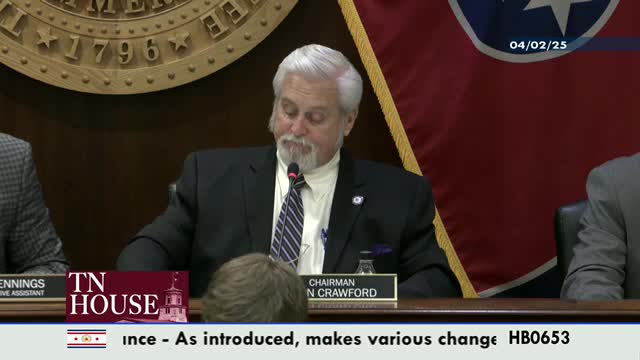
The State and Local Government Committee approved House Bill 6 53, which imposes a $150 annual registration fee on political campaign committees and directs funds from a lobbyist privilege tax to the Bureau of Ethics and Campaign Finance to support a technology replacement and related costs.
The State and Local Government Committee approved House Bill 6 53 on a voice vote after testimony from elections regulators and committee members.
House Bill 6 53, sponsored by Representative Hicks, would require political campaign committees registered with the registry of election finance to pay a $150 annual registration fee and direct 80% of the annual professional privilege tax paid by registered lobbyists to the Bureau of Ethics and Campaign Finance to help replace the bureau’s aging information technology platform.
The bill’s sponsor, Representative Hicks, said the fee is “similar to the fees paid by lobbyists” and that the change would help “offset the cost incurred by the registry in regulating these political campaign committees.” The committee heard from Bill Young, director of the Bureau of Ethics and Campaign Finance, who described the agency’s 30-year-old system and said the bureau has researched replacement options and is prepared to begin if funding is approved. “We are hopeful of getting that money,” Young told the committee.
Representative Warner asked whether the bill would address the issue of large out‑of‑state political action committee spending; Young said the bill does not change the underlying rules on out‑of‑state PACs but emphasized the bureau’s interest in transparency and better reporting.
Members also discussed how additional revenue could help the bureau complete required audits more quickly; Young said additional resources would make audits easier to accomplish but that the bill does not change the statutory number of audits required.
The committee voted to send the bill to Finance, Ways and Means with a recorded tally of 22 ayes and 1 nay. The bill as passed by committee removes neither existing reporting requirements nor statutory audit obligations; it would add the registration fee and the proposed allocation of lobbyist privilege tax revenue.
The measure includes statutory amendments describing use of funds for IT upgrades and assigns oversight and reporting responsibilities to the bureau.
Looking ahead, the bill will be considered in Finance, Ways and Means where budgetary impacts will be reviewed further.