Get Full Government Meeting Transcripts, Videos, & Alerts Forever!
Get email alerts on the Hemp Thc Regulation topic
No spam. Unsubscribe anytime.
House passes broad hemp/THC regulation package after heated debate, adopts ban on heated cannabis flower (THCA)
Summary
House Bill 13-76, a large regulatory package to control hemp-derived THC products, passed after a contentious floor debate and several amendments that moved enforcement to the ABC, set wholesale taxes, and banned THCA products in excess of 0.3% total THC when converted. Final floor vote recorded as 69–21 with 3 present.
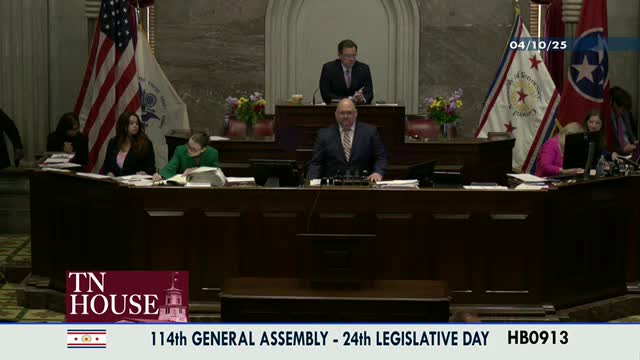
The Tennessee House on Friday approved House Bill 13-76, a comprehensive bill to regulate hemp-derived THC products across the state, after an extended and often emotional floor debate over product types, taxation, enforcement and potential public-health effects.
Leader Lou Lambert carried the measure in the House. Floor managers and committee leaders said the bill converts a largely unregulated market — described repeatedly on the floor as a “wild west” — into a regulated, taxed system under the Alcoholic Beverage Commission (ABC) and Department of Revenue, with brand registration, testing and new wholesaler requirements.
Representative Williams, who explained the amendment package on the floor, said the package “would allow for the regulation and taxation of those products that are currently being sold in the state without while preserving both retailers and wholesalers across the state.” The bill moves oversight from the Department of Agriculture to ABC and the Department of Revenue and establishes wholesale excise rates and registration requirements for products and brands.
A central point of contention was THCA (tetrahydrocannabinolic acid), a raw plant form that, when heated, converts to THC and produces effects similar to marijuana. Representative Cochran offered an amendment to ban sale of THCA in excess of 0.3% total THC (a standard referenced to federal thresholds). Supporters argued the ban addresses a product that can be indistinguishable from marijuana when smoked and that regulating or banning it protects public health and aids law enforcement. Opponents said the amendment removes the natural flower form and leaves only synthesized or chemically altered products on the market, hurting farmers and small businesses that invested under earlier statutes.
Representative Cochran framed the amendment as aligning with the Senate; Representative Williams and others warned about unintended consequences and urged regulation through the new enforcement regime. Representative Clemens, among others, criticized the amendment’s practical impact on farmers and wholesalers, saying it “took the natural part of this bill” away and preferred to rely on the new regulatory system to control harmful products.
Other provisions adopted on the floor included:
- A wholesale taxation system for gummies, vapes and beverages and a $50/ounce wholesale rate on flower products, with some beverage taxation set at 10 cents per unit and other per-milligram or per-unit excise structures discussed on the floor. - Brand registration, testing and a requirement that wholesalers demonstrate fiscal capacity (a bond or equivalent) before licensure; the transcript cites a $750,000 fiscal-capacity figure for wholesalers. - Transfer of primary regulatory authority from Agriculture to the Alcoholic Beverage Commission and Department of Revenue for enforcement and tax collection.
The House adopted a suite of floor amendments (including amendment 12, an omnibus managers’ amendment to refine taxes, include pouches/absorptive materials, and clarify enforcement; and amendment 11, which added a THCA ban language that matched the Senate posture). Amendment 12 was adopted without recorded opposition on the floor; amendment 11 passed after recorded votes.
After debate and votes on amendments, the House voted to pass House Bill 13-76 as amended. The clerk recorded the final roll as 69 ayes, 21 nays and 3 present (not voting); the speaker declared the measure passed by constitutional majority.
Supporters said the bill brings regulation, safety standards and taxation to a previously unregulated market and will allow enforcement against products that pose public-health risks. Opponents said that some adopted language — notably the THCA ban — may unduly harm farmers and small businesses that invested in the market under prior law and argued further review or a more gradual approach would be preferable.