Get Full Government Meeting Transcripts, Videos, & Alerts Forever!
Get email alerts on the Subcommittee Procedural Actions topic
No spam. Unsubscribe anytime.
Finance, Ways and Means subcommittee advances dozens of bills to full finance, places many measures behind the budget
Summary
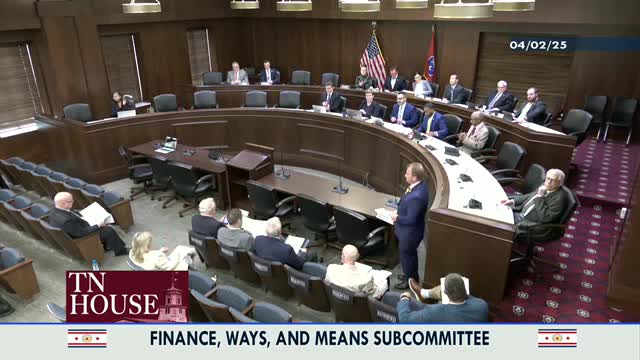
The Finance, Ways and Means Subcommittee met April 2 and considered a 60-item calendar. Several bills were referred to full finance while many proposals were deferred behind the budget for later consideration.
Nashville — The Tennessee House Finance, Ways and Means Subcommittee convened April 2 and considered a 60-item calendar, referring multiple bills to full finance and placing numerous proposals behind the budget for later consideration.
The meeting opened with roll call and proceeded through a long agenda of bills covering education, transportation, public safety, health care reimbursements and local government matters. Speaker Pro Tem Marsh described House Bill 759 as a change in how merit pay could be used: "This bill allows any future state funding to be used in a merit pay structure at the discretion of the local school board. It removes the parameters that currently exist around that. This bill simply moves those parameters to the discretion of the school board at large rather than a parameter set by the state." HB 759 passed the subcommittee and was referred to full finance, 8-0.
Why it matters: The subcommittee’s actions advance several bills that will be considered in more detail by full finance or on other calendars while deferring many measures that carry fiscal costs until budget negotiations. Measures that move forward now will still face additional committee consideration and floor votes before becoming law.
Most consequential procedural outcomes
- Several bills were referred to full finance after voice or recorded votes, including HB 759 (Marsh), HB 810 (Grills), HB 133 (Hale), HB 212 and HB 213 (Howe), HB 335 (Halsey), HB 1250 (Mayberry), HB 45 (McCalmon), HB 171 (Reed), HB 496 (Reedy), HB 1321 (Stinnett), HB 1250 (Mayberry), HB 35 (Hicks), HB 728 (Hicks), HB 829 (Hicks), HB 13-23 (Hicks) and HB 1306 (Williams). Several of those votes were unanimous or near-unanimous on the subcommittee (vote counts are listed in the Votes at a glance below).
- Many bills with identified fiscal impacts were "placed behind the budget," meaning the subcommittee will consider funding during the budget process rather than advancing them immediately. Examples include bills to expand certain scholarship or grant programs (HB 1324, HB 148, HB 504, HB 148 continuation), reimbursement increases for ambulance services (HB 195, HB 201), and other programs with identified costs.
- Several items were referred to other calendars: House Joint Resolution 2 to the constitutional calendar; a set of bills were sent "to the hill" (full House consideration) or to specialty calendars (for example, driver's license calendar or task/study (TASER) calendars) where applicable.
Votes at a glance (committee action and outcome)
Note: "Moved to full finance" indicates the subcommittee referred the bill to the full House Finance Committee. "Placed behind the budget" indicates the subcommittee acknowledged a fiscal impact and deferred consideration of funding to the budget process. Tallies shown where recorded in the subcommittee.
- Item 1 — House Bill 759 (Speaker Pro Tem Marsh): referred to full finance; tally: 8 ayes, 0 no. - Item 2 — House Bill 69 (Leader Lambert): rolled one week (postponed). - Item 3 — House Bill 1324 (Leader Lambert): placed behind the budget (fiscal note ~ $12,000,000 noted in committee discussion). - Item 4 — House Bill 1134 (Chairman Boyd): rolled to health (postponed). - Item 5 — House Bill 1144 (Chairman Boyd): amendment adopted for placement on bill; placed behind the budget. - Item 6 — House Bill 52 (Chairman Bolesow): placed behind the budget (increase in disabled veterans property exemption from $175,000 to $250,000 discussed). - Item 7 — House Joint Resolution 2 (Chairman Darby): sent to constitutional calendar. - Item 8 — House Bill 573 (Chairman Doggett): sent to the full House ("to the hill"). - Item 9 — House Bill 578 (Chairman Doggett): sent to the hill. - Item 10 — House Bill 577 (Chairman Doggett): sent to the hill. - Item 11 — House Bill 802 (Chairman Grills): placed behind the budget. - Item 12 — House Bill 810 (Chairman Grills): referred to full finance; tally: 8 ayes, 0 no. - Item 13 — House Bill 133 (Chairman Hale / Rep. Raper sponsor in discussion): referred to full finance; tally: 9 ayes, 0 no. - Item 14 — House Bill 7 (Chairman Hale): placed behind the budget (amended to create a grant fund administered by THEC; no state appropriation requested in amendment but fiscal impact noted). - Item 15 — House Bill 962 (Chairman Hawk): placed behind the budget (creates local hemp-derived cannabinoid product boards; fiscal impact noted). - Item 16 — House Bill 212 (Chairman Howe): referred to full finance; tally: 10 ayes, 0 no (amendment extended a signature deadline; omnibus specialty plates bill). - Item 17 — House Bill 213 (Chairman Howe): referred to full finance; tally: 10 ayes, 0 no (road and bridge naming omnibus). - Item 18 — House Bill 439 (Chairman Halsey): rolled one week (postponed). - Item 19 — House Bill 335 (Chairman Halsey): referred to full finance; tally: 9 ayes, 0 no (increased Blountville Utility District board pay; no state cost). - Item 20 — House Bill 440/441 (Halsey docket reference): rolled one week (postponed). - Item 21 — House Bill 1199 (Chairman Kumar): initially rolled; later considered and referred to full finance after amendment; tally: 10 ayes, 0 no (student advisory nonvoting member policy requirement described). - Item 22 — House Bill 1200 (Chairman Kumar): referred to full finance; tally: 10 ayes, 0 no (child-safety registry/response measure; sponsor described tragic case prompting bill; funding agreed by the governor as noted in committee discussion). - Item 23 — House Bill 1229 (Chairman Lafferty): reconsidered and referred to full finance after funding secured; tally: 9 ayes, 0 no (removed $350 bond requirement for seized property claims). - Item 24 — House Bill 761 (Chairlady Littleton): placed behind the budget (clean-up to the Protect Tennessee Minors Act; sponsor said it "strengthens the Protect Tennessee Minors Act to best withstand legal challenges"). - Item 25 — House Bill 195 (Chairman Martin): placed behind the budget (increases reimbursements for rural ambulance services under TennCare; sponsor asked to increase reimbursement from 67.5% to 78.5%). - Item 26 — House Bill 148 (Chairman White): placed behind the budget (makes Tennessee Promise Completion Grant permanent; fiscal impact noted). - Item 27 — House Bill 410 (Chairman White): placed behind the budget (working group for English language learners). - Item 28 — House Bill 504 (Chairman White): placed behind the budget (expands Tennessee Future Teachers Scholarship Act; fiscal impact noted). - Item 29 — House Bill 756: taken off notice. - Item 30 — House Bill 16 (Chairman Clemens): placed behind the budget (creates a Student Pedestrian Protection Grant Fund; committee noted concerns about committing future dollars). - Item 31 — House Bill 21 (Representative Davis): rolled one week (postponed). - Item 32 — House Bill 1218 (Representative Johnson): rolled to the hill (postponed/referral as noted). - Item 33 — House Bill 717 (Representative Jones): amendment to extend Alzheimer's/dementia respite pilot program; placed behind the budget. - Item 34 — House Bill 296 (Chairman Love): moved to the task/study ("tasser") calendar (study of speech therapy services in schools). - Item 35 — House Bill 1084 (Representative Martin): placed behind the budget (limited grant program for anti-choking devices). - Item 36 — House Bill 1250 (Representative Mayberry): later considered and referred to full finance; tally: 11 ayes, 0 no (authorizes volunteer or paid chaplains in schools by local boards). - Item 37 — House Bill 45 (Representative McCalmon): referred to full finance; tally: 8 ayes, 0 no (increases penalty on injurious child abuse conviction for ages 9–17 from class A misdemeanor to class E felony). - Item 38 — House Bill 972: placed behind the budget (various local mandates noted). - Item 39 — House Bill 171 (Representative Reed): referred to full finance; tally: 11 ayes, 0 no (extends ground ambulance service annual assessment to June 30, 2026; sponsor noted funding was secured). - Item 40 — House Bill 496 (Representative Reedy): reconsidered with funding secured and referred to full finance; tally: 11 ayes, 0 no (increases ABLE Act disability onset age from 26 to 46 effective 01/01/2026). - Item 41 — House Bill 67 (Representative Sparks): amendment adopted; moved to the task/study (TASER) calendar (study for fast-growing counties; deadline adjusted in amendment). - Item 42 — House Bill 1321 (Representative Stinnett / Leader Cochran present): referred to full finance; tally: 11 ayes, 0 no (marketing division clarification noted). - Item 43 — House Bill 816 (Representative Travis): amended; sent to the driver's license calendar (limits points assessed for driving on suspended/canceled privileges). - Item 44 — House Bill 463 (Representative Travis): placed behind the budget (pension/hybrid-to-legacy plan changes; fiscal impact noted). - Item 45 — House Bill 462 (Representative Travis): placed behind the budget (similar retirement plan change; fiscal impact noted). - Item 46 — House Bill 397 (Representative Vidal / Representative Idal presented): placed behind the budget (Findlay Stadium sales tax revenue diversion request for improvements; sponsor asked for consideration). - Item 47 — House Bill 736 (Representative Vidal): moved to task/study (TASER) calendar (study of alternative transportation funding sources and revenue options). - Item 48 — House Bill 555 (Representative Capley): placed behind the budget (increases burglary-of-conveyance offense class from E to D; fiscal impact noted). - Item 49 — House Bill 1314 (Leader Cochran): referred to full finance; tally: 11 ayes, 0 no (creates an offense for threat of mass violence). - Item 50 — House Bill 547 (Leader Cochran): referred to full finance; tally: 11 ayes, 0 no (creates a public safety fund for district attorneys, analogous to public defender fees). - Item 51 — House Bill 545 (Leader Cochran): placed behind the budget (requires professional development for teachers on artificial intelligence; fiscal impact noted). - Item 52 — House Bill 150 (Representative Gant): placed behind the budget (requires TennCare reimbursement for air ambulance services at a minimum percentage of Medicare; fiscal impact noted). - Item 53 — House Bill 201 (Chairman Hicks): placed behind the budget (increases ground ambulance non-emergency reimbursement from 67.5% toward 100%; fiscal impact noted). - Item 54 — House Bill 35 (Chairman Hicks): funding secured and referred to full finance; tally: 11 ayes, 0 no (increases annual funding for development districts; statute cleanup noted). - Item 55 — House Bill 479 (Chairman Hicks): placed behind the budget (Tennessee National Guard/tricare reimbursement program; fiscal impact noted). - Item 56 — House Bill 728 (Chairman Hicks): referred to full finance; tally: 9 ayes, 0 no (nursing home assessment/medical reimbursement assessment). - Item 57 — House Bill 829 (Chairman Hicks): referred to full finance; tally: 8 ayes, 0 no (hospital assessment; annual administrative vote taken). - Item 58 — House Bill 1323 (Chairman Hicks / administration bill 13-23): referred to full finance; tally: 11 ayes, 0 no (education licensing and limited occupational teaching license provisions). - Item 59 — House Bill 1177 (Chairman Woods): untimely amendment considered; placed behind the budget after discussion. - Item 60 — House Bill 1306 (Chairman Williams): amendment adopted and referred to full finance; tally: 10 ayes, 0 no (expands tax increment financing eligibility to include housing and low-income housing credits).
Discussion and context
Committee members repeatedly flagged fiscal impacts and placed bills with new or increased spending "behind the budget" for the appropriations process. Chairs and sponsors described bills in short presentations; many measures that carried only statutory clarifications or no state cost were advanced to full finance with unanimous or near-unanimous subcommittee support. Representative Raper described a bill expanding a residential living pilot for adults with intellectual and developmental disabilities as led locally by Real Life Village and a church campus in District 24, while Chairman Lafferty described HB 1229 as "remov[ing] the requirement for a person asserting a claim on their seized property to post a bond of $350." Representative Love described HB 296 as a study of speech therapy services in K–12 schools and the bill moved to the study calendar.
What the subcommittee did not do
The subcommittee did not appropriate funding on any of the measures marked "behind the budget." Where members raised concerns about committing future dollars by establishing new funds, chairs acknowledged those limits and deferred final funding decisions to the budget process.
Speakers (selected, from committee record)
- Speaker Pro Tem Marsh — Speaker Pro Tem (member/sponsor), government - Representative Chisholm — Representative, government - Chairman Grills — Committee member/Chair or sponsor, government - Chairman Boyd — Committee member/Chair or sponsor, government - Chairman Bolesow — Committee member/Chair or sponsor, government - Chairman Hale — Committee member/Chair or sponsor, government - Representative Raper — Representative, sponsor of HB 133 (Real Life Village item), government - Chairman Kumar — Committee member/Chair or sponsor, government - Chairlady Littleton — Committee member/Chair or sponsor, government - Chairman White — Committee member/Chair or sponsor, government - Chairman Clemens — Committee member/Chair or sponsor, government - Representative Love — Representative, government - Representative Martin — Representative, sponsor of ambulance reimbursement bill, government - Chairman Hicks — Committee member/Chair or sponsor, government - Representative Vidal (Bridal/Vidal) — Representative, government - Leader Cochran — House leadership, government - Representative Mayberry — Representative, government - Representative Reed — Representative, government - Representative Reedy — Representative, government - Representative Sparks — Representative, government - Representative Williams — Representative (sponsor of HB 1306), government
Authorities referenced in committee discussion
- Protect Tennessee Minors Act (named in discussion by Chairlady Littleton) - ABLE Act (referred to as "ABLE act") - Tennessee Higher Education Commission (THEC) administration of grant programs (referenced in HB 7 discussion) - Tennessee Promise (program name referenced in HB 148 and related discussion) - Tennessee Future Teachers Scholarship Act (referenced in HB 504 discussion) - TennCare (referenced for ambulance and air ambulance reimbursement bills) - Julian's law (referenced by sponsor as prior related legislation)
Clarifying details captured from committee discussion
- Committee calendar length: 60 items. - HB 1324 fiscal note referenced in committee discussion: approximately $12,000,000. - HB 52 would raise the property-tax exemption for permanently and totally disabled veterans from $175,000 (last increased 02/2006) to $250,000 (sponsor cited local property value increases). - HB 1229 deletes a required $350 bond for people seeking return of seized property. - Several bills were explicitly placed behind the budget because committee members noted fiscal impacts; no appropriations were approved in this hearing.
Where to find the record
The subcommittee’s roll call, motions, amendment numbers and recorded tallies are reflected in the official committee minutes and transcript for April 2, 2025. The committee will reconsider funding-level decisions for bills placed behind the budget during the budget process and may hear some items again on specialized calendars (driver’s license, task/study, constitutional calendar, or the full House floor).