Get Full Government Meeting Transcripts, Videos, & Alerts Forever!
Get email alerts on the Consumer Finance topic
No spam. Unsubscribe anytime.
House committee restores bill to floor to allow premium-finance companies to pass card processing fees to borrowers
Summary
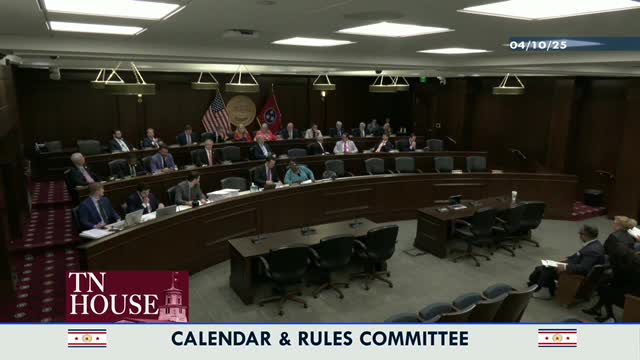
A Calendar and Rules committee on Tuesday voted 17–3 to return Senate Bill 0766 / House Bill 0772 to the House floor after sponsor Representative Powers said the bill would explicitly allow premium‑finance companies to accept electronic payments, including credit cards, and to pass actual third‑party processing costs to the borrower.
A Calendar and Rules committee on Tuesday voted 17–3 to return Senate Bill 0766 / House Bill 0772 to the House floor after sponsor Representative Powers said the bill would explicitly allow premium‑finance companies to accept electronic payments, including credit cards, and to pass actual third‑party processing costs to the borrower.
The measure also permits a premium‑finance company to collect a one‑time bad‑check fee, Representative Powers told the committee during the item on the committee calendar.
The vote to take the bill back up required a two‑thirds majority, the clerk said. The roll call recorded 17 ayes and 3 noes. The three no votes were recorded for Representative Camper, Representative Chisholm and Representative Clemens. Representatives voting aye included Bolsa; Cochran; Crawford; Fazen; Farmer; Hicks of Hawkins; Lafferty; Lambert; Powers; Terry; Todd; White; Zachary; Speaker Pro Tem Marsh; Speaker Sexton; Vice Chairman McCalman; and Chairlady Moody.
Why it matters: Representative Powers said the underlying statute, the Premium Finance Company Act of 1980, did not specifically address electronic payments such as credit cards. The sponsor told the committee the bill is intended to update that act so finance companies may accept modern payment methods and may pass along the actual third‑party costs charged by processors to the borrower, rather than absorb those costs.
Discussion and procedure: After Powers described the bill, committee members called the question. A member asked whether the bill had been amended since its prior floor consideration; Powers said there were no amendments and the bill remained in the same posture as when the chamber last voted on it. The clerk then conducted the roll call for the two‑thirds motion to return the bill to the floor.
Next steps: With the committee vote succeeding, the clerk announced the bill will appear on Monday’s regular calendar for floor consideration.
Votes at the committee: The clerk’s roll call produced 17 ayes and 3 noes; the full roll call as read at the meeting was entered into the record.