Get Full Government Meeting Transcripts, Videos, & Alerts Forever!
Get email alerts on the Economic Development topic
No spam. Unsubscribe anytime.
Commission recommends easing formula-retail rules on Van Ness to address high vacancies, with staff changes and a 12‑month review
Summary
The Planning Commission voted 7-0 to recommend permitting formula retail principally along Van Ness Avenue between Broadway and Redwood, accepting staff modifications (including extending coverage to RC3 parcels and an exception for operator changes) and asking for a 12‑month report back.
The Planning Commission unanimously recommended approval of an ordinance that would allow formula retail uses to be principally permitted (rather than conditionally permitted) on parcels with frontage on Van Ness Avenue between Broadway and Redwood Street, a corridor staff told commissioners has an estimated ground-floor commercial vacancy rate in excess of 50 percent.
Supervisor Cheryl’s office presented the measure as a response to prolonged vacancies along Van Ness, noting the corridor historically hosted department stores and auto showrooms but now suffers from a high vacancy rate that deters both customers and investors. Planning staff Audrey Marloney told commissioners the department supports the ordinance and proposed three modifications: extend the allowance to RC3‑zoned parcels on the corridor, remove the need for a conditional-use authorization when a new operator replaces a prior formula-retail use that predated the formula-retail CUA requirement, and change wording from “properties” to “lots” in the draft ordinance.
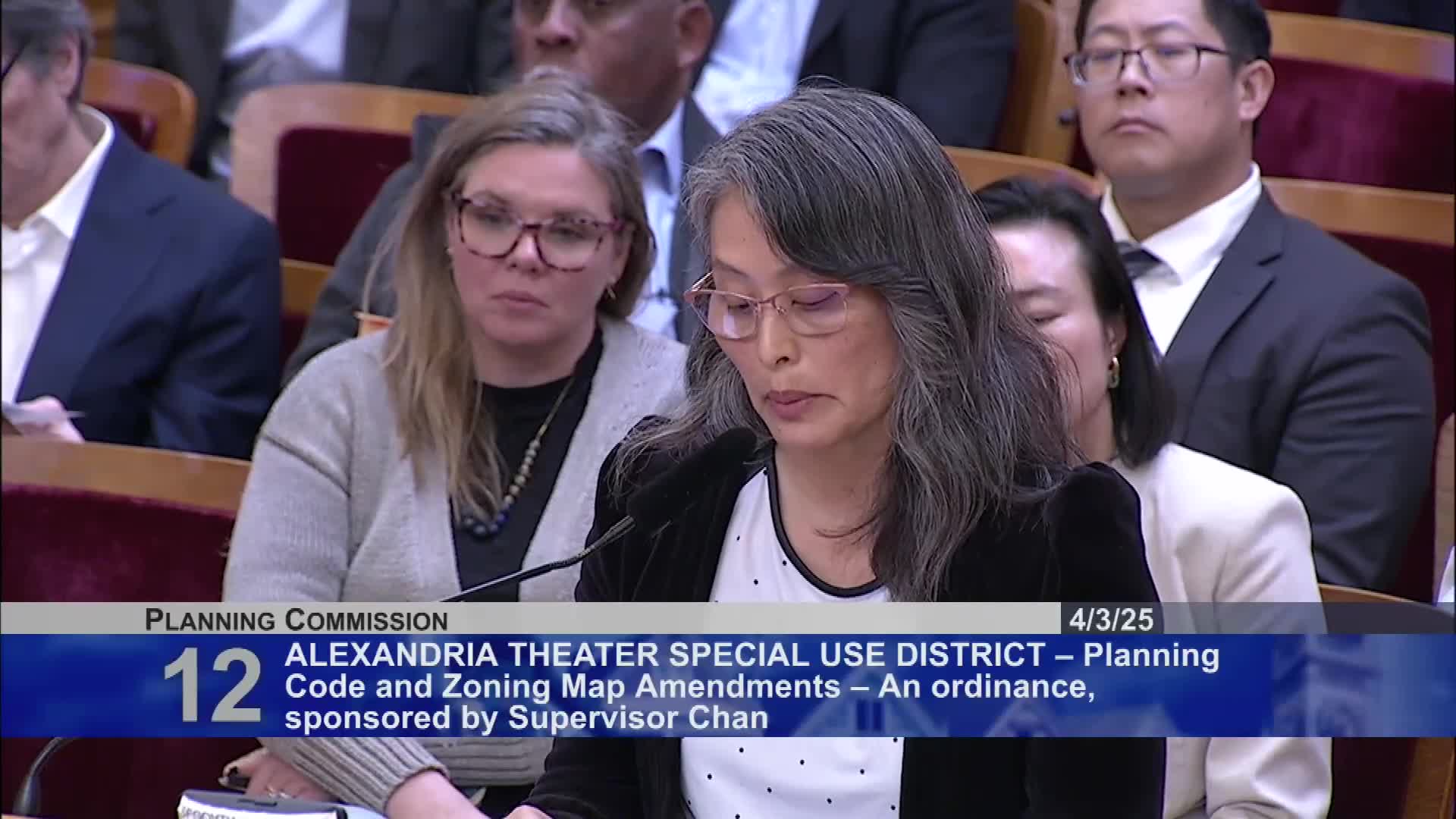
Public testimony included support from the San Francisco Democratic Party and business owners; several speakers urged that permitting alone would not revive Van Ness and that public-safety and anti-vandalism enforcement must accompany any code change. Staff and Supervisor Cheryl’s office said they would pursue complementary measures to address safety and legacy-business protections via grants and small-business programs.
Commissioners discussed risks to legacy businesses and whether community outreach was needed for the RC3 extension. The commission adopted staff modifications and added a requirement that the supervisor’s office report back in 12 months on leasing and occupancy along the corridor; the motion passed unanimously, 7–0.
Staff said the change would not automatically remove existing design and transparency requirements that apply to formula retail; it removes the CUA barrier on the specified corridor to make large storefronts easier to lease.
The commission’s action forwards the ordinance to the Board of Supervisors; staff recommended additional outreach and monitoring to evaluate impacts on legacy businesses and small retailers.