Get Full Government Meeting Transcripts, Videos, & Alerts Forever!
Get email alerts on the Finance Bonding topic
No spam. Unsubscribe anytime.
LCPS finance team and RBC outline plan for final bond tranche; taxable sale recommended and veteran exemptions may affect future capacity
Summary
RBC Capital Markets presented the district’s finance plan and recommended a taxable direct purchase to retire upcoming general obligation bonds quickly. The presenter warned that changes from recent constitutional amendments expanding veteran property exemptions could reduce future bonding capacity and will be visible in 2026 valuations.
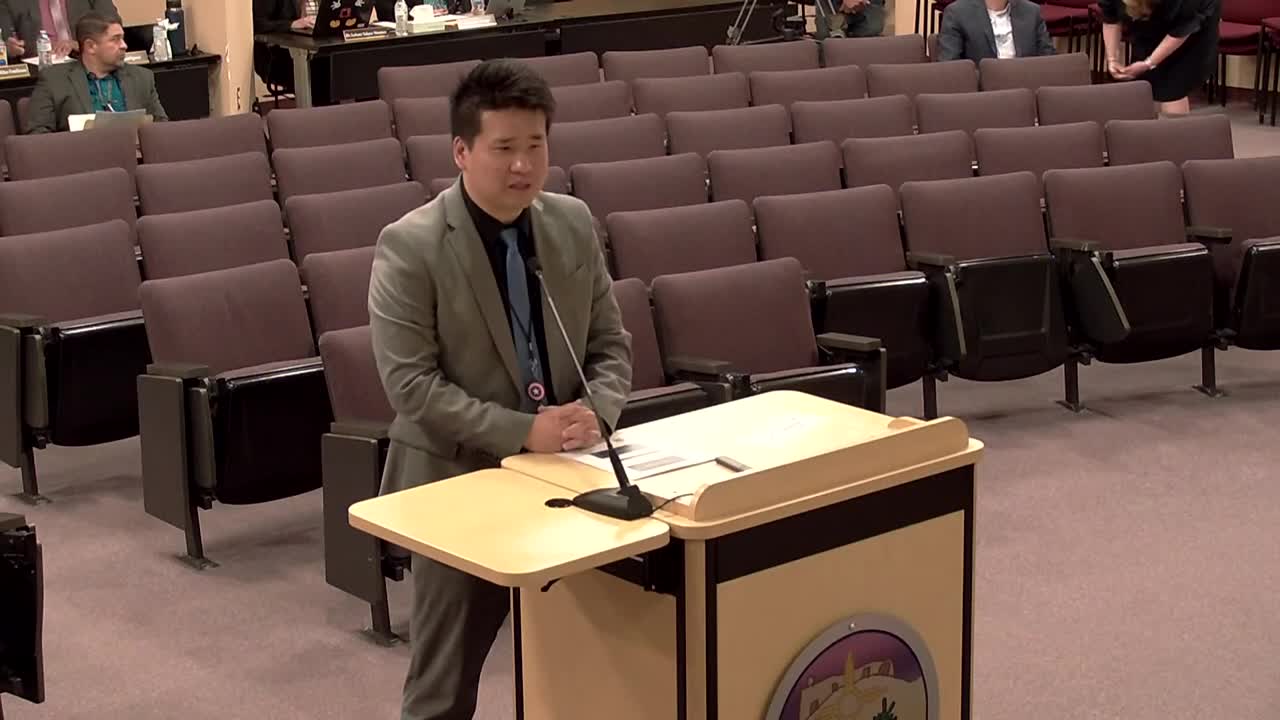
Las Cruces Public Schools received a finance plan update April 1 from Eric Harrigan of RBC Capital Markets outlining the district’s remaining bond authority, options for sale, and the potential budgetary effect of recent changes to veteran property exemptions.
Harrigan reported the district’s tax base has grown roughly 25% over the last four years, enabling the district to keep the existing tax rate while increasing authorization. The district has approximately $128 million in general obligation bonds outstanding and additional lease‑purchase obligations that count against legal capacity; total outstanding debt counted against capacity is about $147 million. With the proposed issuance the district would reach about $160 million outstanding against a legal capacity that is approximately 6% of tax base (roughly $280 million), leaving room for additional future authorizations.
Because the district intends to retire the new tranche quickly—approximately two and a half years—Harrigan recommended a taxable direct purchase (the State Treasurer can purchase on a taxable basis) rather than a traditional tax‑exempt public sale. He cited three benefits to taxable issuance in this context: 1) fewer spending restrictions and timeline constraints (no 85%‑in‑3‑years rule), 2) no federal arbitrage rebate requirements to monitor, and 3) when debt is retired quickly the higher coupon cost on a taxable sale is limited by the short duration.
Harrigan also briefed the board on two constitutional amendments and subsequent legislation expanding veteran property tax exemptions. One change broadens disabled‑veteran exemptions (variable percent based on disability) and another raised the standard veteran exemption from $4,000 to $10,000 with inflation indexing. Harrigan said the disabled‑veteran exemption’s fiscal impact is uncertain at the district level because it depends on how many disabled veterans are in the district’s tax base and the assessed property values they hold. Applying county‑level veterans statistics to district valuations could suggest a material impact (he cited an illustrative figure of up to about $250,000 on a roughly $4.2 billion assessed base) but said exact effects will be clearer after the tax year that begins in 2026 when veterans apply for the expanded exemptions and assessors report updated preliminary values.
Next steps and timing - Board staff will return with a formal election resolution this summer to place a bond authorization question (recommended about $65 million) on the November ballot. The proposed authorization would be the final tranche of the voter‑approved authorization from November 2021; the plan would maintain the district’s historical tax rate. - The district and RBC will continue monitoring the governor’s actions on the legislative package (vetoes and signed bills) and the upcoming state budget process beginning April 28. Harrigan advised watching the September–October tax valuation cycle for indications of the veterans‑exemption impact on revenue capacity.
Questions from board members focused on the taxable sale mechanics, the schedule for debt service payments (first payment due in August, with two additional payments in successive years), and the timing for when veteran exemption impacts will be visible to the district (preliminary values and exemption filings in late 2025 for the 2026 tax year).