Oklahoma Birth Equity Initiative urges city support for community-based doulas, hospital TeamBirth to address Black maternal disparities
Loading...
Summary
At an April 17 meeting of the Beyond Apology Commission in Tulsa, Omari Jimerson, executive director of the Oklahoma Birth Equity Initiative, said Black and Native women in Oklahoma face substantially higher maternal mortality and outlined community-based doula services, hospital TeamBirth pilots and midwifery training as local responses.
Omari Jimerson, executive director of the Oklahoma Birth Equity Initiative, told the Beyond Apology Commission on April 17 that Black women in Oklahoma are about 3.2 times more likely to die from pregnancy-related causes than white women and outlined programs designed to reduce that gap.
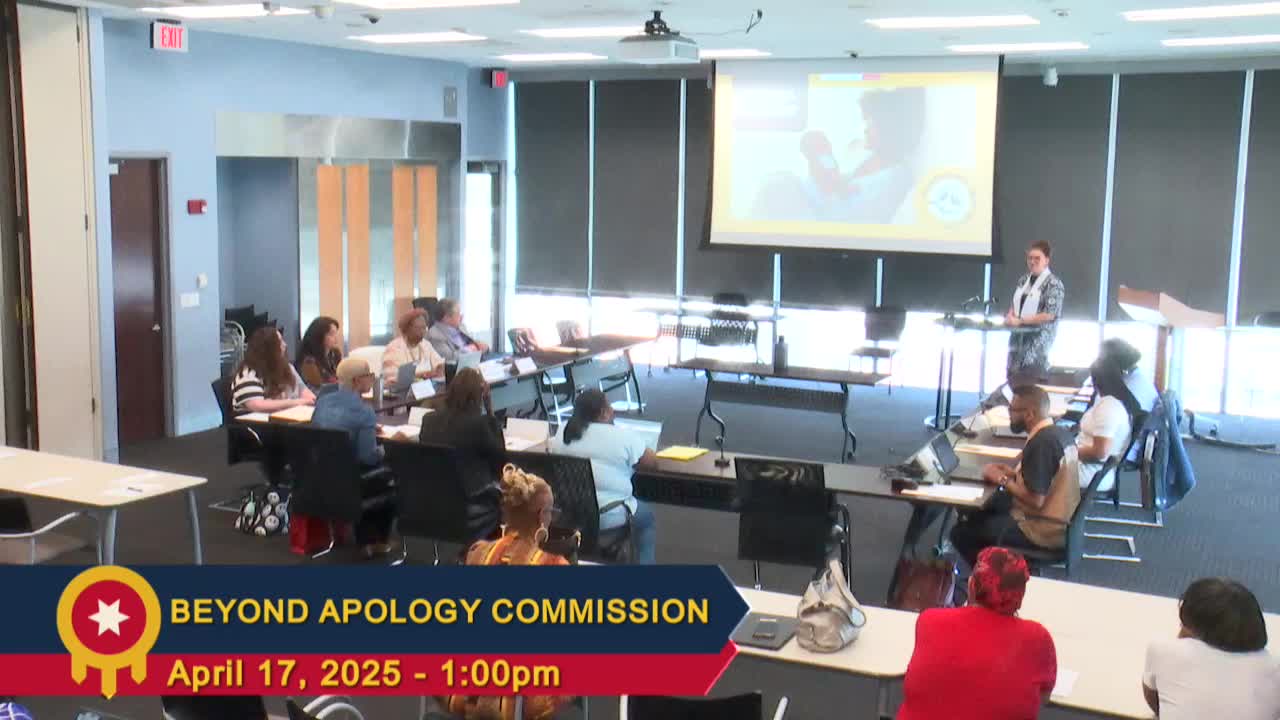
The commission meeting in Tulsa opened with a presentation from Jimerson (who identified the initiative as “OK BAE”), which described the group’s community-based doula program, hospital partnership work called TeamBirth, a Queens Village-style community model, and plans to support midwifery training in rural areas.
Jimerson said OK BAE offers no-cost community-based doula services to people who identify as Black, Native/indigenous, Latina, teens and people navigating the justice system or substance-use treatment. “On average, we touch our clients more than 30 times,” Jimerson said, describing prenatal, birth and intensified postpartum support. She said clients supported by the program in Tulsa now show preterm birth and low-birth-weight rates trending closer to those for white women, and that births attended by OK BAE doulas have a lower cesarean rate.
Why it matters: Oklahoma’s disparities are large and persistent. Jimerson cited recent federal data and state figures showing pockets where rates of maternal mortality and infant mortality remain high; she said the initiative focuses on those pockets because “I cannot serve Black women and do good by them without affecting the whole.” The presentation connected historical mistreatment in medical care to present disparities and argued community-centered supports can improve outcomes.
Program details and barriers
Jimerson described six “cornerstone” programs at OK BAE, emphasizing the community-based doula model as distinct from private, fee-for-service doulas. She said a traditional doula can cost a minimum of about $2,000, while OK BAE’s community-based model is rooted in relationship, often matches clients with doula(s) of and from their communities, and provides more extensive contacts over time.
The group also trains doulas using a culturally congruent curriculum called Blossoming Birth and maintains a public list of trained doulas. Jimerson said OK BAE recently added a billing intermediary: because state doula reimbursement rules require administrative setup that many doulas cannot handle, “we are going to be the go-between and start doing the billing for them so that they don't have to do that,” with an operational target of July 1.
Jimerson told commissioners that TeamBirth — a care model that organizes clinician huddles and shared decision-making — has been taught across Tulsa hospitals and piloted in clinics and training programs. “When a woman enters care pregnant that she would receive a birth experience all the way through her care,” she said, describing TeamBirth as a standard of coordinated, patient-centered communication.
Questions from commissioners and community members focused on hospital buy-in, provider shortages and education. Jimerson said hospitals vary in how fully they implement TeamBirth; some “do it really good” and others do not. She and commissioners discussed workforce trends; Jimerson said more Black physicians are graduating but are often recruited to larger markets with higher pay, a factor contributing to shortages in Oklahoma.
What the commission can do
Commissioners asked what municipal officials could do to help; Jimerson said she has not formally approached the city but hoped the commission’s influence could be used to press hospitals to recognize community voices and to promote alternatives when a hospital’s performance does not match community expectations. She also noted state-level changes — expanded postpartum coverage and the emergence of doula reimbursement — but said implementation hurdles remain.
Jimerson urged investment in midwifery and primary-care training for rural areas and described OK BAE’s broader community strategies: hospital quality-improvement partnerships, Queens Village–style safe spaces, and workforce development.
“The medical system is working exactly how it was designed to work,” she said, arguing that addressing structural design and community-driven services are both necessary components of change.
The commission did not take formal action on the presentation; commissioners thanked Jimerson and discussed possible next steps.
Ending
Jimerson closed by noting OK BAE’s work includes training doulas, supporting billing for reimbursement, and piloting TeamBirth partnerships in clinics and hospitals. Commissioners indicated interest in exploring municipal and hospital-level engagement to support the initiative’s goals.