Get Full Government Meeting Transcripts, Videos, & Alerts Forever!
Get email alerts on the Mental Health Policy topic
No spam. Unsubscribe anytime.
Tulsa’s chief mental health officer outlines youth mental-health, violence-intervention and opioid-abatement programs
Summary
Dr. Rebecca Hubbard, Tulsa’s chief mental health officer, described the city-level role and a portfolio of initiatives — including a SAMHSA-funded children's mental-health program, a DOJ community-based violence intervention grant, and opioid-abatement work — and said the city is hiring coordinators to operationalize the efforts.
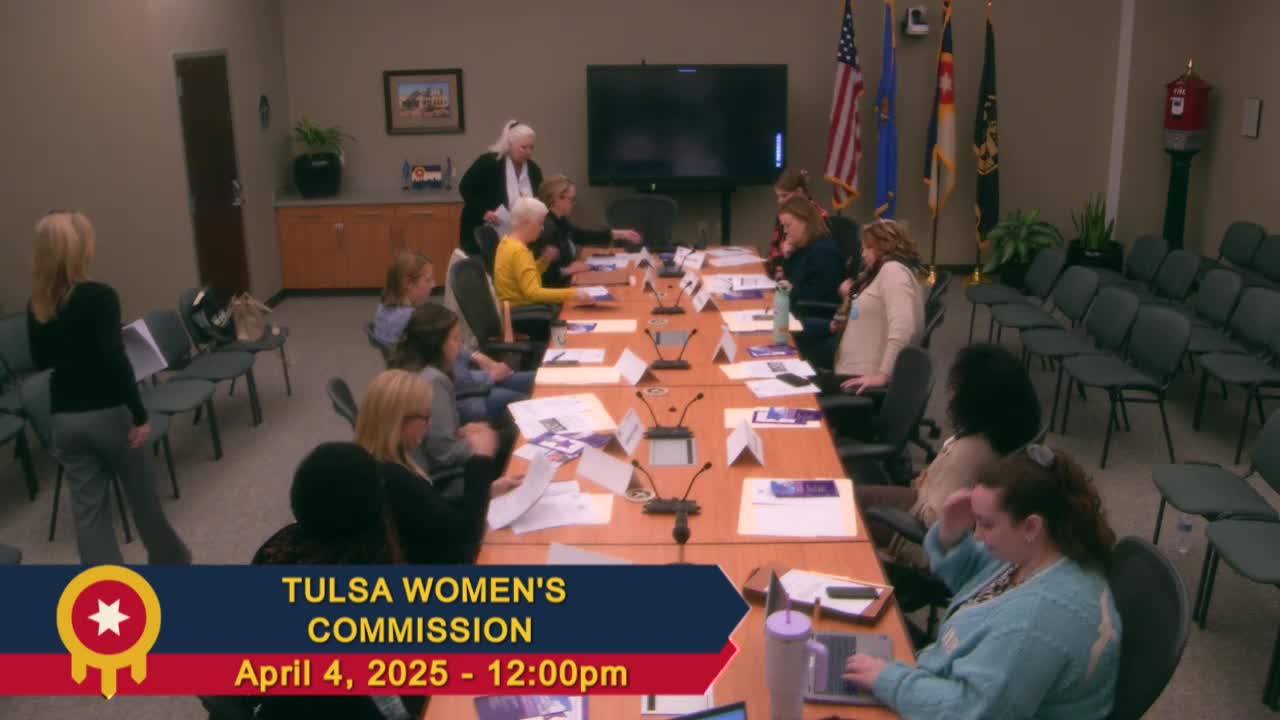
Dr. Rebecca Hubbard, the City of Tulsa’s chief mental health officer, briefed the Tulsa Women’s Commission on a citywide portfolio of mental-health and resilience initiatives she is coordinating under the Department of Resilience and Equity.
Hubbard described seven priority areas: youth and young-adult mental health (0–21), substance use recovery and opioid-abatement response, community-based violence intervention, suicide prevention, trauma-healing and community resilience, culture- and faith-based supports, and crisis-response coordination. She said the office was created following recommendations from local task forces and will coordinate partners, resources and grant administration.
Major federal grants and programs: Hubbard said the city manages a four-year SAMHSA (Substance Abuse and Mental Health Services Administration) grant for a Children’s Mental Health Initiative and that the city recently received a Department of Justice community-based violence intervention award. She said the city also received opioid-abatement funding and has hired an opioid-abatement response coordinator; she said the community youth-resilience coordinator role to facilitate violence-intervention work is in recruitment.
Hubbard said those programs will fund interventions ranging from peer-recovery supports for overdose responses to school-based substance-use training that Tulsa Public Schools is piloting for middle-school students. She described an effort to convene other districts and local partners to scale prevention and training and said some opioid-abatement funding is intended for long-term programming.
Research- and community-engaged work: Hubbard highlighted the Community Engaged Genealogy Project, a Department of Justice–funded effort tied to the Greenwood/Tulsa Massacre documentation and outreach; the project helps descendants trace ancestry and pairs genealogical work with trauma-responsive services. She said the genealogy project is scheduled through September 2025 but that the city planned to seek a no-cost extension because DOJ approval took longer than expected.
Crisis response and suicide prevention: Hubbard described ongoing work aligning local crisis services (including 988, urgent-recovery centers and mobile crisis teams) and said the city is leading a suicide-prevention strategic-planning process with health, law-enforcement and nonprofit partners. She said the city has convened multiple strategic-planning meetings and will finalize goals and implementation steps in coming weeks.
Why it matters: Hubbard said the role aims to ensure that children, families and first responders have timely access to mental-health supports and to coordinate a fragmented system of grants, providers and public agencies. She framed her role as both a convener and a technical lead to help agencies negotiate contracts, identify alternative funding streams and stabilize services when state or federal funding changes.
Staffing and implementation: Hubbard said the city is onboarding staff, including an opioid-abatement response coordinator (Natalie Brown) and will soon fill the community youth-resilience coordinator position to implement the DOJ violence-intervention grant. She said some coordinator roles are being hired now to move programs from planning to operations.
Contact and follow-up: Hubbard provided a city email for follow-up and said the office is intended as a convening, coordinating and capacity-building resource for citywide mental-health work. She described the role’s mission as helping systems respond so children, individuals and families receive timely help.
Ending: Hubbard said she expected to use a combination of legislative advocacy, alternative funding strategies and innovation to sustain services amid state and federal shifts and invited commission members to contact her with questions and offers of partnership.