Get Full Government Meeting Transcripts, Videos, & Alerts Forever!
Get email alerts on the Zoning Variance topic
No spam. Unsubscribe anytime.
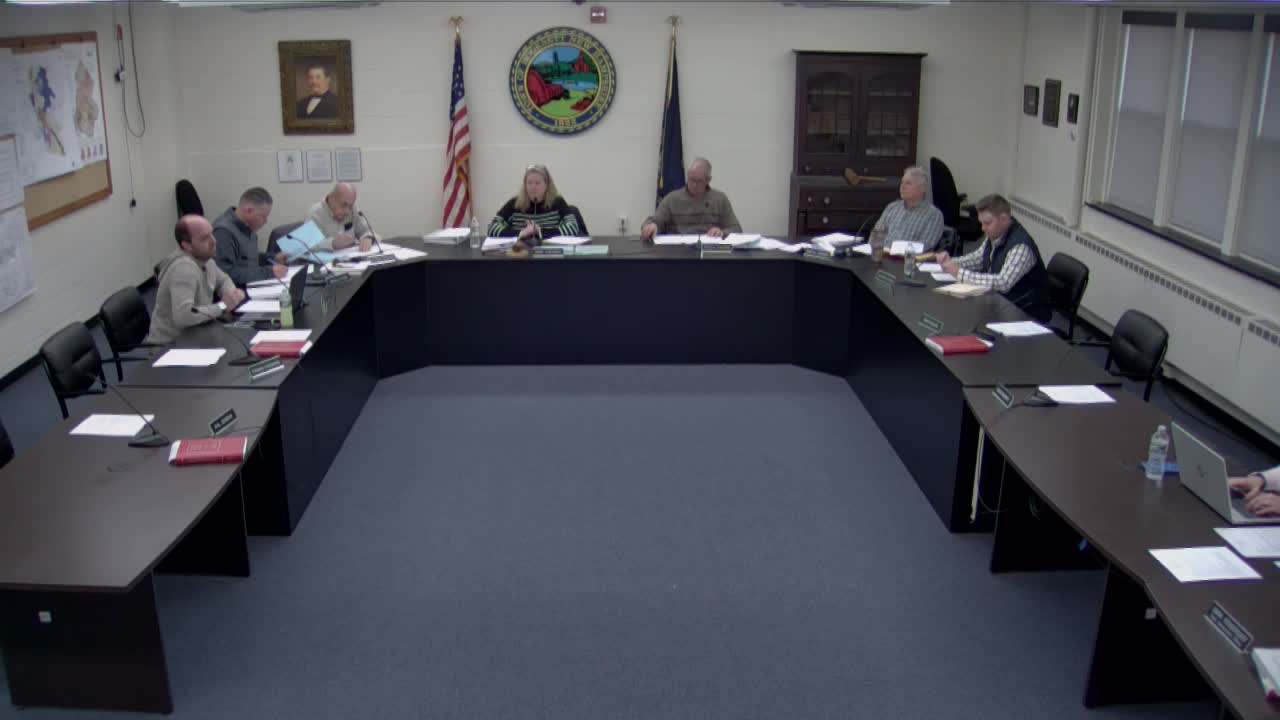
Hooksett zoning board approves variance to allow residential use at College Park Drive office building
Summary
The Hooksett Zoning Board approved a variance allowing residential development inside a vacant 100,000-square-foot office building at 2 College Park Drive, finding the applicant met the five statutory criteria after hearing expert testimony on market conditions, traffic and carrying costs.
The Hooksett Zoning Board voted to approve application Z24-31, allowing a residential use in the MUD‑1 district for the property at 2 College Park Drive (Map 9 Lot 34‑1).
The board approved the variance after a continued public hearing and deliberation that focused on whether the applicant had met the five criteria required for a use variance under the town zoning ordinance. The motion to approve was made by Matt St. Pierre and seconded by Gerald Hyde; the motion passed with one member recorded in opposition.
Board members and expert witnesses reviewed evidence presented by the applicant that the 100,000‑square‑foot, three‑story office building had been vacant for years and was custom-built for a single tenant, making subdivision for multiple commercial tenants impractical. The applicant submitted marketing materials and a commercial-market analysis showing limited demand for large office tenants and elevated carrying costs for the vacant building. One board member referred to a prior Housing Board of Appeals order and said the administrative record on that appeal provided a “road map” for evaluating the variance criteria.
Traffic and neighborhood character were central topics. The board reviewed a trip‑generation memo dated Jan. 28, 2025, that estimated weekday vehicle trips and compared projected trips for the proposed mixed‑use residential scheme to the originally permitted large office campus. The consultant’s comparison showed fewer daily and peak‑hour trips for the residential proposal than for the full office campus that could otherwise be built on the site. Several board members said residential use would likely generate lower concentrated peak‑hour traffic than a single large commercial tenant.
Members also considered testimony and two expert appraisals indicating the project would not diminish surrounding property values. Board members cited market evidence and anecdotal occupancy data from comparable Brady Sullivan properties, including a waiting list at a nearby multifamily property, as context for local housing demand.
On the hardship criterion, the board found the building’s size, floorplates and original design for a single large tenant constitute a special condition that makes commercial re‑use impracticable without extensive and costly alterations. The board also noted the MUD‑1 district in question comprises only the applicant’s two parcels, making the district’s restrictions particularly burdensome for this owner.
In its findings of fact the board concluded: the variance would not be contrary to the public interest or the spirit of the ordinance; substantial justice would be done because continued vacancy imposes high carrying costs (testimony cited annual carrying costs in the range of $250,000–$300,000); surrounding property values would not be diminished; and the proposed residential use is reasonable and would serve as a buffer between commercial frontage and abutting residences.
During deliberations one board member voiced opposition, citing concerns about loss of “prime commercial property,” potential traffic impacts and the prospect that the building could be divided with additional investment. That member’s “no” vote was recorded with spoken reasons before the vote concluded.
The board closed the public hearing before issuing its vote. Applicant representatives — including Chris Lewis of Brady Sullivan — and members of the public who submitted written comments were part of the record. The board said conditions related to buffering and coordination with abutters could be considered as part of site plan or later approvals.