Get Full Government Meeting Transcripts, Videos, & Alerts Forever!
Get email alerts on the Prosecutor Budget topic
No spam. Unsubscribe anytime.
Prosecutor outlines caseload wins, victim services expansion and staffing challenges in FY26 request
Summary
Prosecuting Attorney Kelvin Walton told the council the office secured multiple major convictions in the past year, is expanding victim services and training while continuing to face attorney staffing shortages that limit throughput on complex cases and diversion programs.
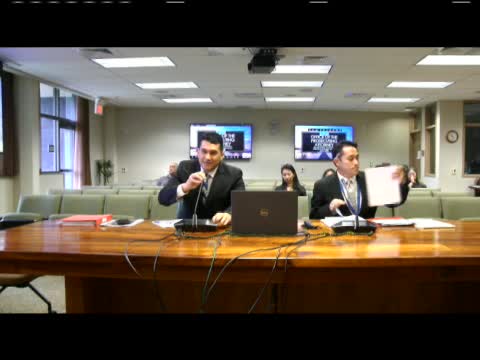
Prosecuting Attorney Kelvin Walton presented his office’s FY26 priorities to the County Council on May 1, emphasizing courtroom wins, expanded victim‑services work and continuing staffing shortfalls for prosecutors.
Walton listed several recent felony sentences achieved by his office — including large prison terms for armed robbery, trafficking and child‑exploitation cases — and highlighted multidisciplinary approaches such as specialty treatment courts and multi‑disciplinary teams for domestic violence response. “Prosecutors are the gatekeepers of the criminal justice system,” Walton said, adding that the office’s duty is to “seek justice within the bounds of the law and not merely convict.”
Victim services: Walton thanked the council for two victim‑assistance positions added last year and said his office’s Victim Assistance Unit provided services to more than 3,400 victims this fiscal year. He said the office has emphasized early engagement, connecting victims to services earlier in the investigative process, and that funding shifts (notably declines in VOCA) have required grant planning to sustain services.
Staffing and recruiting: Walton said the office has 135 authorized positions and was operating with roughly 105 staff on the date of the hearing, and that attorney vacancies remain his principal challenge. He noted an erosion of the historic “feeder” pipeline of judiciary law clerks and urged flexibility in hiring; his office has sought year‑long law clerk contracts to be more competitive and to provide continuity.
Technology and case management: The office has implemented a new case‑management system (Prosecutor by Carpe) to allow paperless case files, integrated discovery for defense counsel and remote access for deputies. Walton said the system will require continued rollout, training and end‑user hardware replacement.
Programmatic work: Walton described sustained attention to juvenile justice, drug trends and traffic‑safety work, including statewide training plans for crash investigation and efforts to prioritize felony firearms offenses. He said the office plans to meet with a subject‑matter expert to design a multidisciplinary approach to elder‑abuse prosecutions.
Councilmembers asked about diversion and alternative programs; Walton said the office has tried “true diversion” pilot programs but found that without sufficient accountability structures participants sometimes failed to complete the required treatment, limiting efficacy. He and councilmembers discussed housing and homelessness as key challenges that produce repeat justice involvement and noted continuing overcrowding at the state corrections facility (HCCC) and its effect on judicial release decisions.
Why it matters: Prosecutor staffing and victim‑service funding affect charging, case resolution timelines and how the criminal system handles complex cases such as elder abuse, trafficking and child exploitation. Walton’s presentation outlined both new tools (case management, team leaders within practice areas) and continuing constraints (attorney recruitment and grant volatility).
What’s next: Walton said the office will continue recruitment efforts, pursue grant funding to sustain victim‑assistance staffing, complete the case‑management rollout and expand training offerings for statewide officers and community partners. Councilmembers signaled interest in working on statewide and county solutions for jail capacity, diversion, and funding for victim services.