Get Full Government Meeting Transcripts, Videos, & Alerts Forever!
Get email alerts on the Animal Control topic
No spam. Unsubscribe anytime.
Residents press council on animal control performance as county reviews animal‑care budgets and facilities
Summary
Public testimony and agency presentations at the May 1 budget hearing pressed the council on response times, shelter capacity and implementation of best‑practice models for animal control; the county's new animal‑care agency described outreach, microchipping and planned facility improvements.
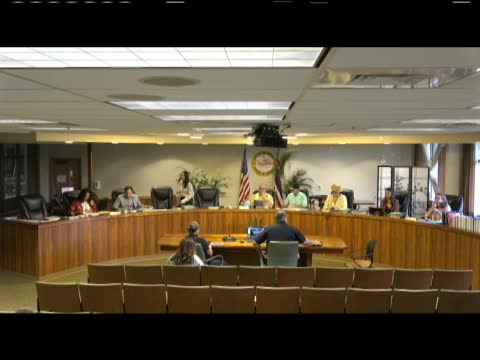
Speakers at the Hawaii County Council’s May 1 special budget hearing urged faster and clearer animal‑control responses and broader adoption of best‑practice sheltering models while county animal‑care officials outlined recent program changes and pending facility work.
Sylvia Dolena, testifying remotely about Bill 31 during the early session, appealed for investment in preventive approaches and adoption of national animal‑control protocols. “We cannot continue to throw more money to a problem, but we can invest in solution, and preventative solutions are best,” she told the council, while listing community concerns that calls often go unanswered. Dolena and other public commenters gave multiple examples of delayed responses, including one account of a dog bite in Ocean View for which the caller said “the police dispatch took down the information. They transferred the call to animal control, and nothing happened.”
Animal‑care administrators and the county’s newly created Bridal/Animal Control agency later described steps intended to reduce intakes and increase returns to owners: expanded microchipping campaigns, increased community outreach and spay‑neuter events, an on‑site contract veterinarian and new software for lost‑and‑found matching. Director Matthew Reynolds (Bridal/Animal Control) said the agency brought in roughly 300–350 animals per month during the past fiscal year and expects to remain at or above that level. He told councilmembers the unit has filled multiple new positions but still has roughly 16 vacancies across two shelters and detailed the technical and staffing needs in order to run outreach clinics, spay/neuter events and microchipping drives.
Carrie Yost of Hilo testified later in favor of better coordination and clinical capacity, telling the council she was directed to bring “feral” cats to Bridal Control but was told by Licensing and by a contractor that such animals were treated differently; Yost urged Bridal Control to ensure sufficient veterinarian staffing so the agency can effectively process and neuter community animals in a timely way.
Key program details presented to councilmembers: - Intake and turnover: Bridal staff reported roughly 3,000+ intakes year‑to‑date and monthly averages of just under 350 animals; the agency reported roughly 687 animals processed through active shelter medical programs over a recent 8–9 month period. (Director Reynolds) - Shelter capacity and staffing: The agency has two shelters; one long‑planned East Hawaii facility needs structural work, including a proposed septic and server‑room improvements. Staff reported 48 total authorized positions and about 16 vacant slots. (Director Reynolds) - Outreach and operations: The department has implemented six outreach events this fiscal year, added microchipping campaigns, and is developing a lost‑and‑found web portal tied to new shelter software. The agency has hired a contract veterinarian and is pursuing grants for additional spay/neuter capacity. (Director Reynolds)
Council members pressed the director on turnaround time, the availability of shelter space and options for temporary substations in rural areas, including collocating animal control with a proposed Ocean View police substation. Councilmember Onishi suggested county collaboration with Parks and Recreation and other nonprofit partners to increase recreation and youth programming as an alternative youth outreach pathway often handled by PAL-style community officers.
Why it matters: Residents drew a direct line between response reliability and public safety — for example, when dog bites are reported and callers perceive no follow‑up. Animal‑care capacity, veterinary staffing and spay/neuter availability affect intake volume and shelter population; the agency said staffing and facility work are the principal constraints to faster service.
What’s next: Bridal/Animal Control will pursue facility upgrades, expand microchipping and spay/neuter events, and continue hiring efforts. Councilmembers asked county departments to explore co‑location of services and for finance to consider funding for the vet‑tech and facility upgrades to reduce intake pressure and improve response times.