Get Full Government Meeting Transcripts, Videos, & Alerts Forever!
Get email alerts on the Land Use Zoning topic
No spam. Unsubscribe anytime.
Timnath planning staff brief commissioners on comp plan, PDOs, waivers and variances
Summary
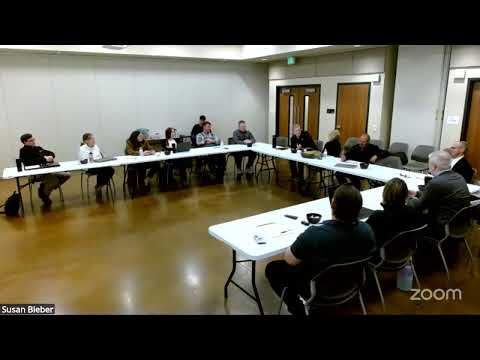
At a work session, Timnath planning staff briefed the Planning Commission on zoning tools including comprehensive-plan amendments, rezoning and site-plan review, planned development overlays (PDOs), waivers and variances, and expectations for public engagement and decision-making.
At a work session, Timnath planning staff briefed the Planning Commission on zoning tools including comprehensive-plan amendments, rezoning and site-plan review, planned development overlays (PDOs), waivers and variances, and expectations for public engagement and decision-making.
The session focused on making sure commissioners apply the right decision standard at each stage of land-use review, maintaining procedural limits in quasi-judicial hearings, and balancing flexibility for developers with predictability for the community. Staff said they will return with code amendment proposals and more explicit guidance for commission packets.
Logan, a staff member leading the presentation, described zoning in basic terms: "So it's a instrument, a regulatory tool that we use to control land use and development within our jurisdiction." Staff walked commissioners through the three review stages: comprehensive-plan amendments (policy-level questions about future land use), rezoning (regulatory changes to a property's allowed uses and densities), and planning/site-plan review (technical compliance, engineering and design). Staff emphasized that a comp‑plan amendment does not guarantee later approvals at rezoning or site-plan stages.
Commissioners and staff discussed planned development overlays (PDOs) as a site‑specific tool that can modify base zoning standards. Staff said PDOs can allow flexibility—such as mixed uses or altered dimensional standards—when the community receives an identifiable public benefit in return. At the same time, staff warned that many site‑specific PDOs create long‑term administrative complexity: "If every development is a PDO, that means staff is looking, researching, administrating 20 plus different PDOs," a staff member said.
Carolyn, a staff member who addressed legal and procedural limits, reminded commissioners about evidence and ex parte contacts in quasi‑judicial proceedings: "You have to make your decision based on the information that's presented at the public hearing before you," she said. Staff and counsel repeated that commissioners should avoid outside fact‑finding for quasi‑judicial cases and instead submit questions to staff in advance so staff can investigate and return findings at the hearing.
The group also discussed waivers and variances. Staff characterized variances as a narrow remedy tied to unique physical site circumstances and subject to a strict legal test; waivers were described as an administratively available route for limited deviations and alternative compliance that avoids pushing every issue to a variance. Staff said they plan to propose clearer waiver rules and PDO criteria in upcoming land‑use code amendments so the commission has more predictable standards to apply.
On public engagement, staff described a practice of holding neighborhood meetings for legislative code changes before those items arrive in a formal public hearing. Commissioners asked staff to include summaries of those neighborhood meetings in the staff packet so commissioners will see whether proposals changed after community input. Staff said they will begin including that summary material in future packets.
Housekeeping items at the start of the session included an announcement that Mike Lewis has resigned from the commission because of work obligations; staff said they are considering candidates from an existing appointment pool and expect to have clarity before the next scheduled meeting.
Staff outlined next steps: begin a comprehensive update of the comp plan (the town’s guiding policy document), return with proposed land‑use code amendments (including updated PDO and waiver criteria) in the coming months, and provide clearer packet language identifying where commissioners have discretion. No formal votes or final actions were taken during the work session; staff described these as preparatory and policy‑framing conversations.
Ending note: staff asked commissioners for feedback on whether they prefer more prescriptive code language (for predictability) or broader discretionary language (for flexibility) as the town prepares draft amendments to bring back for future work sessions.