Get Full Government Meeting Transcripts, Videos, & Alerts Forever!
Get email alerts on the School Choice topic
No spam. Unsubscribe anytime.
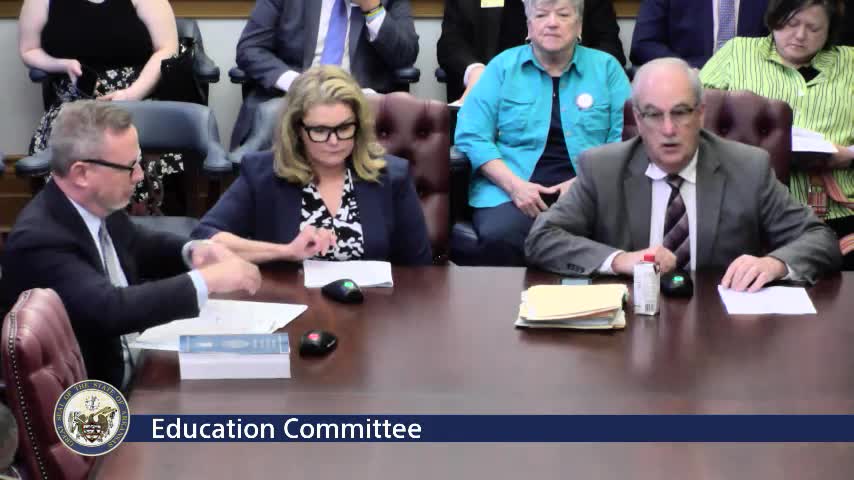
Senate Education debate on school‑choice overhaul centers on capacity rules and expulsions
Summary
Senators and education stakeholders spent more than an hour debating a package of school‑choice changes that would move Opportunity School Choice provisions into the Public School Choice Act and clarify how districts and the state board decide capacity and expulsion issues.
Senators and education stakeholders spent more than an hour debating a package of school‑choice changes that would move provisions of the Opportunity School Choice Act into the state's Public School Choice Act and clarify how districts and the state board decide capacity and expulsion issues.
Proponents said the bill would give districts clearer authority to manage classroom and special‑education caseloads; opponents said the changes reduce independent review and raise fairness concerns for students seeking transfers from failing schools.
The proposal presented at the hearing would: move Opportunity School Choice provisions into the main school‑choice statute, set capacity rules that districts and the Department of Education would apply when considering transfer petitions, and explicitly allow districts to consider expulsions and pending expulsions when deciding whether to accept transfers. Supporters said the intent is to prevent students from avoiding disciplinary consequences by moving between districts and to protect a district's ability to manage staff and special‑education caseloads.
Jeremy Lasser, attorney for Bryant Public Schools, told the committee the bill would not make any currently eligible student ineligible for school choice but would clarify deadlines, allow districts to take prior expulsions into account, and consolidate the Opportunity School Choice Act's major provisions under the Public School Choice Act. Lasser said the bill would also let the Department of Education prepare rules on capacity that would be subject to review.
Brian Duffy, superintendent of Alma School District, and Shane Patrick, superintendent of Solomon Springs School District, testified for the bill, saying capacity is more than seats and includes teacher workload and special‑education caseloads. Patrick said the state board had rarely supported district findings on capacity in appeals, forcing some districts to add staff or long‑term substitutes to cope with transfers.
Gary Newton of Arkansas Learns opposed the bill. Newton said Opportunity School Choice was designed to let students escape failing schools and that the law historically used a higher capacity threshold (95 percent) and an independent arbiter's (the State Board of Education) review to protect transfer rights. Newton told the committee the proposal would make capacity determinations effectively district decisions, remove sibling priority, and create ambiguity by adding 'pending expulsion' as a ground for denial without a clear definition.
Senators discussed competing thresholds: proponents pointed to the existing 90 percent threshold used in regular school choice, while opponents urged keeping a 95 percent standard for opportunity transfers because of the urgency of moving students out of failing schools. Several senators said the differences in interpretation and the size of the amendment package required more time for review.
The committee considered an extensive amendment that combined capacity fixes and other changes. After debate and a roll call, the committee chair said the panel did not have enough votes to pass the measure out of committee that day.
What happens next: lawmakers said they would continue to work with the Department of Education and stakeholders on capacity definitions, how to treat pending expulsions, and the threshold to apply for denying transfers. Several senators suggested separating a narrow capacity fix from broader statutory restructuring to allow more targeted debate.
Speakers quoted in this article spoke during the bill presentation or public testimony before the Senate Education Committee.