Get Full Government Meeting Transcripts, Videos, & Alerts Forever!
Get email alerts on the Wind Energy Moratorium topic
No spam. Unsubscribe anytime.
Senate rejects two-year moratorium on tall wind turbines after split testimony on wildlife and economic benefits
Summary
Senators debated Senate Bill 466, a proposed temporary moratorium on wind power devices taller than 150 feet that would have paused construction in parts of eastern Arkansas until July 1, 2027, and authorized a study focusing on potential impacts to migratory waterfowl and raptors.
Senators debated Senate Bill 466, a proposed temporary moratorium on wind power devices taller than 150 feet that would have paused construction in parts of eastern Arkansas until July 1, 2027, and authorized a study focusing on potential impacts to migratory waterfowl and predatory birds (raptors).
Sponsor Senator Blake Johnson (Dist. 21) and Representative Jeremiah Moore explained the moratorium's intent: to ensure adequate study of how large-scale wind farms might affect the Mississippi Flyway and local waterfowl populations before new construction begins. The draft exempted devices already under construction or with ground broken before March 21, 2025.
Conservation groups urged caution but supported study-based approaches. Ed Penney of Ducks Unlimited said the organization was not taking a position for or against the bill but stressed that "there is very little science, very little research on this issue, particularly in Arkansas, Mississippi and Louisiana." He urged avoiding and minimizing potential impacts and recommended on-the-ground habitat conservation measures.
Renewable-energy industry witnesses strongly opposed the moratorium. Brad Leila of Cordelia Power described an operating project in Cross County: a 35-megawatt installation with a roughly $375 million capital investment, 22 turbines already standing (30 total planned), more than 500 construction workers employed during buildout and recurring payments to counties and landowners. "That payment alone is gonna be $13,600,000," he told the committee, summarizing expected local revenue. Phoebe Bloom, development manager for Triple Oak Power, said projects in Arkansas follow standard national guidance (the WEGs) and argued that the moratorium would halt projects and local tax revenue.
Proponents of the moratorium pointed to limited published studies suggesting avoidance behavior and localized declines in breeding pairs near wind facilities in other regions. Witnesses and some senators underscored uncertainty about whether findings from the Great Plains or Texas map directly to Arkansas flyway conditions.
Senators asked whether Game and Fish should lead studies or whether independent contractors should perform them; witnesses said the state agency could partner on research but that independent expertise should be included. The bill would have authorized the Game and Fish Commission to lead or contract for studies.
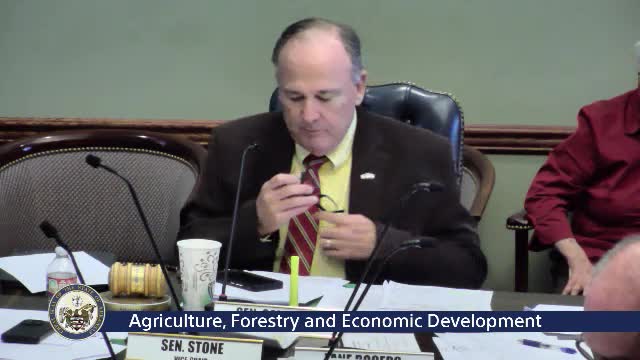
After debate, senators moved to a voice vote on whether to pass the bill. The committee recorded opposition by voice: "Noes have it." The moratorium therefore failed in committee, and sponsored testimony from industry emphasized lost local revenue and jobs if projects were halted.