Get Full Government Meeting Transcripts, Videos, & Alerts Forever!
Get email alerts on the Waste Management topic
No spam. Unsubscribe anytime.
Privatization plan for Arkansas waste‑tire program fails in committee after debates over costs and service
Summary
Senate Bill 606, which would dissolve waste-tire districts, shift the $3 rim-removal fee to a $1.50 front‑end generator fee and create a waste-tire abatement fund, failed to pass after committee members voiced concerns about consumer costs, rural service and fund sufficiency.
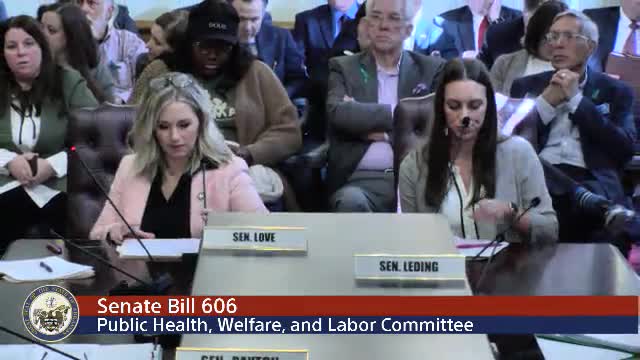
Senate Bill 606, a proposal to privatize elements of Arkansas's waste-tire system and move the rim removal fee to the point of sale, failed to pass the Senate Public Health, Welfare and Labor Committee after a lengthy debate over costs, service equity and system funding.
Senator Brianne Davis (state senator, District 25) presented the bill and described two primary goals: dissolve existing waste-tire districts and move the fee collection point from rim removal to the front end of a new tire sale (a proposed $1.50 "tire generator fee"). The proposal also would create a waste-tire abatement fund for enforcement and site cleanup; if that fund exceeded $5 million the $1.50 fee would be reduced to 75 cents, the sponsor said.
Proponents, including private processors and steelmaker Nucor, testified that the current system does not fund adequate processing and that market demand exists for tire-derived materials; Nucor's representative said the company uses tires in steelmaking and could increase use if processing capacity and material specifications were available. Large processors (Liberty Tire, Davis Rubber) said opening the market to competition and private-sector investment would improve outcomes.
Opponents and skeptical members focused on several concerns: whether shifting costs would raise consumer prices (hauling currently can cost several dollars per tire), the risk that small rural retailers would have higher costs or less service, past disputed reimbursements where processors failed or bankrupted and left stockpiles, and whether the proposed fee would be sufficient to fund abatement and recycling. District directors and a county judge testified about cases where small tire shops remitted the $3 fee but did not receive pickup service.
During debate several members pressed the sponsor to work with the Department of Agriculture, processors and district staff; the sponsor offered a plan to provide a written amendment and to coordinate with stakeholders. The sponsor made a motion to pass but after the full discussion the committee chair called the vote and declared the bill failed.
What happens next: The sponsor indicated willingness to continue negotiations with stakeholders and to bring revised language back; the transcript shows requests for follow-up collaboration among the Department of Agriculture, district staff, private processors and the sponsor.