Get Full Government Meeting Transcripts, Videos, & Alerts Forever!
Get email alerts on the Medicaid Finance topic
No spam. Unsubscribe anytime.
Senate committee hears extended testimony on proposed Medicaid dental rate increases; bill reported out
Summary
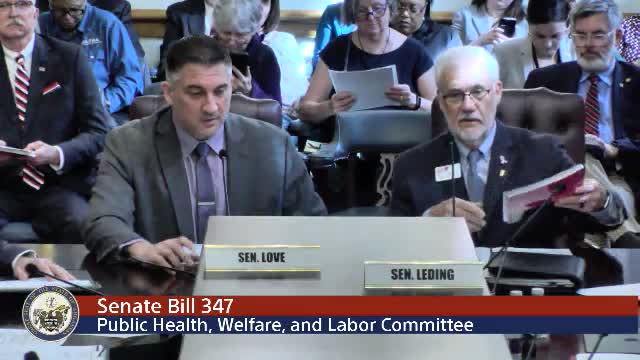
Senate Bill 347, aimed at raising Medicaid dental reimbursements and increasing an annual cap for adults with special needs, drew prolonged testimony from dentists, dental associations and DHS officials before the committee voted to pass the measure.
Senators heard extended testimony on Senate Bill 347, a multi-part proposal to raise Medicaid dental reimbursement rates and increase the annual dental cap for adults with special needs. After extensive questioning of association witnesses and the Department of Human Services (DHS), the committee voted to pass the bill.
Presenters included representatives of the Arkansas State Dental Association and practicing providers who described operational and access problems under the current Medicaid fee schedule. Dr. Aaron Baldwin, an oral and maxillofacial surgeon from Hot Springs, said he and other providers face reimbursement rates that cover only 32%–44% of typical fees for nonhospital procedures, and that his practice stopped accepting new Medicaid dental patients on Jan. 1, 2025, except for emergencies. Pediatric dentist Dr. Jason Havard and other pediatric providers said many Arkansas children — the providers said roughly half of children in the state rely on Medicaid for dental care — rely on Medicaid dentists for preventive and specialty care, and they urged a rate increase to avoid provider attrition.
Witnesses said the ask uses a phased approach to raise fees over three fiscal years based on a published National Dental Advisory fee report (the sponsors and witnesses referenced a 50th percentile benchmark adjusted for Arkansas). Witnesses said the association surveyed providers in 02/2022 and reported that 84% of respondents might stop treating Medicaid patients if rates remain unchanged. The association shared a chart of commonly billed procedure codes and proposed year-by-year increases for those codes; DHS officials said those code-specific figures in the handout were not the same as the methodology DHS uses in its internal rate review.
DHS representatives told senators they began a rate review in January and planned to publish results for public comment the week of the hearing; DHS said its rate review compares Arkansas rates to surrounding states and to Medicare benchmarks. DHS said the fiscal impact in the committee packet was developed based on the bill language and a specific set of codes and that the agency was still finalizing broader-rate-review publication figures. Committee members pressed DHS on whether the bill’s published fee figures were retail rather than market or Medicaid-based and asked how the bill’s cap increase for special-needs adults would affect denials and fiscal estimates; DHS replied the bill would increase the adult special-needs cap (currently $500) and that raising it would increase, not lower, fiscal outlays. DHS offered a range of possible fiscal impacts depending on enrollment and scope.
After the discussion, the committee adopted Senate Bill 347 by voice vote. The bill as presented includes a multi-year fee adjustment tied to published fee benchmarks and an increase to the adult special-needs cap. Committee members and DHS agreed to continue coordination on the rate-review publication and fiscal details as the bill moves forward.