Get Full Government Meeting Transcripts, Videos, & Alerts Forever!
Get email alerts on the Agriculture topic
No spam. Unsubscribe anytime.
Committee advances tax credit to encourage breweries to use Arkansas rice
Summary
House Bill 1491, sponsored by Representative Jeff Wardlaw, would create a targeted tax incentive to encourage breweries and sake producers to use Arkansas rice as an ingredient. Sponsor estimates the cost at roughly $1 million annually and said most of Arkansas rice is sold to the brewery market.
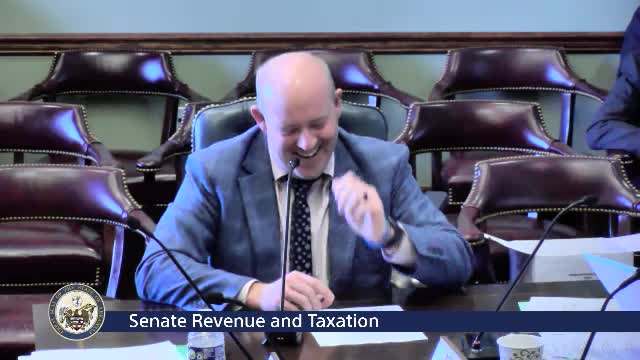
The Senate Revenue & Tax Committee advanced House Bill 1491 after hearing from the bill sponsor, Representative Jeff Wardlaw. The bill would create a small state tax credit intended to encourage breweries, sake producers and wholesalers to use Arkansas rice as an ingredient, with mechanisms intended to keep the tax benefit and resulting sales within Arkansas.
Representative Jeff Wardlaw, who said he works “in the waterfowl world with Delta Waterfowl,” described the measure as an effort to protect Arkansas rice markets. "If you look at the prices of rice right now and you look at what's going into the fields, it's corn...the rice market's fallen to almost $5.80, and the break even for a farmer, it's $7.80," Wardlaw said. He told the committee that about 80% of Arkansas rice currently winds up in the brewery market, and that incentivizing in-state beverage producers to use rice could help maintain demand for the crop.
Wardlaw said the tax credit was crafted to keep the incentive inside Arkansas by directing benefits to in-state wholesalers and breweries. He estimated the fiscal impact at about $1 million per year, citing conversations with industry participants including Anheuser-Busch: "Their sales actually vary a pretty good bit in Arkansas, but it comes in anywhere from $900,000 to a million 1 if you look back over the last 10 years of sales." He described the maximum credit to any single entity as roughly a 22% credit on the qualified item.
After questions from committee members about fiscal neutrality, the committee moved to pass the bill. A motion to pass was offered by Senator Crowell and seconded by Senator Boyd; the motion carried on a voice vote.