Get Full Government Meeting Transcripts, Videos, & Alerts Forever!
Get email alerts on the Policy Ai Tech topic
No spam. Unsubscribe anytime.
Board committee reviews generative‑AI and electronic‑device policies; drafts move to first reading
Summary
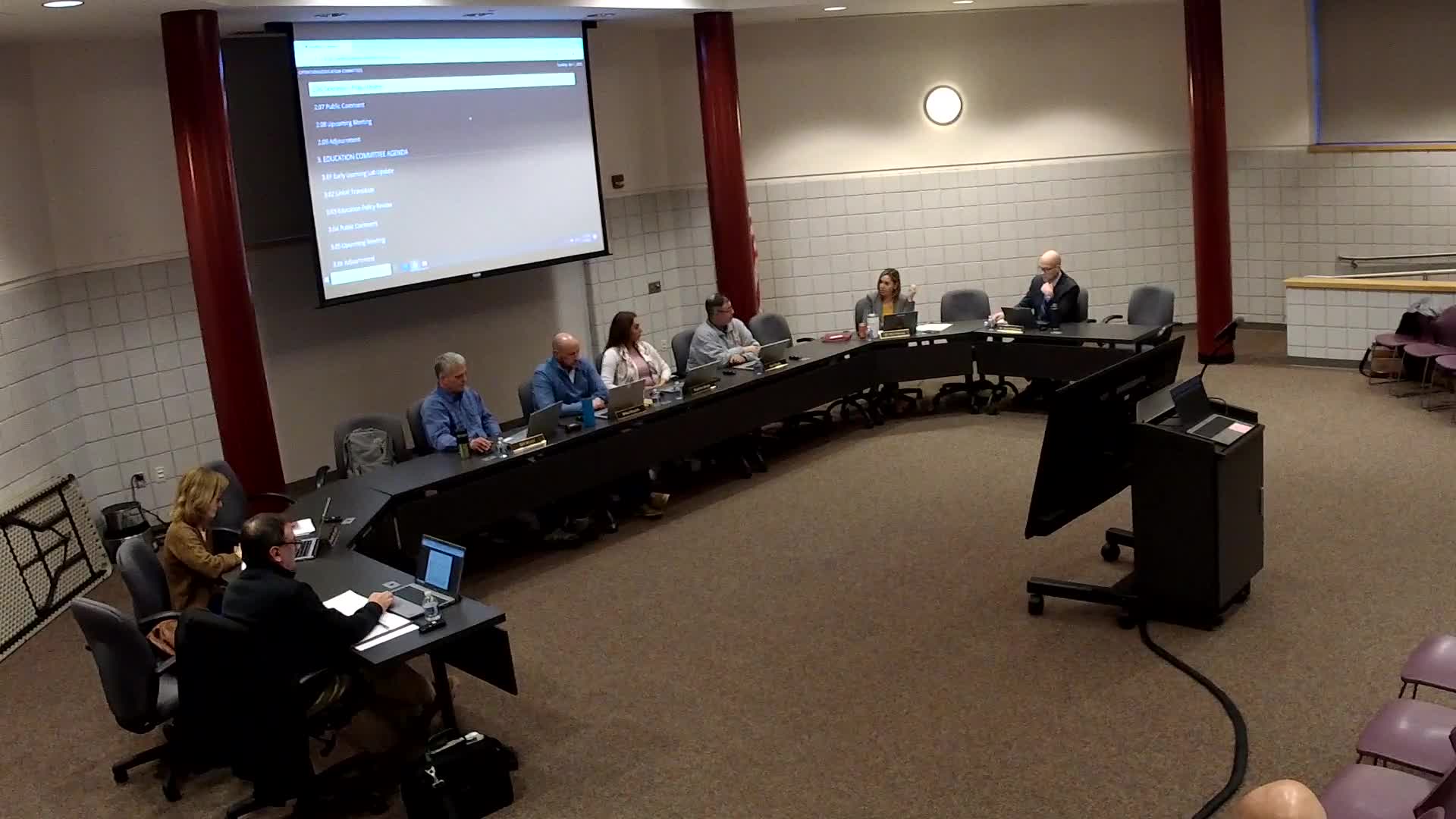
The education committee reviewed and agreed to forward draft policies on generative AI and on electronic device use to the board’s first reading, with requested clarifications about principal authority for non‑instructional device rules and about how off‑campus conduct will be handled.
The education committee reviewed two policy drafts: a generative‑artificial‑intelligence policy and a revision of the district’s electronic‑devices policy.
The generative‑AI policy defines terms (AI, generative AI, AI literacy), requires training and ongoing professional learning for staff and students, and requires pre‑approval for any tool with access to student (FERPA) data. The policy says teachers and staff should incorporate explicit guidance for when and how AI may be used for assignments and that detection tools and academic‑integrity procedures will be one component of review rather than an automatic determinant of misconduct. The district solicitor reviewed the draft and the administration said the policy will need periodic updates as AI evolves.
Separately, the committee reviewed an update to the district’s acceptable‑use/electronic‑devices policy. The draft retains a core rule prohibiting personal‑device use during instructional time, reiterates prohibitions for bathrooms and locker rooms, and expands definitions to include wearable devices (earbuds, smart watches, smart glasses). The draft also authorizes building principals—working with administration—to set building‑level procedures for use during non‑instructional times (for example, lunchtime or extracurricular events). Committee members asked administration to clarify that building procedures will be developed collaboratively, to refine language that applies discipline for off‑campus conduct, and to remove example lists in the definition section that can quickly become outdated.
Administrators reported current approved tools for staff and students include Perplexity for generative search and Turnitin as an AI/plagiarism screener in some departments; they also said the district is piloting a small number of paid AI platforms and that year‑one procurement for a new data tool (LinkIt) would be budget‑neutral because it replaces the current analytics contract.
The committee approved moving the AI and electronic‑devices drafts to first reading on the legislative agenda, with edits requested for clarity on principal authority, off‑campus applicability and iterative policy review.