Get Full Government Meeting Transcripts, Videos, & Alerts Forever!
Get email alerts on the Communications topic
No spam. Unsubscribe anytime.
District communications staff reports modest survey gains; board communications seen as clear but not frequent enough
Summary
Communications staff presented the 2025 family satisfaction survey and a draft 2025–28 strategic communications plan. Survey responses fell to 496 from 599 in 2024; staff highlighted gains in safety/security perception and recommended accessibility, branding and engagement actions.
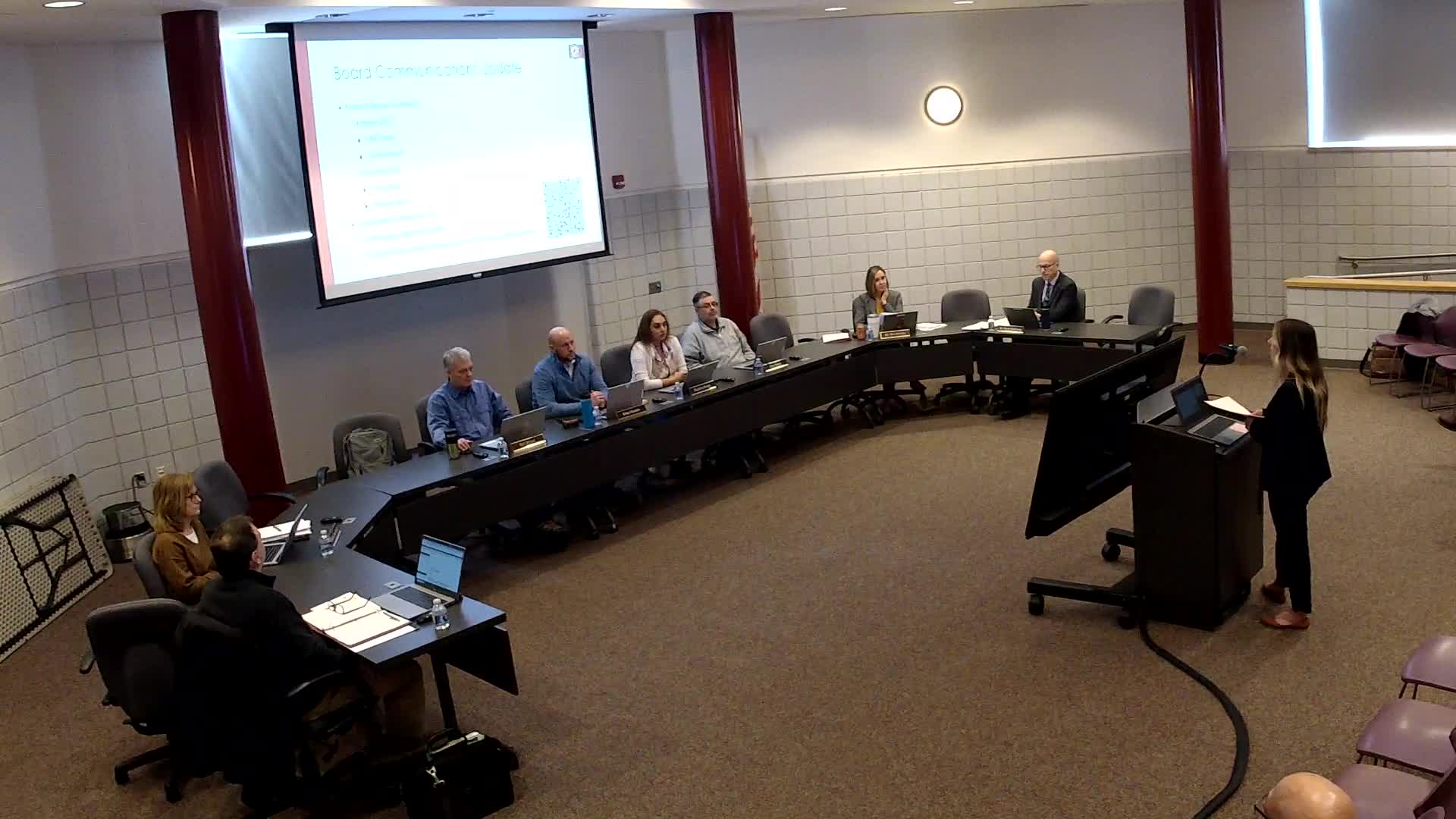
Kelsey Kebbell, a communications staffer working through the Chester County Intermediate Unit partnership, presented district communications work, results from the 2025 family satisfaction survey and a draft 2025–28 strategic communications plan to the operations committee.
Kebbell said the district received 496 survey responses in 2025, down from 599 the year before. The survey was sent to 8,505 contacts in the district’s system; the district calculated a roughly 6% response rate and noted that only about 61.6% of contacts are opted in to receive text messages. Kebbell shared analytics for the district’s new Board and Beyond newsletter (about 7,400 views in January and February with 100–152 link clicks) and said the community distribution list currently includes 59 emails.
On content, Kebbell said families reported being most interested in school‑district events, curriculum/program information and classroom features. Preferred contact methods were email and text (both above 50%). Kebbell highlighted substantial gains in safety and security perception since 2023—single‑digit percentage point gains from 2024 and larger gains from 2023—crediting investments including an in‑house director of safety and security, a school police officer, and technology and facility upgrades.
The draft 2025–28 strategic communications plan Kebbell presented includes three goals: improve accessibility (standardized translation and accessibility guides), strengthen culture (customer‑service training and a brand‑ambassador program), and increase engagement (meet‑your‑board profiles, infographics and more in‑person events). She proposed piloting board‑communications materials and recommended integrating survey data into the plan’s metrics. Board members asked for refinements to survey design to better distinguish “neutral” from “not applicable” answers and for disaggregated building‑level data where relevant.
No formal vote was taken. The committee asked administration and communications staff to finalize the strategic communications plan for placement on the legislative meeting agenda in April.