Get Full Government Meeting Transcripts, Videos, & Alerts Forever!
Get email alerts on the Mental Health Spending topic
No spam. Unsubscribe anytime.
Governor presses mental-health spending oversight after report on commissioner’s licensing; highlights nonprofit CEO pay discrepancies
Summary
Responding to a reporter's question about the mental health commissioner's licensure, the governor said he was unaware of allegations, defended the agency director's role, and criticized high CEO pay and billing discrepancies among nonprofits receiving state funds.
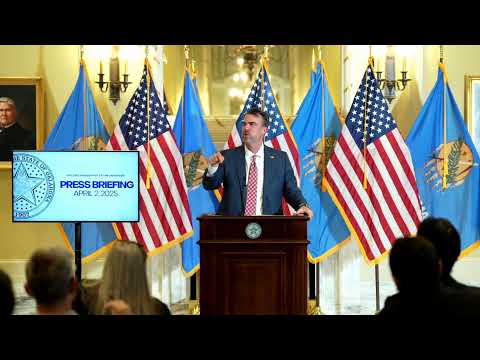
A reporter asked whether the governor was concerned by a FOX 25 report that the mental-health commissioner had portrayed herself as a licensed counselor after her license had permanently expired. The governor said he had not been aware of the report and that the state had hired the commissioner, Ali Friesen, to lead the agency rather than act as a counselor.
"We hired her to oversee this agency, not to be a counselor still," the governor said in response. He added that he was not aware of the situation and was not concerned, while saying he supports agency leaders who ask questions about spending.
The governor used the exchange to press broader oversight concerns about nonprofit providers that contract with the state. He said some nonprofit mental-health CEOs are paid large salaries — citing figures he said he found during review: "we have nonprofit CEOs in the mental health space ... making $1,300,000. The COO ... was making $1,100,000." He contrasted those figures with what he said were lower CEO salaries in other states, noting a top salary of about $335,000 in South Carolina.
He also highlighted what he described as billing differences between providers: "Grand Lake right now ... are billing the state $6,700 per person, where Hope Community Mental Health is billing the state $2,600 per month. That's a big discrepancy for something doing the exact same thing," the governor said. He said these disparities merit inquiry to determine whether taxpayer dollars are "going on target actually helping folks."
Asked whether he had confidence in the agency director's ability to lead, the governor said he did and that if a supplemental appropriation were necessary to meet mental-health needs, the state could provide it from reserves: "If we need a supplemental ... we've got a $5,000,000,000 savings account. We can absolutely do that."
The governor said agency leaders had been placed on notice regarding discretionary bonuses and that he intends to continue pressing for accountability and outcome-based spending. He declined to confirm or deny the specific licensing allegation beyond saying he had not been aware of it and reiterated that questions about spending warranted review.