Get Full Government Meeting Transcripts, Videos, & Alerts Forever!
Get email alerts on the Tourism Promotion Area topic
No spam. Unsubscribe anytime.
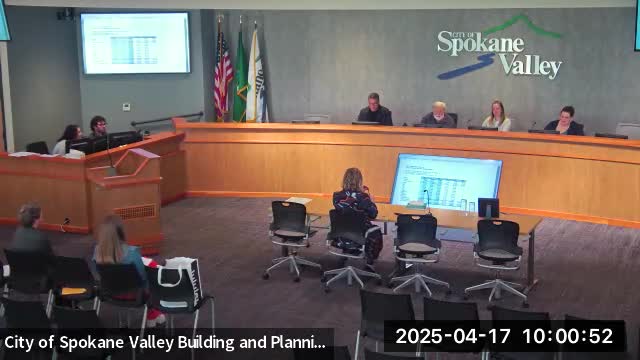
Spokane Valley panel reviews $475,000 in available lodging funds; staff to develop marketing and incentive proposals
Summary
Spokane Valley commissioners were briefed on the city’s year-end finance numbers and discussed options for using surplus lodging/TPA funds to boost marketing and recruit conferences.
Spokane Valley commissioners were briefed on the city’s year-end finance numbers and discussed options for using surplus lodging/TPA (tourism promotion area) funds to boost marketing and recruit conferences.
Chelsea Walls, finance director for the city, told the commission the city’s 2024 revenue “ended at about 1,400,000.0” and that, after accounting for expenditures and maintaining the city’s minimum fund balance, “I anticipate that we have about 475,000 available for additional expenditures if the commission were to choose that.” She clarified the available amount is “above and beyond the reserve,” and said the reserve is sized at about 25% of expected revenues.
The available funds prompted a broad discussion about how to spend the money this year and whether to create a small incentive or “opportunity” fund to help recruit conferences and events that require hotel room blocks and meeting space. Leslie (staff member in the economic development department) briefed the group on the statutory backdrop for lodging surcharges, saying, “The section of state code allowing the additional up to $3 per night sunsets on 07/01/2027, unless the legislature extends those additional charges.” Leslie also noted the city currently levies $4 per night while a separate Spokane Regional TPA assesses $5 per night.
Leslie asked the commission whether it wanted the economic development staff to work with current contractors — including 116 West and Spokane Sports — to produce concrete proposals for using the available funds. Commissioners and industry representatives discussed two related pathways: (1) one-time marketing proposals and expanded campaigns to increase overnight stays this season, and (2) the longer-term idea of setting aside a recurring incentive fund to bid for conferences and events.
Staff described practical constraints. Walls and other staff reminded commissioners that any increase in spending would be processed through a city budget amendment and that work cannot proceed far in advance of signed contracts because of municipal procurement rules. As Walls put it, the city’s policy means “until a contract is signed technically or a scope of work is signed into that contract, the consultant really should not be working significantly on that scope of work.”
Despite the procurement guardrails, commission members pushed for speed. One commissioner urged developing proposals the board could evaluate quickly so money would be “working for us as soon as we can.” Leslie proposed working with 116 West and Spokane Sports to prepare individual proposals and to bring them back to the commission in early June (the regular June meeting needs rescheduling because it falls on a city holiday). Staff said they would also aim to provide draft material to the commission for review before the report goes to city council for final approval.
On the idea of an incentive or opportunity fund, participants raised several open questions the staff will need to resolve before seeking council approval: the allowable uses under state code and city policy, reporting requirements tied to the state’s review of the additional $3 surcharge, whether funds should be committed up front or reimbursed after an event, and what decision-making authority (city staff, the contracted operator, or the commission) would be appropriate for rapid-response bids. Leslie said the state has not specified metrics for the required review and that the city expected to coordinate with the State Tourism Office and VISIT Spokane on a consistent reporting approach.
Marketing staff and contractors outlined current campaign results and argued that an immediate infusion of funds could increase reach and hotel bookings. Jessica (marketing consultant) reviewed the Discover the Valley campaigns launched since 2023 and said the spring sports-targeted campaign launched in mid-March already produced early gains: paid-search engagement was up 24%, organic search users up 34%, and organic engaged sessions up 91% in the short window measured. Jessica described two concurrent campaigns — an “Adventures Nearby” brand-awareness campaign and a sports-targeted “Champions stay here” campaign — and displayed creative being used on streaming CTV, social platforms and paid search. She said the advertising is geo-targeted to nearby markets (Central Washington, Northern Idaho, Boise and Western Montana) and is deliberately blocked from serving locally so ad dollars go to out-of-area travelers.
Hoteliers on the commission noted a remaining gap: conversion tracking between ad clicks and final hotel bookings is limited. Commissioners and staff discussed a short, confidential hotel survey and shared metrics the marketing team can compile (site clicks, clicks to hotel pages, and high-level analytics). Jessica said the Discover the Valley website is set to send traffic to the “places to stay” page and that conversions beyond that point are harder to observe without hotel cooperation; commissioners agreed to help craft a one- or two-question electronic survey tailored to hotel booking terminology.
Next steps and formal direction - Staff will work with 116 West and Spokane Sports to prepare individual proposals for use of available funds and return to the commission in early June with draft materials for review. - Any changes to contract scopes or new spending would require a city budget amendment and city council approval; staff emphasized procurement rules mean consultants should not begin substantial work until contracts or amendments are executed. - Staff will research the state reporting requirement tied to the optional $3 surcharge (sunset date 07/01/2027) and coordinate with the State Tourism Office and VISIT Spokane; the commission asked for draft versions of any required reports for review. - Marketing staff and the commission will develop a short hotel survey to gather confidential conversion and revenue indicators to help measure campaign impact.
Commissioners did not take a formal vote; the exchange produced a staff direction to develop proposals and return with materials for an amended-budget request to city council if the commission chooses to proceed.
Why this matters: the city has a multi-hundred-thousand-dollar near-term funding opportunity to expand marketing and potentially establish an incentive program to recruit room-block-driving events. Any use of the funds will require clearly defined reporting, procurement-compliant contracts and city council approval.