Get Full Government Meeting Transcripts, Videos, & Alerts Forever!
Get email alerts on the School Recovery topic
No spam. Unsubscribe anytime.
Carter County board approves in-place repair of Hampton High, authorizes superintendent to sign disaster grants
Summary
At a special-called meeting, the Carter County Board of Education authorized Superintendent Dr. Carpenter to sign disaster-recovery grants and voted unanimously to repair and mitigate Hampton High School at its current site, selecting the board's Option 4 after reviewing three consolidation alternatives and funding estimates.
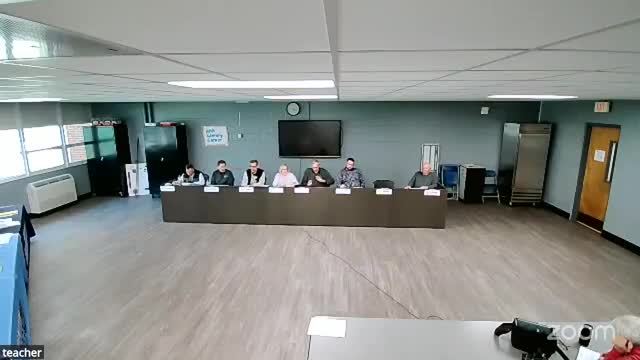
The Carter County Board of Education at a special-called meeting voted to repair and mitigate Hampton High School at its existing location and gave Superintendent Dr. Carpenter authority to sign disaster-recovery grants.
Board members discussed four options for flood-impacted school locations before selecting Option 4, which would repair Hampton High in place and include mitigation work. The board also unanimously approved a separate motion authorizing Dr. Carpenter to execute grants and related paperwork needed for recovery work.
The decision follows severe flooding that county officials said damaged hundreds of homes and multiple pieces of public infrastructure. Mayor Patty and county officials gave the board an update on countywide damage and ongoing recovery contracts before the school-specific discussion began.
Dr. Carpenter, superintendent of Carter County Schools, told the board he needed “authorization to sign for the grants that pertain to the disaster recovery,” citing urgency and reimbursement rules tied to federal programs. The board approved that authorization in a motion moved by Keith Bowers and seconded by Danny Ward; the vote recorded Yes from Keith Bowers, Renee Lewis, Tony Garland, Dylan Hill, Gary Oaks, Jeremiah Tolley, Danny Ward and one additional vocal affirmative, and the motion passed unanimously.
Dr. Carpenter outlined four options the district had studied: build a new 650‑student high school in the Hampton area (estimated $75–80 million, $1.1 million annual savings, local funding required roughly $40–45 million plus an additional 33–35 percent financing premium); build a new 1,000‑student school in the Gap Creek area (estimated $95–100 million, $1.6 million annual savings, local funding roughly $60–65 million); build a new 800‑student school in Lower Valley Forge (estimated $85–90 million, annual recurring savings under $1 million, local funding roughly $50–55 million); or repair and mitigate Hampton High on site (Option 4), capacity about 525 students, with an estimated local requirement of less than $1 million and an accompanying three‑year K–8 improvement plan that the superintendent said could yield approximately $1.8 million in recurring annual savings over time.
Dr. Carpenter said Option 4 became feasible only recently because of changes in flood‑zone and sewer/septic approvals. He said the sewer project is the primary remaining work before students can return. “If we get started early summer,” he said, “the students could possibly be back in the school by the first of ’26,” and elsewhere in the discussion he identified January as a target window for returning students once mitigation and repairs have been completed.
Board member Keith Bowers made the motion to adopt Option 4; Renee Lewis seconded. The board voted unanimously to approve the repair‑and‑mitigation plan for Hampton High School.
Dr. Carpenter said the board and county leaders have worked to secure state support: he reported a $20 million allocation the board had sought has been secured and is being rerouted to support Carter County Schools’ post‑disaster needs. He said that appropriation will act as seed funding for projects that must be paid for up front and later reimbursed through federal or state programs; the superintendent said the appropriation was in committee and expected to go to the General Assembly floor for a vote before funds would be wired to the district.
Public comment included technical concerns about creek and bank work. Michael Claus, a resident who spoke during public comment, urged the county to require engineered plans and upstream easements for riverbank and wall projects to avoid future washouts and to place a qualified overseer on such work. Dr. Carpenter and other board members acknowledged that mitigation design and proper engineering would be central to any rebuild or repair option.
County officials earlier in the meeting described widespread damage from the flood: they said approximately 670 homes were affected, with 74 reported destroyed and an estimated $150 million in residential damage; they reported roughly $7 million in right‑of‑way debris removal, 140,000 cubic yards removed from waterways to date, 12 bridges impacted (including two county bridges in Povey that were complete losses), and millions in needed bridge replacement and temporary bridge costs. The county said it currently has a contract with the Tennessee Emergency Management Agency (TEMA) covering cleanup on several named waterways and is working to add tributaries to that contract.
Next steps identified by the board and superintendent include completing engineering and mitigation plans, proceeding with the sewer work needed to make the Hampton site functional, executing disaster grants once authorization is confirmed, and receiving the anticipated state appropriation and subsequent reimbursements. The board also said it will continue planning improvements to K–8 facilities over the coming three years as part of broader cost‑saving measures.
The meeting concluded with the board adjourning after the votes. Several board members and county officials thanked state legislators and the governor’s office for assistance in securing funding and for work on the county’s disaster recovery efforts.