Get Full Government Meeting Transcripts, Videos, & Alerts Forever!
Get email alerts on the Clean Energy topic
No spam. Unsubscribe anytime.
Holy Cross Energy, CLEAR outline thermal energy networks and geothermal options for Carbondale
Summary
Holy Cross Energy and CLEAR presented progress and opportunities for deep decarbonization in the valley, highlighting distributed renewables, battery programs, and the potential for thermal energy networks or geothermal systems to store renewable energy and replace gas heating at sites such as the Third Street Center.
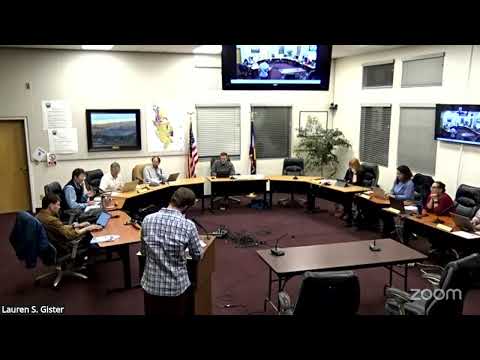
Representatives from Holy Cross Energy and CLEAR told the Carbondale Board of Trustees about the cooperative’s recent clean-energy progress and discussed thermal energy networks and geothermal feasibility work for the town’s Third Street Center.
Brian Hannigan of Holy Cross described the cooperative’s strategy and results, saying the member-owned utility has pushed decarbonization for several years and recently increased its carbon‑free supply: "At the end of 2024, that number was 75%. And I checked before I came tonight, and year to date, we're up over 80% for the first quarter of this year," Hannigan said. He highlighted Holy Cross’s focus on remaining affordable and reliable while increasing sustainability, noting, "safe, reliable, affordable, and sustainable — we view all 4 of those as legs on a 4‑legged stool." He also said Holy Cross’s retail rates are roughly 11¢ per kilowatt-hour, substantially below the national average.
Lauren from CLEAR summarized a geothermal feasibility study the town funded for the Third Street Center and said the Department of Energy application the town pursued did not receive award funding but produced useful findings. The study concluded retrofitting an older building like the Third Street Center presents technical and cost challenges; the team recommended pausing and re-scoping or identifying a different site that could capture waste heat sources and provide better economics. Holy Cross staff added that wastewater treatment, commercial buildings and other sources of rejected heat could be candidates for a thermal energy network that stores heat seasonally and acts as long-duration storage to balance variable wind and solar.
Holy Cross staff outlined existing local programs and tools that could pair with thermal networks, including distributed battery programs (the cooperative’s “Power Plus” program to deploy residential batteries and offer bill credits) and solar-plus-storage projects. The presenters said thermal storage has the advantage of providing seasonal or multi-day storage capacity and could lower the need for natural-gas peaker resources if paired with flexible demand management.
Trustees asked questions about service territories, statutory or regulatory constraints, and how the town could facilitate future projects. Presenters said territory boundaries are not impossible to change but are defended historically; they recommended early coordination between developers, utilities and the town to avoid costly retrofits. Holy Cross pointed to examples in other counties and said the utility is willing to explore partnership opportunities for projects that would help meet town climate goals. CLEAR and Holy Cross offered to continue engagement and provide technical assistance as the town considers future steps.