Get Full Government Meeting Transcripts, Videos, & Alerts Forever!
Get email alerts on the Votes Roundup topic
No spam. Unsubscribe anytime.
Votes at a glance: key bills the Oregon House passed April 18
Summary
A roundup of bills that received final House passage during the April 18 floor session, with short descriptions and outcomes.
The Oregon House recorded final passage or advancement on a number of bills during the April 18 floor session. Below are short entries for bills that received floor action and were declared passed by the clerk or otherwise advanced on that day.
Votes at a glance
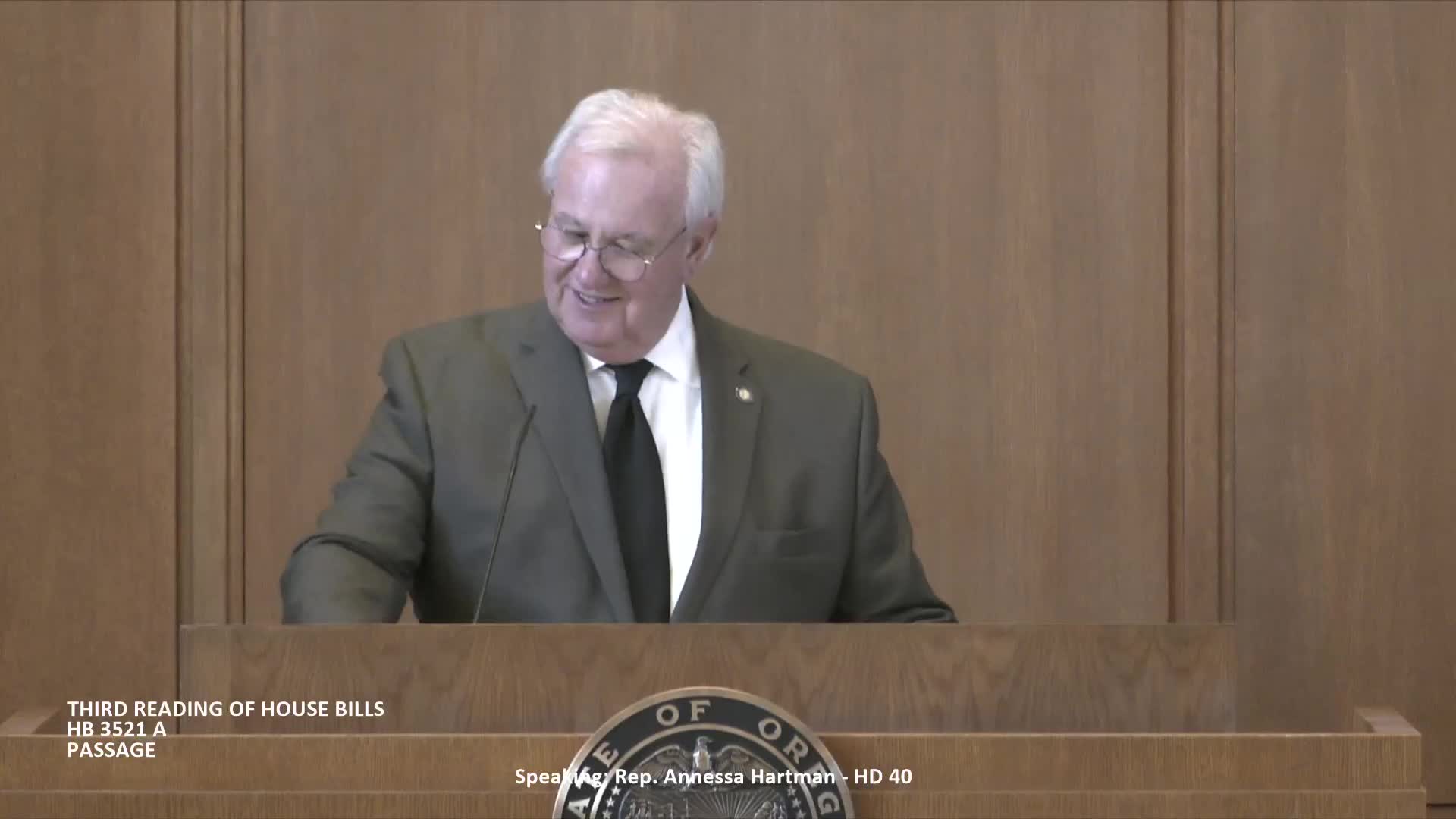
- House Bill 35 21 A — Hold deposit accountability: Passed. Sponsor: Representative Hartman. The bill tightens rules for “hold” deposits applicants give to hold rental units, creates a right for applicants to walk away from substantially uninhabitable units and increases penalties for landlords who violate hold‑deposit agreements. (Floor reading and final passage announced.)
- House Bill 35 64 — Corrections and retractions for defamatory online articles: Passed. Sponsor: Representative Harbeck. Extends the written‑demand window from 20 to 40 days, clarifies that online articles must be corrected or linked to corrections, and updates the statute to apply to online publications.
- House Bill 36 24 — Examinations administered to homeschool children: Passed. Sponsor: Representative Owens. Permits education service districts to offer and pay for proctoring options for homeschool students on a permissive basis; families may continue to arrange private proctors.
- House Bill 36 54 — Matching variance for small cities on state capital infrastructure grants: Passed. Sponsor: Representative Deal. Establishes a sliding scale for local match requirements and allows small cities to use awarded funds across planning, engineering and construction phases.
- House Bill 37 31 — Campus reporting on sexual misconduct: Passed. Sponsor: Representative Hartman. Updates reporting requirements for higher‑education institutions to include reports involving nonstudents/nonemployees, provide case closure reasons and permit narrative context from Title IX offices; implementation phased into the 2025–26 year for most items.
- House Bill 38 16 — Restitution claims and insurance recovery: Passed. Sponsor: Representative Crump. When an insurer pursues restitution in a criminal case, half the restitution collected is directed to the Department of Justice to support victim services, per the bill’s language; sponsors said the change offsets public costs when prosecutors handle insurance restitution claims.
- House Bill 38 19 — Illicit massage businesses and enforcement tools: Passed. Sponsor: Representative Tran. The bill expands administrative and civil enforcement tools against illicit massage businesses, increases civil penalties, authorizes placarding of proven‑illegal facilities, and makes licensed massage therapists mandatory reporters for suspected trafficking.
- House Bill 38 25 — Clearing municipal and justice‑court fines for small cannabis possession: Passed. Sponsor: Representative Johnson. Extends prior state pardons/clearing to municipal and justice courts so possession of a personal amount of marijuana (under current law) is no longer a lingering municipal fine that can impede housing and employment access.
- House Bill 39 21 — Urban growth boundary property exchanges: Passed. Sponsor: Representative Osborne. Allows swaps of certain undevelopable land for more developable land in affected counties to enable housing development in places where local constraints impede growth.
- House Bill 25 30 — School‑bus stop‑arm camera technical fixes: Passed. Sponsor: Representative Wright. Clarifies contracting options, strengthens evidentiary and enforcement provisions, and ensures fine revenue can be used to offset district costs for locally adopted stop‑arm camera programs.
- House Bill 36 53 — Energy savings performance contracting updates: Passed. Co‑carriers: Representatives E. Levy and B. Levy. Modernizes the energy savings performance contracting program (ESPC) for schools and local governments, broadens allowable measures and updates the cost‑effectiveness test.
How this roundup was compiled: The clerk’s announcements on the House floor declared the bills above “having received the constitutional majority” or otherwise announced final passage; sponsors gave floor explanations and the House completed recorded votes or announced passage during the April 18 session.