Get Full Government Meeting Transcripts, Videos, & Alerts Forever!
Get email alerts on the Education Climate topic
No spam. Unsubscribe anytime.
House approves measure directing State Board of Education to integrate climate instruction into core standards
Summary
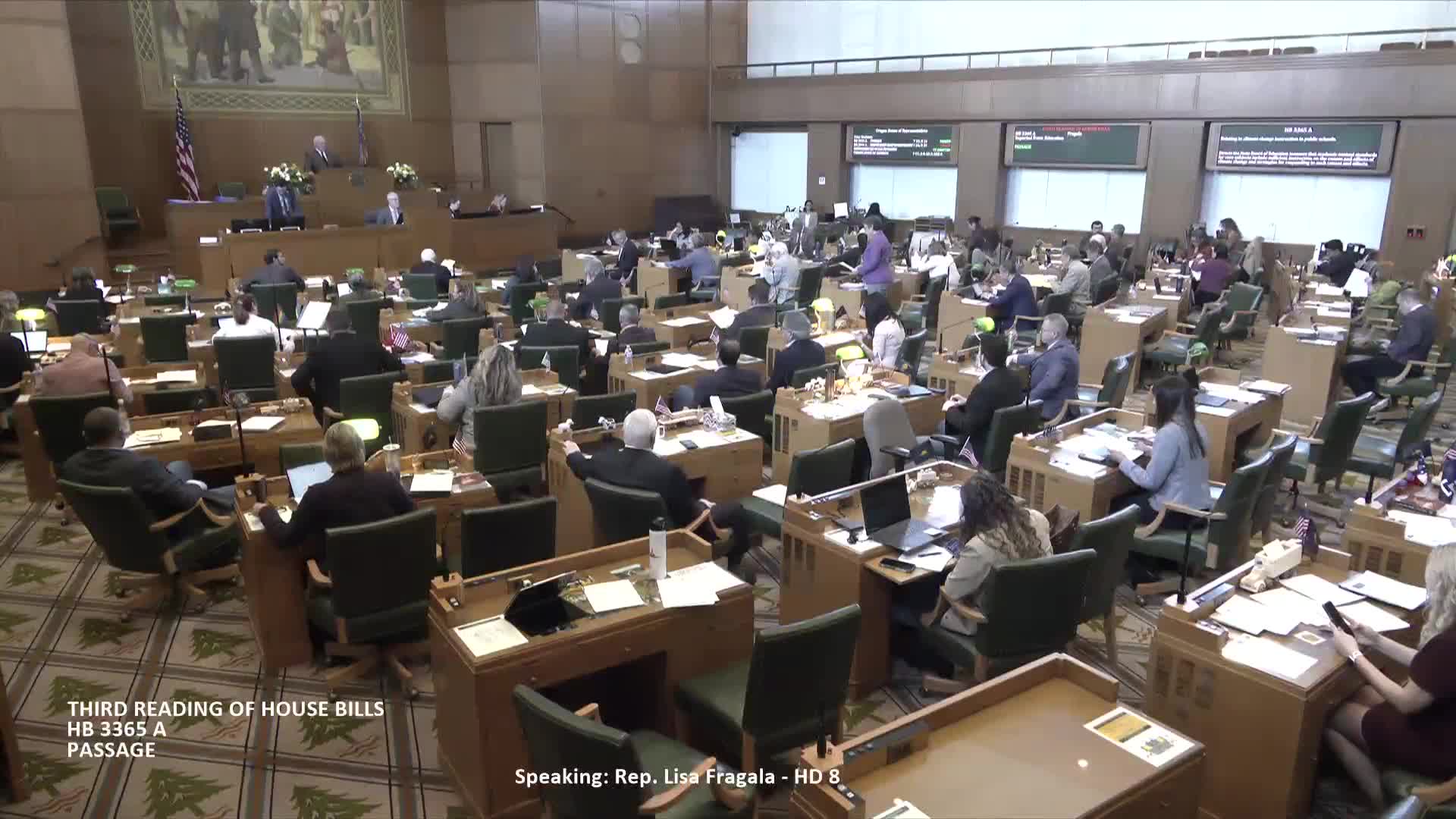
After hours of debate, the House passed House Bill 33 65, instructing the Oregon State Board of Education to ensure academic content standards include sufficient instruction on climate causes, effects and resilience strategies across core subjects.
The Oregon House on April 18 passed House Bill 33 65 A, a bill directing the State Board of Education to ensure Oregon’s academic content standards include “sufficient instruction” on the causes and effects of climate change and on strategies for mitigation, adaptation and community resilience across core subject areas.
Proponents described the measure as modest and procedural — a direction to the State Board of Education to consider climate literacy during its regular standards‑review cycles — and said it builds on existing science standards. “House Bill 33 65 is aimed at ensuring that Oregon students have access to education on climate and sustainability,” Representative Fragula, the bill sponsor, told the House.
Opponents argued the bill was an unfunded, ambiguous mandate that risks distracting schools from priorities such as literacy and math. Representative Yamcha said the bill would politicize classrooms and criticized the proposed expansion of standards across subjects.
Supporters noted the bill does not create a new mandated curriculum, does not change the Board of Education's authority and is intended to preserve local control while making climate instruction a permanent part of the standards‑review process. Representative Wright said integrating climate topics is “real‑world learning” that many teachers already include; other members urged caution about unfunded professional development and curricular costs.
The House debate included discussion of the next‑generation science standards (NGSS), which already include climate concepts in science courses and some related standards elsewhere in K‑12 instruction. Backers said the bill simply embeds climate literacy within the formal standards‑review process so the board ensures the topic receives continued attention; critics said it lacked a fiscal note and could place new training and curriculum costs on schools.
The bill passed the House and was declared passed by the clerk. Floor remarks made clear the State Board of Education retains authority to decide what counts as “sufficient instruction” and to implement standards through the existing review process. The sponsor said the measure delays immediate implementation for most changes until the 2025–26 school year to allow districts time to adapt through the usual standards cycle.
Representative Bridal (closing) emphasized educator support: “This bill itself is a very modest effort to listen to the students in our schools, who want curriculum that engages them and reflects the reality of their world.”