Get Full Government Meeting Transcripts, Videos, & Alerts Forever!
Get email alerts on the Short Term Rentals topic
No spam. Unsubscribe anytime.
Residents and lodging industry back short‑term rental registry and optional municipal tax; advocates want registration, local flexibility
Summary
Supporters including lodging businesses, municipal officials and residents told lawmakers HB 7238 would bring transparency, tax compliance and public‑safety information to short‑term rental markets while allowing municipalities to tailor rules. Residents in shore towns urged primary‑residence limits to curb investor conversion of housing.
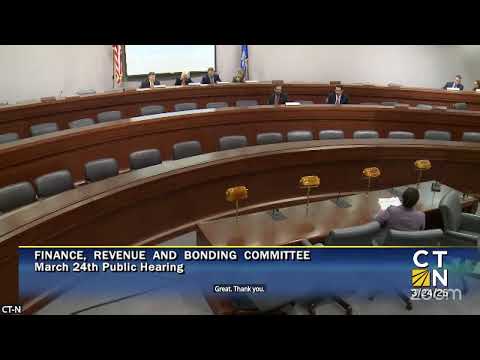
Residents and business representatives urged the Finance, Revenue and Bonding Committee to approve a statewide short‑term rental registry and give towns an optional supplemental tax in House Bill 7238, saying registration would level the regulatory playing field and improve public safety and tax compliance.
Speakers described different local impacts and urged municipal flexibility. Small innkeepers said short‑term rental platforms compete without the licensing, inspections and staffing obligations that apply to hotels and bed‑and‑breakfasts; residents in shoreline neighborhoods described noise, parties and years‑long investor conversions that reduced family housing.
“We looked at beach communities all along the East Coast, but settled on East Haven because of the quiet generational family neighborhoods along the beach,” said a resident testifying for the Shoreline Association for the Enforcement of Residents’ Rights. “Today, my once quiet neighborhood of 45 homes is 9 short‑term rentals in it. That’s 20% of my neighborhood.”
Jenny Kozlowski, executive director of the Connecticut Lodging Association, said the industry supports HB 7238 because uniform registration would improve tax compliance and public‑safety oversight. She noted that some platforms remit occupancy taxes automatically but that other tax streams — sales and income taxes — are not always visible without a registry.
“Short‑term rentals benefit from the same traveler demand yet avoid many of the costs and responsibilities shouldered by the state’s hotels,” Kozlowski said. “HB 7238 seeks to level the playing field by requiring operators to register with the state, just as traditional lodging businesses do.”
Speakers suggested policy design features: require an in‑state contact or agent for out‑of‑state owners, allow municipalities to adopt supplemental municipal taxes at a uniform rate if they choose, make registry data available to local enforcement, and allow local ordinances (for example, primary‑residence rules or caps) to exceed the state floor.
Supporters also urged that some registry or supplemental‑tax revenue be directed to housing assistance and municipal enforcement. No formal committee votes were recorded at the hearing; testimony will inform the committee’s drafting and possible amendments.