Get Full Government Meeting Transcripts, Videos, & Alerts Forever!
Get email alerts on the Labor Collective Bargaining topic
No spam. Unsubscribe anytime.
House approves bill creating escalating penalties for public employers who delay union dues and rosters
Summary
The Oregon House passed House Bill 29 44 A after extended debate on civil penalties, timelines and extenuating‑circumstance defenses for public employers that fail to remit union dues or required employee rosters on time.
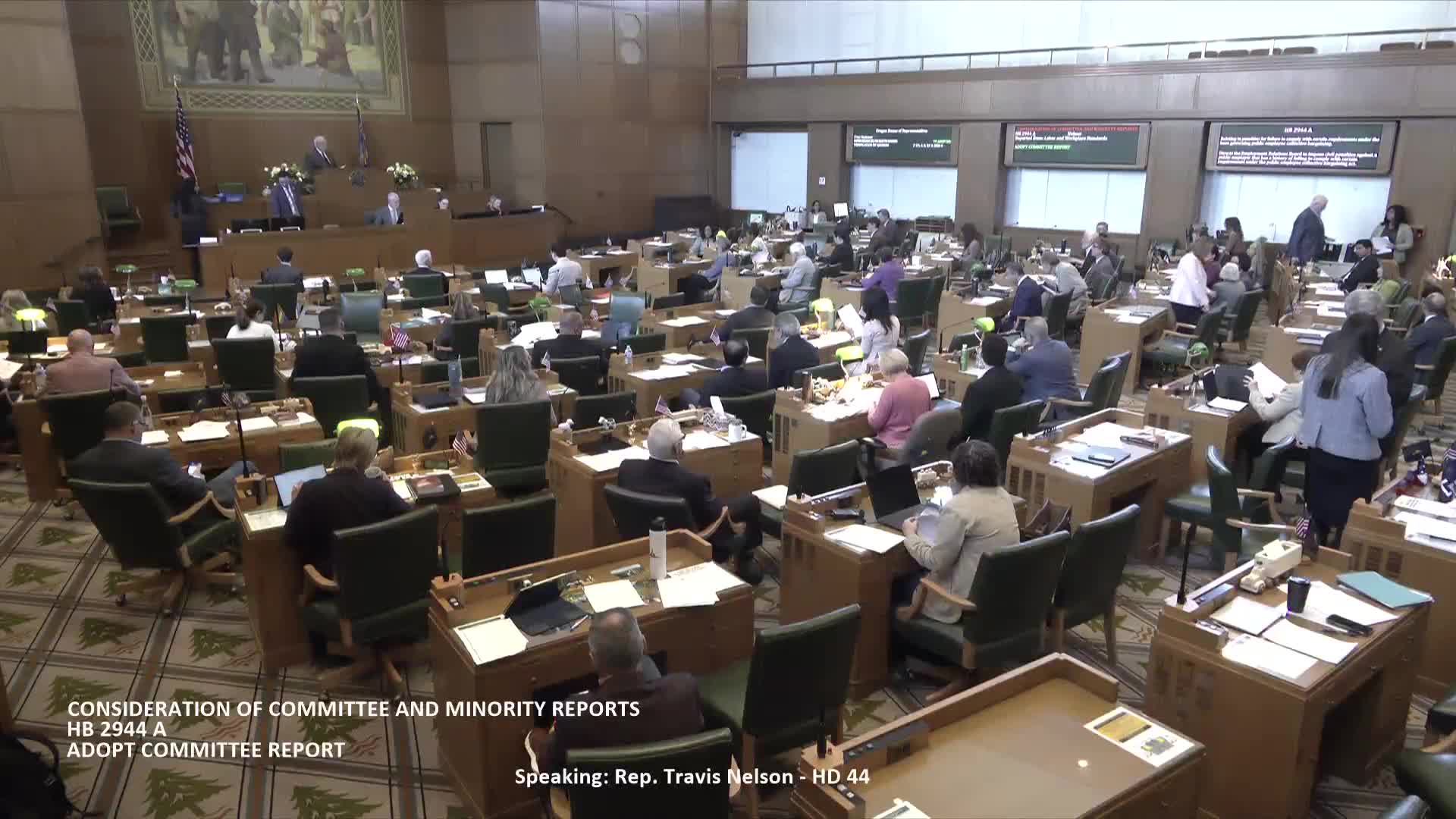
The Oregon House on April 18 passed House Bill 29 44 A, establishing an escalating civil‑penalty framework for public employers that fail to submit dues, deductions or required employee rosters under the state's public‑employee collective bargaining law.
The bill, advanced from the Labor and Workforce Committee, sets a clear 30‑day deadline for remitting authorized employee deductions and tightens enforcement through the Oregon Employment Relations Board (ERB). Under the majority report adopted by the House, civil penalties may be assigned for repeat violations: a second repeat offense could draw a penalty in the range of $1,000 to $5,000 and a third or subsequent repeat offense could draw a penalty in the range of $5,000 to $10,000. The measure also requires the ERB to consider extenuating circumstances when setting penalties; the majority report does not make extenuating circumstances an automatic affirmative defense to penalties.
Why it matters: Supporters said the changes create accountability for employers who have repeatedly failed to transmit dues or quarterly rosters, while opponents said the bill risks punishing cities, counties and school districts recovering from disasters such as wildfires, floods or ransomware attacks.
Supporters argued the bill fills an enforcement gap. “House Bill 29 44 A introduces a fair and escalating fine structure for employers who repeatedly fail to meet deadlines,” Representative Nelson said on the House floor, adding that under current law unions face high legal costs to pursue an unfair labor practice and rarely recover fees that make enforcement practical.
Opponents pressed for a broader affirmative‑defense provision for local governments. Representative Elmer moved a minority‑report substitute that would have allowed extenuating circumstances — for example, a wildfire, flood or cyberattack — to serve as an affirmative defense to civil penalties. “If a city is hit by a wildfire, a flood, or a ransomware attack … should we find these communities while they are literally trying to keep the lights on and help their citizens recover?” Elmer asked. The motion to substitute the minority report failed.
The bill shortens the existing timelines from 60 days to 30 days for certain employer duties and preserves ERB’s existing ability to award civil penalties only after repeated or egregious violations; the statutory change aims to make civil penalties an available remedy earlier in cases of repeated noncompliance. The majority report also directs ERB to consider documented extenuating circumstances when setting any penalty amount; the minority report would have made extenuating circumstances an affirmative defense that indemnifies employers from penalties. The House rejected the minority substitute and advanced the bill to third reading; it later passed final passage and was declared passed by the House.
Discussion vs. action: Much of the floor time was debate over how narrowly to define and how broadly to apply extenuating‑circumstance protections. Proponents framed the bill as an accountability measure to ensure timely remittance of employee dues and rosters; opponents said no systemic evidence of widespread violations had been presented to justify the new penalties and warned the bill could impose large costs on small jurisdictions under stress.
Next steps and implementation: The bill tasks the ERB with implementing the penalty framework consistent with statute; ERB retains discretion to apply penalties, consider extenuating circumstances and award legal fees when appropriate. The legislation passed the House and will proceed through the legislative process.
Votes and formal actions recorded on the floor included a failed motion to substitute the minority report and the final passage of House Bill 29 44 A. The House clerk announced the bill “having received the constitutional majority is declared passed.”