Coalition and labor leaders urge expanded tax study and bold revenue package amid federal cuts
Loading...
Summary
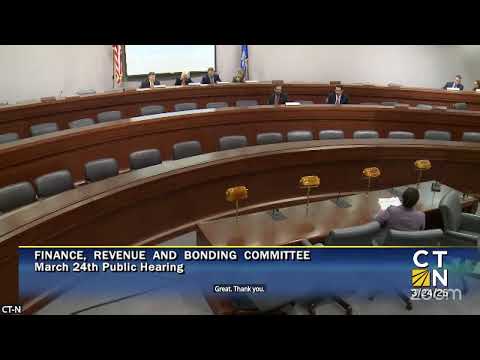
Advocates from labor, higher education and community coalitions urged the Finance, Revenue and Bonding Committee to expand the scope of SB 1528 — a proposed study of state taxation — to analyze how Connecticut’s tax system can better fund public services and reduce economic inequality.
Advocates from labor, higher education and community coalitions urged the Finance, Revenue and Bonding Committee to expand the scope of SB 1528 — a proposed study of state taxation — to analyze how Connecticut’s tax system can better fund public services and reduce economic inequality.
Witnesses warned that anticipated federal spending cuts would shift costs to states and urged Connecticut to explore progressive revenue options, including a capital‑gains surcharge, closing the carried‑interest loophole, an additional income tax tier for millionaires and a mansion tax.
“Connecticut faces unprecedented challenges from rising food prices to incoming attacks from the administration in Washington,” said Sarah Ganong, state director of Connecticut Working Families Power. “Ignoring the looming impact of federal cuts would be a critical mistake. We should study taxes, and Connecticut for All supports the bill with an expanded focus.”
Labor leaders and university faculty said a redesigned tax structure would help sustain higher education, child care, health care and K‑12 services. Louise Williams, president of CSU AUP and a history professor at Central Connecticut State University, described higher education as “the economic engines of Connecticut” and urged study of revenue options to shore up public colleges and universities.
Ed Hawthorne, president of the Connecticut AFL‑CIO, asked the committee to consider guardrail reform and proposed revenue measures including a capital‑gains surtax, a digital ad tax and a new income‑tax bracket for incomes above $1 million. He said the state must prepare in case federal Medicaid and other supports are reduced.
Witnesses did not ask the committee to adopt specific tax increases at the hearing but urged lawmakers to include equity and the risk of federal cuts in the study’s charge. Multiple witnesses asked that the study examine how revenue options interact with the state’s fiscal guardrails.
Committee members questioned assumptions about raising taxes in high‑tax states and asked witnesses to provide more detail on incidence and targeted uses of any new revenue. Some legislators urged caution, while others said targeted investments — for example, school meals, construction, and child care — can produce measurable benefits.
No formal committee action or votes were recorded at the hearing; SB 1528 remains under committee consideration.