Get Full Government Meeting Transcripts, Videos, & Alerts Forever!
Get email alerts on the Court Administration Budget topic
No spam. Unsubscribe anytime.
Cochise County judges ask supervisors for 6% budget boost to fund call center, probation pay and digital evidence upgrades
Summary
Presiding Judge David Thorne told the Cochise County Board of Supervisors at a work session that the court is asking the county for a roughly 6% general-fund increase largely to pay staff more competitively and to fund modernization projects including a judicial call center, a customer ticketing system and a digital evidence portal.
Presiding Judge David Thorne told the Cochise County Board of Supervisors at a work session that the court is asking the county for a roughly 6% general-fund increase largely to pay staff more competitively and to fund modernization projects including a judicial call center, a customer ticketing system and a digital evidence portal.
Thorne, who opened the presentation to supervisors Supervisor Gomez, Vice Chairman Crosby and Chairman Antinori, said the courts will prioritize staffing the clerk's office and probation ahead of public-facing web upgrades. "There is no minimum amount the county is required to provide for the administration of the courts," he said, citing the Arizona Constitution’s vesting of administrative supervision in presiding judges. He added that the courts must also seek state and federal funding where available.
Why it matters: Cochise County court officials said heavy caseloads, understaffing and aging technology are harming access to justice in the rural county. Thorne said probation officers in Cochise County typically must manage caseloads at or above the statutory standard — "at least 65 probationers" per standard adult probation officer — and that pay for county probation staff is about "17% below the market rate" for comparable positions in the state, which hampers recruitment and retention.
Key budget requests and rationale
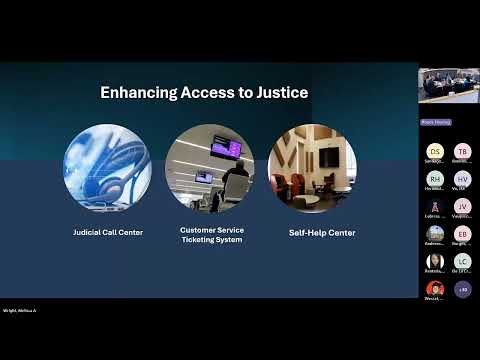
- Judicial call center: Thorne said the courts receive roughly 95,000 phone calls across the superior court clerk's office, justice courts and court administration, and proposed a central call center so the public can call one number for information across court locations. He said Pima County offered to share training and operational experience, and the plan is to start with the superior court and expand to justice courts if those elected judges agree to participate. Thorne said the county already has physical space and expects to post jobs and begin training in the coming months.
- Ticketing/waiting system: The courts proposed a customer queue system (described in the presentation as the "Nemo" or ticketing system) to let people check in, make appointments and get estimated wait times at the clerk’s counter.
- Electronic calendars and forms: Thorne said funds already exist to deploy digital courtroom calendars this year and proposed expanding e-filing and auto-populating forms so litigants do not repeatedly enter the same data.
- Digital evidence portal and courtroom displays: Citing an Arizona Supreme Court administrative order recommending a digital evidence portal, Thorne said superior-court courtrooms in Bisbee already have tables with connectors and that county staff plan a phased rollout starting with criminal cases and expanding to other case types. He said the courts cannot safely accept thumb drives or phones as ad hoc evidence in hearings and need a secure portal for submission and presentation.
- Staffing and workforce development: The courts requested funding to raise clerk and probation salaries to market levels, to create a deputy superior court administrator post to aid succession planning and to convert some part-time justice-court positions to full time where fees permit. Thorne said the goal is to raise many front-line clerk positions into a $20–$30-per-hour career range so turnover falls and institutional knowledge grows.
State, federal and one-time funding
Thorne described efforts to secure outside support: probation has received federal training and equipment for digital forensics (two data-extraction devices and related licenses described in the presentation as roughly $20,000 in total), and the courts plan to pursue state and federal grants for specific projects. He said one-time revenue from court fee accounts can fund capital or one-time technology purchases, but sustained salary increases require ongoing general-fund support.
Board questions and fiscal scrutiny
Supervisors pressed staff on the total delta from last year and questioned large entries across county-wide "leases and rentals" and subscription lines that were moved to conform with GASB accounting. Several supervisors said those aggregated subscription and fleet charges looked large and asked the county finance team for detailed breakouts. Chairman Antinori and others also raised the option of increasing court fees or finding administrative savings, while recognizing that many court users lack means to pay larger fines or fees.
Other operational notes and follow-up items
- Juvenile medical fund: Rita Shipley, judicial budget finance director, said funds held for juvenile medical, hospital and dental care are being reserved because the county is ultimately liable for out-of-county emergency claims; the county has discussed returning unused balances but has kept funding available in case of need.
- Case management and IT: The courts currently use the statewide case-management system (Ajax and the Arizona Court Automation Project were discussed). Thorne and court administrators said they are exploring whether rural counties can collaborate on shared IT platforms rather than each county maintaining separate systems and subscriptions.
- Facilities and records cleanup: Thorne asked for one-time funding next year to clear stored exhibits and old records from the unused upper floors of the historic courthouse (he emphasized fire and safety risks and long-term preservation needs).
What was not decided
No formal vote or binding action was taken at the work session. Supervisors asked for additional information on subscription costs, fleet replacement accounting and the exact dollar amount needed to implement the call center and other requests. Finance staff and court administrators agreed to return with detailed line-item explanations and potential offsets.
Quotes
"Nobody answers the phone," Thorne said of public complaints; he later added that the call center is intended to fix that by centralizing responses and collecting call data to improve online services. "Our probation officers supervise the maximum number of probationers," he said, describing vacancies and workload pressures that push many officers above the statutory standard of 65 to 1.
Next steps
Court administration and county finance staff will provide supervisors a more detailed budget delta and line-item breakdowns, including subscription and fleet charges, and will identify potential offsets and timelines for phased projects such as the call center and digital evidence rollout. The board did not adopt or reject the court's funding requests at the session.
Ending
Supervisors thanked court staff for the presentation and asked to be contacted with follow-up detail; the county will consider the court's coordinated budget request as part of the ongoing general-fund process.