Get Full Government Meeting Transcripts, Videos, & Alerts Forever!
Get email alerts on the Public School Facilities topic
No spam. Unsubscribe anytime.
Statewide proposal would create dedicated fund for routine school repairs; superintendents urge $30 million start
Summary
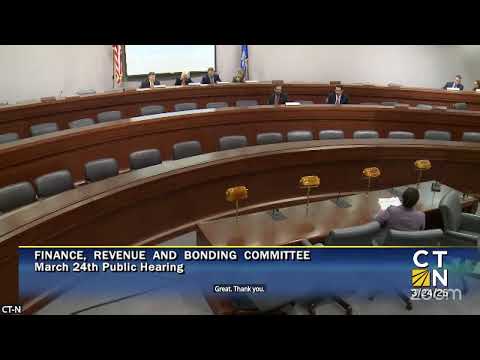
Advocates for public-school maintenance urged the Finance, Revenue and Bonding Committee on Monday to establish a state program to fund routine but essential school repairs, saying local budgets routinely defer projects that later become costly renovations.
Advocates for public-school maintenance urged the Finance, Revenue and Bonding Committee on Monday to establish a state program to fund routine but essential school repairs, saying local budgets routinely defer projects that later become costly renovations.
The proposal in House Bill 7239 would create a District Repair and Improvement Project (DRIP) program modeled on the state’s LOSIP municipal infrastructure program and would allow districts to carry forward funds across fiscal years, supporters said.
Supporters said the measure matters because minor capital needs — leaking roofs, boilers, HVAC dampers, failing gym floors and aging restroom fixtures — are regularly cut when municipal budgets tighten, producing larger costs and disruptions later.
“The DRIP program would allow districts to save money long term by preventing costly repairs or replacements,” said Iris White, acting superintendent of Bristol Public Schools. “These are not just building repairs. They are investments in our students’ future and their ability to learn.”
Superintendents and facilities directors from small and large districts gave concrete examples of deferred maintenance. Steve Madanci, superintendent of Southington Public Schools, said his district spent about $123,000 on roof repairs over the past three years and listed immediate needs that included a $33,000 retrofit to convert general classrooms to science classrooms, roughly $121,000 to replace a high‑school boiler and $41,000 to replace original acoustic panels in a music room.
“Next year, we’re shifting to a middle-school schedule that necessitates retrofitting a couple of general classrooms to science classrooms,” Madanci said. “Those dollars could go a long way toward structural maintenance and, more importantly, toward students and programs.”
Patrick Gibson, deputy executive director of the School and State Finance Project, recommended an initial state allocation of $30 million for DRIP and said the bill’s grant formula should consider enrollment and town wealth while including a flat grant so every district receives some support. “Establishing this program would complement existing school construction funding and protect the state’s investment by helping districts maintain their buildings,” Gibson said.
Other witnesses — including superintendents from Putnam, East Hartford, Waterbury, Plainfield, Norwich Free Academy and Pomfret — described routine projects that fall below the threshold for a bonded renovation but are too large to be absorbed easily in an annual operating budget. Waterbury’s chief operating officer described a $193,000 electrical transformer repair that forced the district to cancel planned indoor-air-quality improvements this year.
Witnesses repeatedly praised two features of the bill: (1) allowing unspent DRIP funds to be non‑lapsing and carried forward across fiscal years, which helps districts plan and aggregate funds for larger mid-scale projects; and (2) excluding projects already eligible for the existing school construction reimbursement program, thereby targeting DRIP to minor capital needs.
Speakers also described air‑quality and accessibility obligations that cities must meet. Elaine Maynard Adams, chairwoman of the New London Board of Education, cited section 44 of Public Act 23-167, requiring periodic air‑quality testing, and said districts are often required to test without an identified funding source for remediation. “Repairing, replacing, or remediating air‑handling equipment is one potential use of DRIP funds,” she said.
No formal vote or committee action was recorded at the hearing; witnesses delivered testimony and answered members’ questions.
If enacted, supporters said, DRIP would let districts take a more proactive approach to maintenance, reduce the number of emergency repairs and preserve state and local investment in school buildings.
Questions remain about the bill’s final appropriation and grant formula. At the hearing, proponents proposed a $30 million initial appropriation and offered a draft formula; committee members asked staff to review cost estimates and interactions with existing programs before any decision.
Representatives from school boards, regional education organizations and facilities associations joined superintendents in urging passage. Supporters said the program would save taxpayers money over time by avoiding major renovations caused by deferred maintenance.